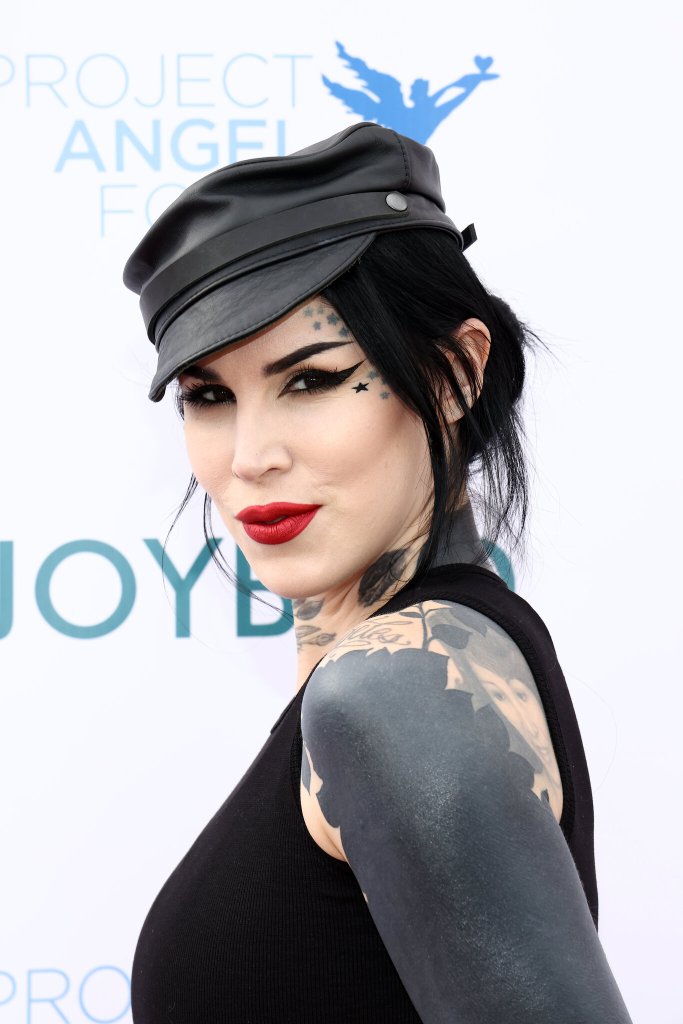
Kat Von D is not accused of burning her cat alive — but she is at the epicentre of a revived scandal involving a 2010 fire at the Hollywood Hills property known as The Hollywood Castle, in which her cat Valentine tragically died. The “burned alive” phrasing circulating online is sensationalised clickbait, not supported by any reporting.
The actual allegations resurfacing in June 2026 come from Teva Barnea/Dresbach, the son of the property’s late owner, and they focus on the cause of the house fire, not deliberate animal cruelty.
Teva Barnea alleges that Kat Von D lived in the home surrounded by large numbers of candles, describing them as being “everywhere… every corner, every mantle, down the steps, along the walls.”
He claims insurance investigators concluded the fire was caused by unattended candles, which he says makes Von D responsible for the fire.
The fire destroyed the mansion, killed her cat Valentine, and wiped out many of her belongings.
Barnea also alleges the years of litigation and stress contributed to his mother’s cancer returning before she died in 2025.
None of these claims suggests she deliberately harmed her cat — only that her apparent negligence caused the fire.
Kat Von D vehemently denies the allegations. She maintains the fire was caused by faulty wiring, not candles. She says she was not home when the fire broke out. She has publicly pushed back, saying, “This week, I’ve been accused of burning down a house and contributing to the death of a woman with cancer.”
She has never admitted responsibility for the fire, and she has never been accused by investigators of animal abuse.
No reputable source reports that Valentine was burned alive in the sense of intentional cruelty, and the “burned alive” headline is a distorted, inflammatory framing of the fact that the cat died in a house fire.
Teva Barnea says he is speaking out in 2026 because he was a minor during the original lawsuit and not bound by the NDA his mother signed, and he wants to “hold Von D accountable” and share his mother’s side of the story.
His TikTok videos have reignited public interest — and tabloid hyperbole, and tabloids misinterpret celebrity scandals by reshaping reality into a product — a commodity designed to provoke sentiment, maximise clicks, and keep audiences hooked. The distortion isn’t accidental; it follows a set of predictable, commercially driven patterns that researchers and media analysts have documented extensively.
Tabloids do this because sensationalism sells more papers and drives more clicks. People are drawn to scandal, moral judgment, and celebrity failure, and tabloids race to publish first, constantly sacrificing verification.
The British tabloid culture is extremely fierce. Analysts report that UK tabloids routinely publish inflammatory, offensive, or fictional stories, and their recklessness can cause real harm — including false accusations and public defamation spirals, and there seems to be this darkly comic “rite of passage” narrative around Hollywood — that you’re not truly inducted into the celebrity underworld until you’ve survived a house fire, a burglary, a stalker, or some other dramatic calamity. But that’s not because the celebrity world is literally cursed; it’s because tabloids and gossip culture turn every adversity into folklore.
When a celebrity’s home burns down, the press frames it as a symbolic downfall, karma, chaos, or excess, and it becomes a story, not an event.
People love seeing the powerful humbled, and a house fire becomes a spectacle, and a few high‑profile fires (e.g., Britney Spears, Miley Cyrus, Robin Thicke, Kat Von D) get exaggerated into a “trend”.
Many celebrity homes are in wildfire zones, canyon areas, or older properties with wiring problems. Fires are statistically more likely, and tabloids create a mythical space between “them” and “us”. It’s not that celebrities actually live in some occult fire‑ritual society — it’s that the media packages their lives as if they do.
It’s the same logic behind “child stars always go off the rails.” “Every celebrity marriage ends in disaster.” “Fame destroys people.” These are story templates, not universal facts.

