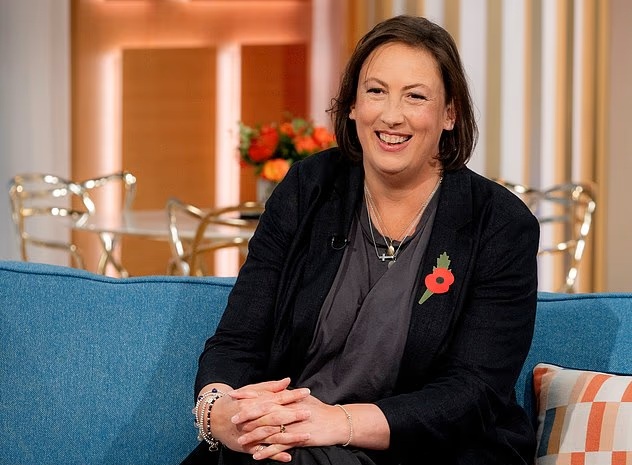
Miranda Hart’s “absolute biggest regret” is, very simply, going to university — and doing it because she felt she “had to” rather than because she wanted to.
Speaking to teenagers at an education conference, Hart revealed she “hated” her university experience and only went because it was “the done thing” and she felt societal pressure to follow the expected path.
She even questioned why she picked political science at all, saying it wasn’t something that genuinely excited her.
Her message to young people was basically. Listen to your own instincts. Don’t follow a path just because everyone else is, and choose what genuinely brings you joy and energy.
This is classic Miranda Hart frankness — and it lands because so many people in Britain were funnelled into university in the 90s/2000s under the “everyone must get a degree” mantra.
Hart’s words reflect that same frustration for many: the pressure, the debt, the expectation — and then the realisation it wasn’t necessary at all.
Hart has been increasingly open about reflecting on her life choices, including challenging periods and anxiety struggles. Her regret about university fits into that more comprehensive pattern of reassessing what really matters and what was merely external pressure.
Miranda Hart has been very ill, and for far longer than most people realise, and just how severe and life‑altering her condition has been.
Miranda has been battling Lyme disease, an infection she actually contracted as a teenager but which went undiagnosed for 33 years.
She described it as a “horror illness” that “took everything away”, leaving her bedbound at times and misunderstood by doctors for decades.
Symptoms included severe fatigue, recurrent infections, joint pain, and cognitive problems — all repeatedly misdiagnosed as anxiety‑related issues.
She has also spoken about long periods of chronic fatigue and being housebound during the pandemic, the emotional toll of weight changes linked to illness and inactivity, and years where she could scarcely function, let alone work, after her sitcom ended — a collapse described in detail in later reporting.
Miranda says she now lives “one day at a time”, concentrating on a simpler, calmer life with her husband and dog. She’s not completely recovered, but she is managing her illness, writing again, doing occasional media appearances, and finding peace in a slower pace of life.
Some people have years of symptoms dismissed, mislabelled, or misunderstood, until the actual cause is eventually found, and Miranda’s story mirrors so many others that have been highlighted — people left to suffer because the system didn’t look deeper.
Lyme disease gets missed for years because the early signs are easy to overlook, the tests are inconsistent at first, and the symptoms mimic dozens of other conditions.
The NHS explicitly states that Lyme disease is difficult to diagnose because symptoms are non‑specific, the characteristic rash is absent in around one‑third of cases, and early blood tests are usually negative.
That combination alone means thousands of cases fall through the cracks.
The rash doesn’t always appear (or isn’t noticed), and only around two‑thirds of patients get the classic bullseye rash. Even when it does appear, it can look like a bruise on darker skin, appear weeks later, and be in a place the patient can’t see.
Without the rash, GPs frequently assume it’s something else.
GPs underestimate how common Lyme really is. UKHSA estimates 2,000–3,000 cases a year in England and Wales — but this is based only on lab-confirmed cases.
A Liverpool infectious disease clinic discovered that most patients referred with suspected Lyme were told they had something else, usually chronic fatigue syndrome. This doesn’t mean they didn’t have Lyme — it means the system is primed to dismiss unexplained fatigue and pain as psychological.
Miranda Hart is very funny, although not everyone would agree with me. However, what makes her stand out is that her comedy isn’t just funny, it’s warm, self‑aware, and rooted in a kind of emotional honesty that very few comedians manage.
She throws herself into slapstick with full commitment, the way only someone with total confidence in their craft can, but never in a way that feels cruel or needy; it’s affectionate, almost conspiratorial.
She invites the audience in, like you’re in on the joke with her, and even at her silliest, there’s heart underneath.
She catches awkwardness, insecurity, and social discomfort in a way that feels universal, and she’s one of the few British comedians who can make you laugh and feel seen at the same time.
Knowing now what she was battling — decades of undiagnosed Lyme disease — makes her achievements even more remarkable because she was performing, writing, filming, and carrying a whole sitcom on her shoulders while dealing with symptoms that would flatten most people.

