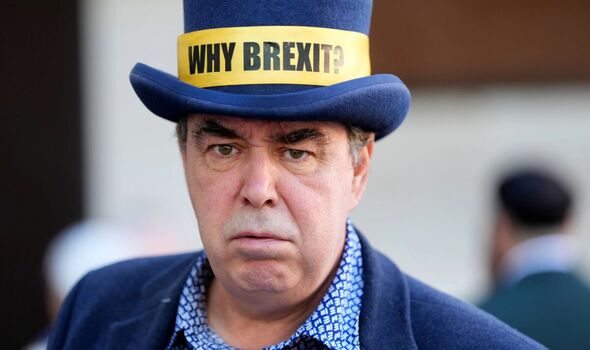
Good Morning Britain viewers were distracted during Keir Starmer’s resignation coverage — but not by anything he said. The disruption came from blasting music outside Downing Street, which repeatedly cut through the broadcast and drew attention away from the address itself.
A well‑known anti‑Brexit activist, Steve Bray, blasted Beethoven’s Ode to Joy — the EU anthem — throughout Starmer’s speech.
The volume was so high that many viewers said they couldn’t hear the speech clearly, including those watching on Good Morning Britain.
After Starmer finished, Bray switched to a satirical “Brexit Song” with the chorus “We all live in a Brexit tragedy.”
The interruption created a surreal contrast with the gravity of a Prime Minister’s resignation, and viewers took to social media saying the broadcast felt “chaotic” and “impossible to follow.”
The choice of Ode to Joy was especially pointed because Starmer had previously said the piece “best summed up” the Labour Party — something that already irritated some Brexit‑supporting viewers.
Starmer’s address itself was emotional and focused on his party’s loss of confidence in his leadership, his achievements, and his gratitude to his wife, Victoria — but for many watching live, the soundtrack overshadowed the importance of the address.
Steve Bray is a British anti‑Brexit activist best known for his loud, persistent, and deliberately disruptive protests outside Parliament — especially those involving music blasted through powerful speakers. He became a political fixture during and after the Brexit years, earning the nickname “Stop Brexit Man.”
He became widely recognised for appearing behind live TV broadcasts at Westminster in bright blue EU‑themed outfits, waving placards and shouting slogans.
Bray began daily protests in 2018–2019 on College Green, Westminster, shouting “Stop Brexit!” and using placards and megaphones to disrupt political messaging. He sees Brexit as a historic mistake and uses high‑visibility, high‑volume tactics to keep the issue in the public eye.
He claims that playing music is part of his basic right to protest, a claim he has defended successfully in court, and although he began as an anti‑Brexit protester, Bray later widened his activism to protest against Conservative governments more generally.
Bray’s protests often disrupt major political moments, provoking strong reactions from politicians, journalists, and the public.
Critics call him rude, antisocial, or attention‑seeking; supporters defend him as a symbol of free expression resisting an increasingly authoritarian climate. He has had equipment seized, been temporarily barred from areas around Parliament, and frequently clashed with police — but continues to protest.
Bray says he protests because Brexit was a national mistake. Politicians must be held accountable in public view. Noise and disruption are necessary to cut through political spin, and protest is a democratic right, even if it annoys people.
The police can limit Steve Bray, but they cannot realistically prevent him long‑term unless Parliament alters the law in a very specific and much more restrictive way. Every time authorities have tried to shut him down, he has found a lawful workaround — and courts have frequently sided with him.
The police cannot ban him from protesting altogether. Under the Human Rights Act 1998, Bray has protected rights to freedom of expression and freedom of peaceful assembly. These rights apply even if the protest is annoying, loud, or politically inconvenient.

