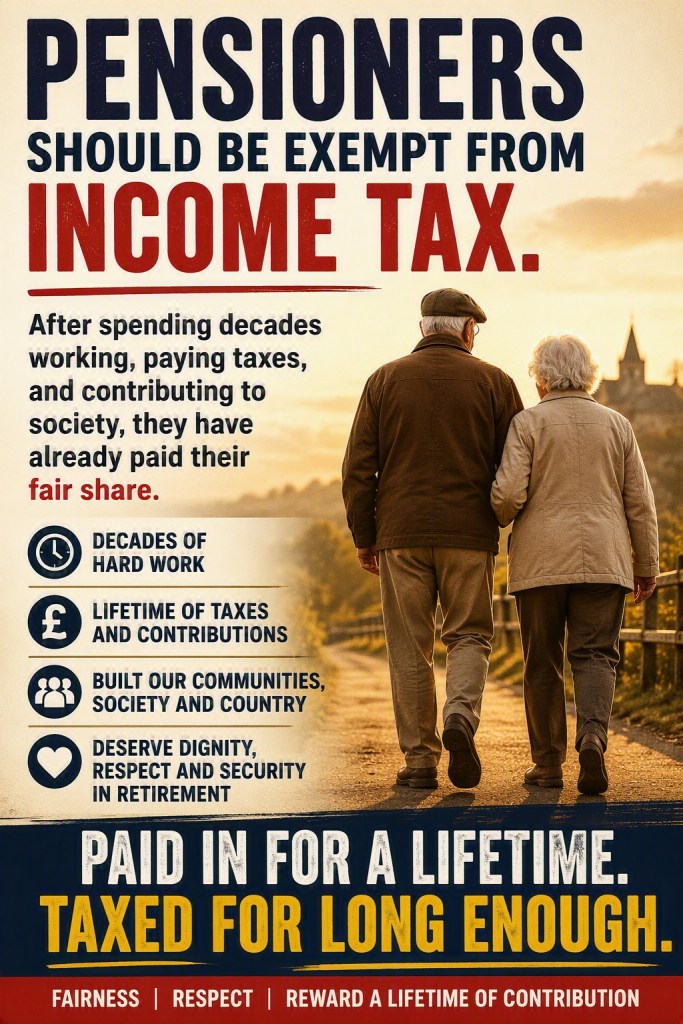
Pensioners should be exempt from income tax. After spending decades working, paying taxes, and contributing to society, they have already paid their fair share.
The State Pension should not be treated as taxable income. It is not a benefit handed out for free, but the result of decades of National Insurance contributions made throughout a person’s working life. Pensioners have already paid into the system and should not be taxed again on what they have earned.
The UK is also unusual in combining a relatively modest State Pension with taxation that can draw pensioners into the income tax system. The House of Commons Library notes that the UK State Pension provides a lower level of income relative to average earnings than that of many comparable advanced economies, while the UK spends a smaller share of GDP on state pensions and pensioner benefits than many of its peers.
Many countries already recognise that retirement income deserves special treatment, with nations such as Panama, Costa Rica, Malaysia, Georgia, and Ecuador exempting certain pension income from taxation, while others offer retirees significantly reduced tax rates.
If you agree, make your voice heard. Write to your MP, support campaigns for pension tax reform, and demand a fairer retirement for those who spent a lifetime building the country. They paid in for decades. Now let them keep what they earned.
Why should pensioners be taxed on the income they’ve already spent a lifetime earning? The State Pension is not a gift from the government. It is the result of decades of work, taxation, and National Insurance contributions. For many, taxing that pension feels less like fairness and more like paying twice for the same retirement. If the State Pension is an earned entitlement, it should be treated as such and kept out of the tax net.
The government argues that raising the State Pension age helps keep the system affordable by delaying pension payments and encouraging people to work for longer. But many pensioners see it differently.
If someone has worked and paid taxes and National Insurance for 40 or 50 years, asking them to wait even longer for the retirement they’ve already funded can feel like moving the goalposts. For those in physically demanding jobs, working additional years is often not a practical option. Retirement should be based on a lifetime of contribution, not continually pushed further out of reach.
One of the strongest arguments against continually raising the State Pension age is that some people never live long enough to receive it. After decades of working, paying taxes, and contributing through National Insurance, they die before reaching retirement age or only receive their pension for a short time. For them, the promise of retirement becomes something they spent a lifetime funding but never got the chance to enjoy.
The comments tell a powerful story: people who worked from their teens, paid taxes and National Insurance for decades, only to see the pension age drift further away. Some lost parents, spouses, friends, and colleagues who died before claiming a penny of their State Pension. Others watched loved ones receive only a few years of retirement after a lifetime of contributions. Their message is simple: if you’ve spent 40, 50, or even 60 years paying into the system, retirement should be a guarantee, not a finish line that keeps moving further out of reach.

