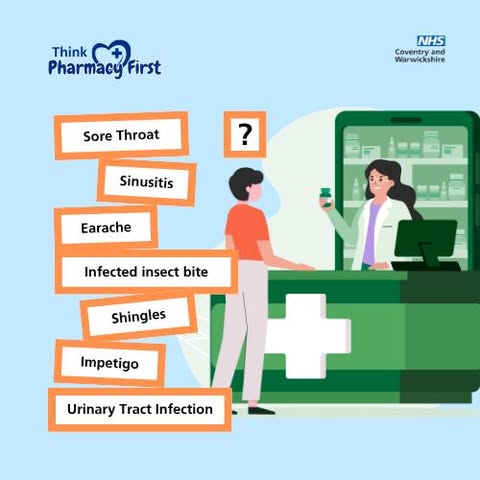
The NHS has expanded its Pharmacy First scheme across England to allow patients to get immediate consultations and prescriptions for migraines, mild-to-moderate acne, scabies, adult ear infections (acute otitis externa), and childhood hay fever (seasonal allergic rhinitis) directly from a participating high street chemist without needing a GP appointment.
This change allows people to get treatment at a time that fits their everyday schedule rather than booking a GP appointment, which the NHS hopes will significantly ease pressure on family doctors.
Dr Amanda Doyle, NHS England’s National Director for Primary Care and Community Services, highlighted that community pharmacy teams have already provided fast, convenient high street treatment to millions of people, emphasising the NHS’s commitment to making healthcare access as easy as possible.
Dr Doyle added that as part of winter preparations, the NHS aims to maximise community support so patients can get help locally and avoid unnecessary hospital admissions.
Dr Doyle concluded that by offering direct pharmacy care for these new common conditions without a GP appointment, family doctors will be freed up for patients who need them most during the colder months.
Prime Minister Andy Burnham supported the decision by noting that the public is tired of the frantic struggle to secure routine GP appointments, emphasising that the pharmacy expansion delivers immediate, localised care without forcing people to take time off work.
Prime Minister Andy Burnham concluded his announcement by promising that the service expansion will give families back precious time by allowing them to walk into a local chemist and receive immediate treatment for these five additional common illnesses.
Prime Minister Andy Burnham concluded by emphasising that the localised expansion of Pharmacy First will bring noticeable, day-to-day relief to families, catching health issues earlier while successfully saving precious time and reducing demand on critical GP and A&E resources.
Health and Social Care Secretary Yvette Cooper championed the expansion, noting that the Pharmacy First scheme already provides millions with quicker, more accessible care closer to home, and expanding it will make it even simpler for people nationwide to get advice and treatment precisely when they need it.
Health and Social Care Secretary Yvette Cooper added that community pharmacies are central to moving treatment into local areas, emphasising that the initiative fully utilises the expertise of skilled pharmacists for on-the-spot care while easing NHS pressure through early medical intervention.
Rob Music, Chief Executive of The Migraine Trust, enthusiastically welcomed the inclusion of migraine in the Pharmacy First scheme, stating that the organisation has actively campaigned for a wider expansion of localised migraine care following the measurable success of a pilot programme in Scotland.
Despite the political optimism, frontline pharmacy workers and trade bodies have raised significant concerns regarding severe workforce shortages and pre-existing operational deficits. Industry representatives warn that because the law requires a registered pharmacist to complete the final clinical and safety check on every single prescription, forcing heavily stretched staff into prolonged private clinical consultations could drastically delay standard dispensing queues.
If they give you a treatment, do you have to pay?
The consultation and medical advice from the pharmacist are completely free, but standard NHS prescription rules apply to any medication you are given.
However, this is absolutely rubbish because when I had a consultation with the pharmacist, I was made to pay for mine, and I am over 60 years old.
This was incredibly frustrating, and I was understandably angry when I found out that I shouldn’t have paid.
If you are over 60, you are legally exempt, and if you are forced to pay after a consultation, then something is very wrong with how the transaction is processed.
Public comments on the scheme reveal a stark divide: while some patients praise the speed of bypassing the GP morning phone scramble, a significant number express immense frustration over hidden retail costs and system confusion, alongside widespread concern from frontline pharmacists who warn that the extra workload is pushing their already exhausted teams to a breaking point.

