Fresh off announcing his final tour, Sir Rod Stewart has left an Ayrshire family “speechless” by donating £5,000 to support their severely disabled 18-year-old son following a gruelling benefits dispute where the teenager was told to look for work.
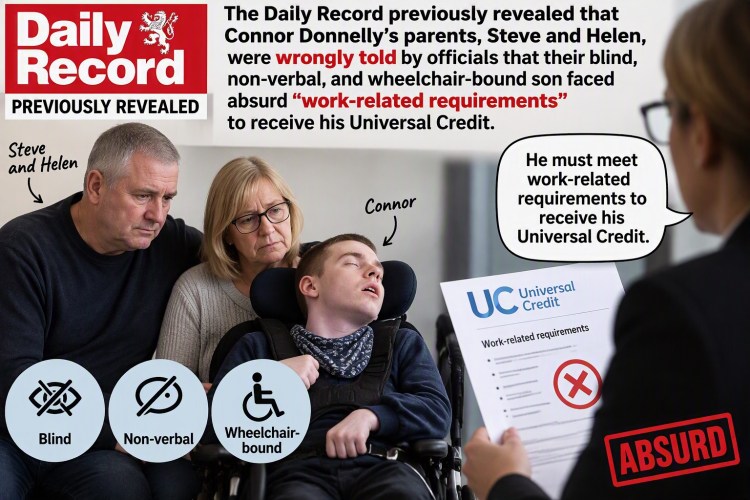
The Daily Record previously revealed that Connor Donnelly’s parents, Steve and Helen, were wrongly told by officials that their blind, non-verbal, and wheelchair-bound son faced absurd “work-related requirements” to receive his Universal Credit.
After turning 18 earlier this year, Mauchline teenager Connor’s family submitted a fresh claim for his £338 monthly benefit in June, only to endure a string of “upsetting” phone calls from officials discussing his ability to get a job and forcing them to file sick lines.
Before their three-month ordeal finally came to an end, the family was emailed instructions to spend time “looking and preparing for work” and was even summoned to a “work-focused interview” by phone this month under the threat of a financial sanction if they missed it.
Now Sir Rod Stewart, who announced his final tour this week, has left the family “speechless” by pledging his support and a £5,000 donation following their gruelling benefits ordeal.
Sir Rod Stewart stated that upon reading the young man’s story in the Daily Record, he immediately felt compelled to help and hoped his gesture would make things a little easier for the family.
The DWP publicly dismissed the job-hunting demands as a “standard notification,” but Work and Pensions Secretary Pat McFadden ultimately intervened in the “critical issue” to remove all work requirements and increase Connor’s Universal Credit payments.
Connor’s father, Steve Donnelly, strongly echoed that sentiment, expressing deep frustration that the family never received an official apology from the DWP for an ordeal that left them feeling humiliated, frustrated, and deeply let down.
While Sir Rod Stewart’s gesture provides welcome immediate relief, a one-off £5,000 donation does not solve the long-term systemic financial pressures that families face when managing severe, lifelong disability costs during an intense cost-of-living crisis.
Connor has an older brother and three younger sisters, and they have complex care needs stemming from being starved of oxygen at birth.
Connor received Universal Credit until earlier this year because he was in full-time education, but since leaving school in May, his parents have been locked in an ongoing struggle with their local jobcentre.
The current DWP system faces intense public criticism for aggressively penalising the vast majority of genuinely ill and disabled individuals who desperately need support, overshadowing the small minority who abuse the system.
Subjecting a large majority of genuinely sick individuals to punitive measures and stressful administrative hurdles to catch a small minority who abuse the system is widely condemned as both unethical and morally wrong.
Public commentary on the case has heavily praised Sir Rod Stewart’s kindness while expressing widespread disgust toward the DWP, with many pointing out how unethical it is to subject vulnerable people to cruel administrative hurdles just to catch a minority who abuse the system.

