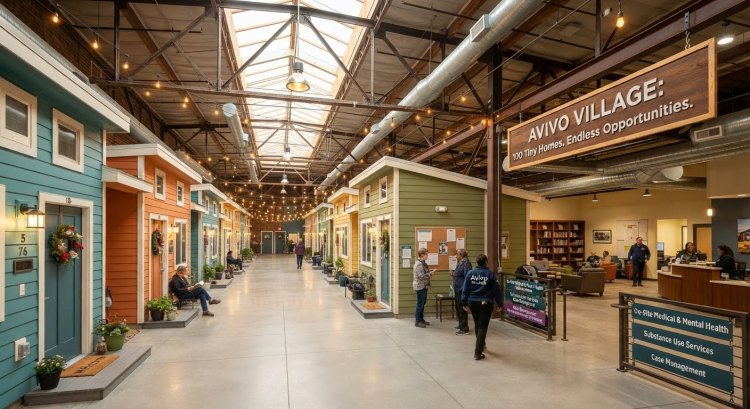
In Minneapolis, an empty 48,000-square-foot warehouse was transformed into Avivo Village, an innovative indoor community featuring 100 private, lockable tiny homes with on-site medical, mental health, and substance use services for people experiencing homelessness.
Since opening in December 2020, Avivo Village has helped hundreds of people transition off the streets by providing private tiny homes backed by 24/7 security, staff support, and comprehensive on-site health and housing services.
By July 2026, this single repurposed warehouse had provided 873 residents with a second chance in one of its 100 private tiny homes, successfully helping 339 people move into permanent housing.
This innovative model provides residents with the security of strong, safe doors to help them successfully transition out of homelessness.
Residents share that having a passcode-locked door gives them peace of mind and true autonomy, meaning they no longer have to worry about their phone or purse being stolen just to go to the bathroom.
This project represents a compassionate shift in American emergency housing, demonstrating how cities can effectively care for their citizens by prioritising safety and human dignity.
By repurposing the built-in layouts of closed New England college dorms and underutilised commercial spaces in cities like Washington, D.C., developers can bypass expensive construction hurdles to quickly turn existing infrastructure into dignified, deeply affordable housing.
While the UK and Australia have thousands of empty buildings, strict habitability laws, high retrofitting costs, and rigid planning restrictions prevent indoor warehouse conversions, leading both nations to favour outdoor modular pod housing on vacant land instead.
To address the housing crisis, London councils are partnering with developers to install factory-built, zero-carbon modular pods on vacant brownfield land and even above car parks, providing vulnerable residents with energy-efficient, fully private transitional homes.
To ensure these pods are a true stepping stone to independent living, local councils partner with specialised charities like the Single Homeless Project, Riverside, and St Mungo’s to deliver intensive, 24/7 on-site medical care, addiction treatment, and employment training.
Providing someone with their own front door and dedicated support gives them the stability, dignity, and real second chance they need to successfully rebuild their lives and move off the streets for good.
By connecting innovative initiatives like Minneapolis’s Avivo Village, repurposed New England college dorms, and London’s charity-backed modular pods, this global overview proves that when cities creatively transform empty spaces into private, dignified housing with 24/7 care, they give vulnerable citizens the security and support needed to successfully rebuild their lives.
Providing unconditional support and a safe, private space to those in need is fundamentally about humans looking after humans, recognising that basic survival and dignity are moral rights everyone deserves.

