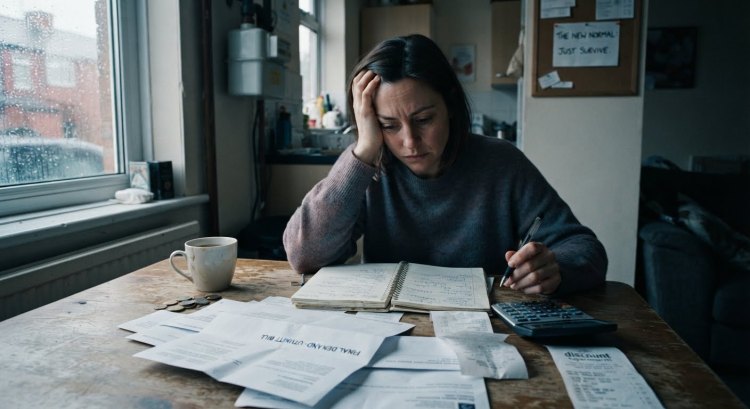
The collective public sentiment toward the cost-of-living crisis is defined by a deep sense of exhaustion, frustration, and political disillusionment, as people find themselves permanently cutting back on everyday luxuries and struggling against stagnant wages to afford essentials like food and utilities, creating a deeply unequal society where lower-income families face genuine material deprivation while others are merely inconvenienced by a global economic squeeze that many fear has become a permanently normalised state of hardship.
People can combat the cost of living crisis by utilising government support schemes and checking benefit eligibility through official calculators, slashing routine household expenses by switching to discounted social broadband tariffs and own-brand groceries, and managing mounting debt proactively by seeking free, confidential advice from specialised charities rather than ignoring creditors.
Economic experts project that the cost-of-living crisis will not have a sudden, definitive end date but will instead slowly transition into a “new normal,” as everyday prices remain permanently high while a toxic combination of energy price shocks, high borrowing costs, and stubborn inflation means that real household wages are not expected to fully catch up and restore lost spending power until at least 2027 or 2028.
Political analysts argue that a general election would introduce different financial strategies, such as Conservative proposals for pro-growth tax cuts or Labour’s focus on fiscal rules and green infrastructure, but it would not fundamentally alter the underlying global economic forces driving the cost-of-living crisis.
The cost-of-living crisis is actively making people poorer in real terms because families have endured thirteen years’ worth of typical price rises packed into just five years, a staggering inflationary surge that has left the average household £2,900 a year worse off compared to steady historical trends and has nearly doubled the proportion of lower-income families trapped in persistent debt and severe utility arrears.
Public health data and mortality studies confirm that people do die as a direct and indirect result of the cost-of-living crisis, as thousands of excess winter deaths are attributed annually to fuel poverty and living in cold, damp homes that exacerbate fatal respiratory and cardiovascular conditions, while severe financial distress significantly spikes mental health crises and premature mortality rates within the most deprived communities.
While the modern cost-of-living crisis shares striking, well-documented parallels with Victorian-era hardships—such as a widening social gap between the rich and poor, house price unaffordability surging back to 1899 levels, and a heavy reliance on community food banks and charities—society is not literally regressing to the 19th century because we maintain modern workplace safety regulations, universal healthcare, and an institutionalised welfare safety net that did not exist during the brutal era of Dickensian workhouses.
Governments will not bring back physical, Victorian-style workhouses because the concept violates fundamental modern human rights laws, and state safety nets rely on monetary distribution rather than forced confinement, meaning that even though aggressive welfare proposals from political groups like Reform UK suggest requiring long-term unemployed claimants to perform community labour—a concept critics heavily condemn as a modern manifestation of the punitive 1834 Poor Laws—any contemporary state response to extreme poverty will continue to take the form of financial social security credits, local council welfare grants, and community-based support.
Public comments across community forums and social platforms paint a raw and deeply frustrated picture of everyday survival, as citizens frequently share heartbreaking and angry accounts of strictly “yellow-sticker shopping” at supermarkets, watching rent and utility bills consume well over half of their stagnant monthly wages, and completely cutting out life’s basic pleasures—like gym memberships, family holidays, or simply feeling secure enough to have a second child—to the point where everyday online discussions explicitly describe the exhaustion of working a full-time job just to live like a “modern peasant” while being trapped in what has undeniably become the new, permanent normal.

