Two Latvian nationals aged 32 and 36 were arrested inside the perimeter of RAF Molesworth on suspicion of breaching the UK National Security Act 2023 after Ministry of Defence Police discovered a cut fence and an abandoned vehicle on Wednesday night, triggering a counter-terrorism investigation, local residential searches, and a bomb squad road closure before both men were released on strict bail conditions.
The intense scrutiny surrounding the recent security breaches at RAF Molesworth and RAF Fairford stems from the highly sensitive nature of these facilities, with Molesworth hosting vital intelligence operations for US European Command, US Africa Command, and NATO, and Fairford acting as a crucial European forward operating base for US strategic bombers, meaning that the back-to-back arrests of suspects under counter-terrorism and national security laws within just over a week have raised urgent concerns regarding potential foreign espionage and the vulnerability of key Allied defence infrastructure within the United Kingdom.
While the successful interception of the intruders at RAF Molesworth and the extensive security reinforcements at RAF Fairford demonstrate that base defence protocols are actively functioning, the fact that a perimeter was breached at a high-clearance NATO and US intelligence hub—coupled with the strain on local civil police forces and political pressure over delayed domestic security reviews—has fueled intense public debate over whether existing safeguards are robust enough to protect vital Allied infrastructure against sophisticated hybrid threats.
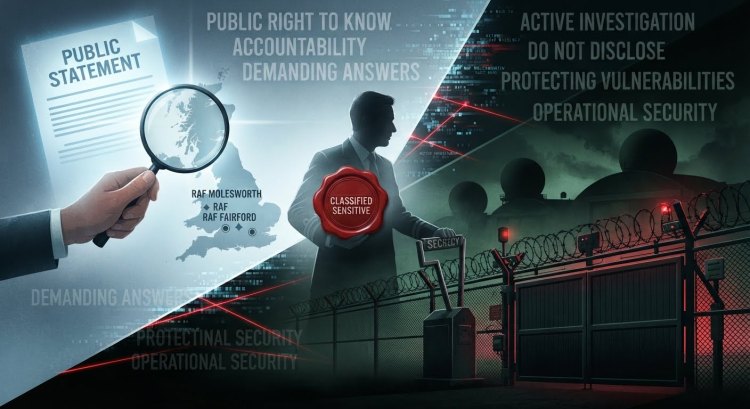
The question of whether the government should issue a full public statement involves balancing public transparency and accountability against the strict operational security required during an active counter-terrorism investigation, as disclosing specific security vulnerabilities could inadvertently provide hostile state actors or copycat trespassers with actionable data on how to exploit gaps in military base perimeters.
According to official Counter Terrorism Policing statements, the primary physical evidence documented at the scene consisted solely of a “small breach” cut into the perimeter fence and an abandoned vehicle that triggered a bomb squad inspection and a temporary closure of the A1(M) motorway before being cleared of any explosives.
Under Section 4 of the [UK National Security Act 2023], the suspects face a maximum penalty of up to 14 years in prison, an unlimited fine, or both if convicted on indictment of entering a prohibited place for purposes prejudicial to the safety or interests of the United Kingdom.
While Section 4 specifically has not yet seen individual sentencing precedents, recent high-profile Old Bailey rulings under the [National Security Act 2023] demonstrate that the UK courts hand down severe, multi-year prison terms to deter hostile activities, as seen when a Russian-linked sabotage network ringleader was sentenced to 17 years for preparatory conduct and two individuals were jailed for 8 and 10 years for assisting a Hong Kong intelligence service.
The legal distinction centres entirely on intent and national risk, as standard summary trespass under Section 5 of the [UK National Security Act 2023] requires only proof of unauthorised entry or filming at a designated military site and carries a maximum penalty of just six months in prison, whereas a full Section 4 espionage charge scales up to a 14-year maximum sentence because the prosecution must prove the intruder entered for a “prejudicial purpose” meant to harm the safety or strategic interests of the United Kingdom.

