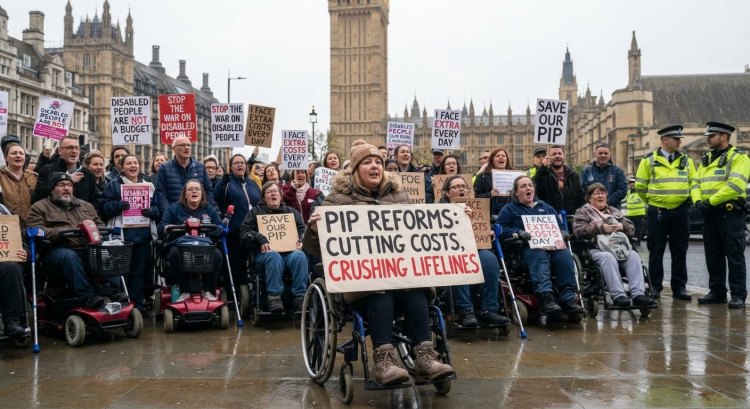
The UK government is considering restricting or cutting PIP benefits following a report that suggested some claimants don’t face extra disability costs, sparking fierce backlash from campaigners.
Existing PIP claimants will see their awards automatically extended and protected from immediate cuts, with official decisions on long-term system changes expected by late 2026.
Major disability charities have condemned the updates, warning that cutting PIP will push hundreds of thousands of disabled people into poverty by stripping away a vital lifeline used for essential living costs.
The government is targeting disability benefits to reduce a rapidly rising welfare bill and push more people into work, while campaigners argue they are unfairly scapegoating vulnerable people to fix broader economic failures.
The government plans to use home-working options and specialised job coaches to help disabled people find employment, though critics argue the accessible job market isn’t large enough to support them.
While the UK has over 700,000 vacant jobs, most are high-stress, in-person roles in health or retail rather than the flexible, remote positions disabled people actually require.
The DWP’s grand plan is basically telling someone who relies on an iron lung, “Good news, we found a remote data-entry role that requires exactly zero lung capacity, and the desk is highly ergonomic!”
It’s hard not to laugh at the mental image of a job centre coach giving a pep talk to someone on a stretcher, telling them they’d make an excellent, high-energy retail greeter because “the posture is already taken care of.” While the government envisions a sleek, modern workforce of bionic remote workers, critics point out that forcing severely ill people into high-stress jobs is less of an “employment strategy” and more of a blueprint for turning office breakrooms into emergency triage units.
If you’re on PIP, you can legally tell a work coach to use their laptop as a frisbee, because PIP has absolutely zero work requirements and cannot be sanctioned.
However, if you also claim Universal Credit, that work coach wields the power of the almighty Claimant Commitment—a digital contract that essentially gives them the authority to decide your financial fate. If they sign you up for one of their legendary “Skills Bootcamps”—which promise to magically transform you into a full-stack software engineer in three weeks—and you decide to show their laptop the nearest exit, the DWP will swiftly hit you with a Universal Credit sanction, instantly vaporising your standard allowance and leaving you to pay your bills with thoughts and prayers.
You can legally stop a work coach’s demands by ensuring your health conditions are officially tailored into your Claimant Commitment, and if a sanction is issued anyway, you can immediately freeze the penalty and overturn it through an independent tribunal appeal.
The government’s grand plan is essentially trying to fix a blown engine by shouting motivational quotes at the bumper, and deep down, they know it’s a total comedy of errors that will completely fall apart the second it hits reality.
You can’t magically solve unemployment by putting 1,000 job coaches in shiny suits into a job centre and telling them to find remote tech roles that simply do not exist for people who literally cannot leave their beds. It’s a brilliant loop of bureaucratic logic: they want to stop paying PIP to save cash, which will immediately land thousands of people in hospital, completely bankrupting the NHS—thereby forcing the government to spend ten times more money fixing the crisis they just manufactured. The whole policy isn’t a functional blueprint; it’s just expensive political theatre designed to make ministers look busy while they quietly pray nobody notices the math doesn’t add up.

