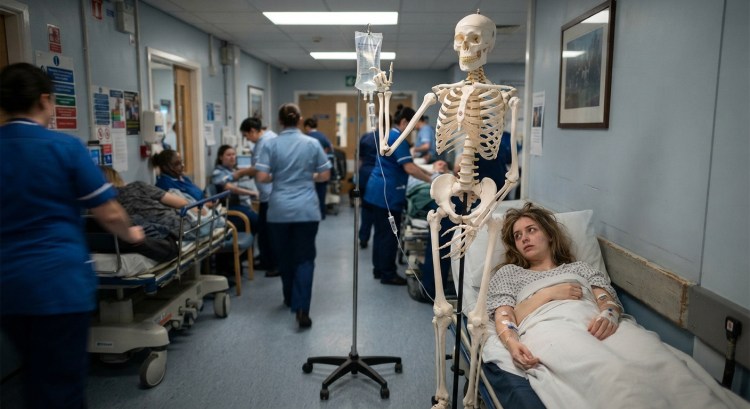
In September 2026, a severe equipment shortage at a capacity-strained Salisbury District Hospital forced nurses to improvise by hanging an IV drip bag from the bony fingers of a medical teaching skeleton for 28-year-old patient Cleo Rawlings, who was waiting in an A&E corridor with suspected meningitis.
Following the incident, the Salisbury NHS Foundation Trust issued a formal apology acknowledging the setup was insensitive and fell below professional standards after a staff member failed to remove the skeleton from the rolling stand, while the viral photos sparked intense public debate—dividing people between those who praised the nurses’ resourcefulness, those who found dark humour in the absurdity, and those who saw it as a tragic symbol of a broken, underfunded healthcare system.
While Cleo’s mother, Alexandra Leat, defended the frontline staff for their resourcefulness, noting that they were “doing a great job” and that other corridor patients had their drips hung from picture frames, Salisbury District Hospital addressed the matter directly with the employee involved and issued an internal directive to strictly reinforce equipment policies regarding patient dignity.
With over 2.4 million A&E attendances making September 2026 the busiest on record for the NHS, more than 10% of patients faced arrival-to-discharge waits exceeding 12 hours, while 50,582 individuals endured extreme “corridor care” for over 12 hours even after a formal decision had been made to admit them.
These severe patient bottlenecks are primarily driven by a “delayed discharge” crisis where thousands of medically fit individuals remain stuck in hospital beds due to a lack of capacity in overstretched community social care services, creating a backlog that forces newly arrived emergency patients to wait on trolleys and leaves regions like Northern Ireland and the Midlands facing the longest healthcare delays as bed-occupancy levels consistently exceed unsafe thresholds of 90%.
To address this infrastructure failure, the government’s “Fit for the Future” 10-Year Health Plan outlines sweeping structural targets—including shifting care from hospitals to community settings through Neighbourhood Health Centres and guaranteeing 92% of elective treatments occur within 18 weeks—while simultaneously introducing a long-term plan to establish a National Care Service alongside a targeted £9 billion Better Care Fund to permanently resolve the discharge delays crippling NHS wards.
Operating under the official Neighbourhood Health Framework, the proposed clinics will serve as extended community hubs co-locating GPs with multi-disciplinary medical teams, debt advice, and employment assistance to manage chronic conditions locally, whereas the newly unveiled National Care Service is structured as a phased, long-term initiative delivering free essential personal care for older adults that will be fully funded by linking its financial scope to structural savings generated from reforming the State Pension Triple Lock beginning in April 2030.
Public and expert feedback on the reform plans reveals deep scepticism despite widespread agreement on the vision, as independent think tanks like The King’s Fund point out critical workforce and capacity shortages while health experts warn that structural bias within NHS England risks compromising the policy, a concern echoed by Health Foundation data showing a clear misalignment where the government prioritises routine treatment wait times while the public remains overwhelmingly focused on securing GP appointments and improving emergency care.

