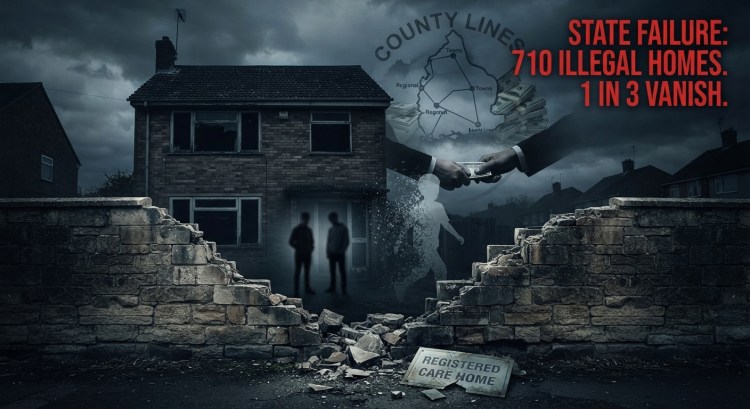
An ongoing investigation reveals that UK councils placed hundreds of vulnerable children into 710 illegal, unregistered care homes—where nearly a third went missing—while regulatory gaps allowed organised criminals to help finance these settings and resulted in only two prosecutions by Ofsted.
The state has failed its fundamental duty to protect vulnerable children by placing hundreds into illegal, unmonitored care homes where their safety cannot be guaranteed, all while organised criminal networks are now alleged to be financing the operations.
The care crisis deepens with revelations that a single operator, SafeSpace4U, pocketed over £1 million in public funds to run at least 19 unregistered children’s homes, despite operating from a headquarters owned by a convicted drug dealer linked to organised crime.
As Secretary of State for Education, Lucy Powell holds ultimate ministerial responsibility for children’s social care, making her politically accountable for the verified systemic failures that allowed an illegal, crime-financed care network to operate under Ofsted’s oversight.
Proposals for Parliament to drastically reform the residential care sector address a critical, documented vulnerability where systemic regulatory gaps leave looked-after children exposed to targeted grooming, sexual abuse, and criminal exploitation by organised gangs.
This systemic crisis developed through a combination of an acute local authority placement shortage, aggressive private sector profiteering, and historical gaps in regulatory enforcement powers.
An acute national shortage of registered secure placements means that when an emergency arises, desperate social workers are frequently forced to turn to illegal, unregistered providers because no legal facility will accept high-risk children.
To fix the systemic crisis, the Association of Directors of Children’s Services recommends introducing a statutory ban on private sector profiteering, prioritising early family intervention, enacting a national fostering strategy, and stopping Ofsted from unfairly penalising desperate councils when no legal, registered placement exists.
While opposition parties aggressively campaign for stricter criminal sentencing and national inquiries into child sexual exploitation, they face criticism for failing to confront the regulatory blind spots that allow organised crime groups to infiltrate and finance the children’s care home market.
Parliamentary scrutiny of the care crisis is intensifying through live oral evidence hearings by the House of Lords Public Services Committee, a concurrent House of Commons Education Committee inquiry into children’s social care safeguarding, and upcoming legislative debates on funding the enforcement of Ofsted’s new anti-unregistered home powers.
Official data and independent audits confirm that group-based child sexual exploitation and abuse (CSE) continue to occur across the United Kingdom.
Public comments on child grooming in the UK reflect intense anger over institutional failures, alongside sharp political divides regarding the role of cultural backgrounds versus systemic misogyny and child vulnerability.

