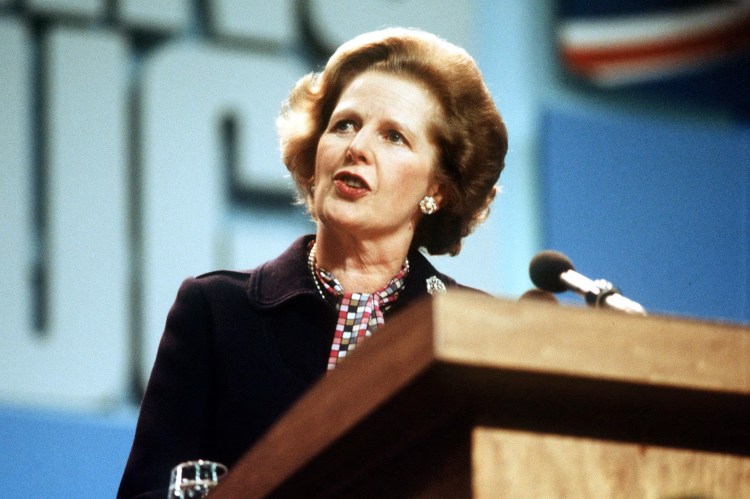
“Labour’s language may alter, their presentation may be slicker, but underneath, it’s still the same old socialism.”
This quote was spoken by former British Prime Minister Margaret Thatcher during her speech at the Conservative Party Conference on 9 October 1987.
The remark was made shortly after Thatcher won her third consecutive general election victory in June 1987. In the speech, she argued that despite the Labour Party’s attempts to modernise its image and repackage its policies to appeal to a broader electorate, its core ideological foundation remained unchanged.
“And so our political opponents are now feverishly packaging their policies to look like ours. And it’s interesting that no Party now dares to say openly that it will take away from the people what we have given back to the people. Mr President, Labour’s language may alter, their presentation may be slicker, but underneath, it’s still the same old socialism. Far be it from me to deride the sinner that repenteth. The trouble with Labour is they want the benefit of repentance without renouncing the original sin.”
When Margaret Thatcher said this, she meant that even though the Labour Party was trying to change its look and sound more modern, its core beliefs had not changed.
She was warning voters: “Don’t be fooled by their new look; they are still the exact same party they have always been.”
Political parties use slick marketing and glossy packaging to hide the fact that, at their core, their fundamental nature and flaws never truly change.
While social media allows political parties to tailor their cosmetic packaging directly to individual voters, history shows that true structural changes to a party’s core identity only happen during major national crises or long-term shifts in society.
While parties use TikTok memes and targeted digital ads to polish their image, the underlying reality is that British politics has fractured along generational and educational lines, breaking the traditional two-party system.
While political parties use highly managed meme networks and private apps to manufacture a relatable public image, the actual electoral map reveals a country deeply fractured by age and education rather than traditional class lines.
While political parties weaponise targeted digital apps and platform-specific aesthetics to exploit deep demographic divides, independent regulators are scrambling to enforce digital tracking rules and block generative AI threats to preserve electoral integrity.
While the government rushes to test new digital imprint mandates and launch a centralised Information Defence centre to protect local elections, weaponised deepfakes—such as the highly realistic audio clones targeting Sadiq Khan and Keir Starmer—demonstrate how easily synthetic media can threaten public order and warp political reality.
While nearly 90% of the UK public is deeply worried that political deepfakes are damaging democratic trust, people remain highly divided over whether tech platforms should be forced to delete them or if government regulation risks censoring free speech.

