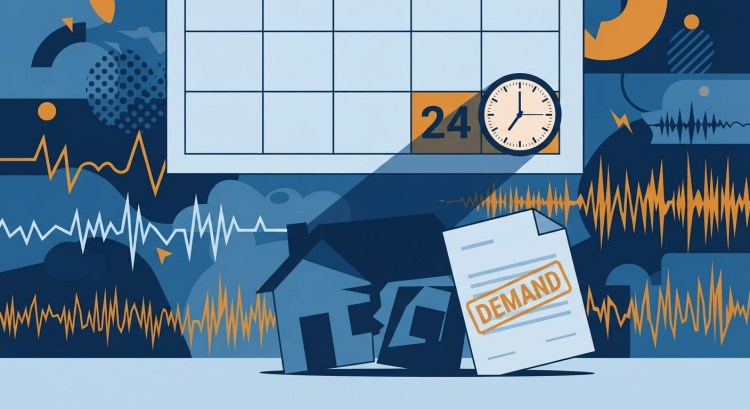
Hillingdon Council was found to have acted unlawfully by the Local Government and Social Care Ombudsman after giving an autistic man with mental health conditions a 24-hour ultimatum to provide a police report or face having his homelessness case closed.
The man, referred to as Mr X in a Local Government and Social Care Ombudsman report, lives with a number of mental health conditions and is autistic, which means he is oversensitive to noise. The council failed to make timely enquiries to evaluate how his housing crisis impacted him as a result.
In 2021, Hillingdon Council accepted a homelessness relief duty for Mr X and supported him in securing a room within a house in multiple occupancy (HMO) outside the borough.
In late July 2025, Mr X submitted a new homelessness application stating it was no longer reasonable to live in the property due to anti-social behaviour and excessive noise from fellow occupants, supporting his claim with two medical reports and an indication that he required assistance with budgeting and benefits.
In August 2025, Hillingdon Council requested that Mr X provide a police report to prove he could no longer remain at the property, giving him just 24 hours to submit the evidence or face having his homelessness application closed.
Although Hillingdon Council was not found at fault for failing to consider Mr X’s medical evidence, the Ombudsman ruled that it acted wrongfully by failing to make timely enquiries and properly assess that evidence alongside his housing circumstances, a failure the council later acknowledged after admitting that demanding a police report was “not strictly necessary.”
The Ombudsman concluded that the council’s handling caused an unnecessary delay in progressing Mr X’s homelessness application, leaving him in a state of prolonged uncertainty.
In September 2025, an NHS community-based mental health service issued a letter explicitly stating that Mr X’s accommodation in the HMO was “wholly unsuitable” for his needs.
Although the council later apologised for the delay in handling his application, the watchdog stated they “[did] not consider the council’s apology sufficient to remedy Mr X’s uncertainty caused by the delay.”
Because Hillingdon Council was aware of Mr X’s disabilities, it had a duty to consider reasonable adjustments when he requested support, making its failure to offer appropriate assistance a fault that caused the man “avoidable distress”.
In late October 2025, the council agreed to specific reasonable adjustments to support Mr X, including communicating in writing only, avoiding phone contact, and providing direct assistance with uploading evidence to its housing portal.
The local authority also offered to arrange an in-person meeting in a quiet room near the council’s reception at Hillingdon Civic Centre, and it must now apologise to the man and make a symbolic payment of £100 for the distress caused.
The Ombudsman has also urged the council to remind staff, by way of training or briefing, of its duties when considering homelessness applications and how it must consider reasonable adjustments under the Equality Act when an applicant indicates that they may need support.

