Unwarned And Harmed

Dozens of women who used Depo-Provera say they were never warned of a potential brain tumour risk, and now live with devastating consequences including sight loss, bulging eyes and meningiomas.

Doctors have been instructed to warn women about the risk of brain tumours linked to a contraceptive injection after dozens of women came forward saying they suffered life-changing injuries and were never told of the potential danger.

The issue came to light after reports highlighted women who say they suffered severe, life-altering injuries following years of Depo-Provera use, including sight loss, bulging eyes and brain tumours. Many claim they were never informed of the potential risk when receiving the contraceptive injection.

Updated guidance has now been issued to GPs, nurses and pharmacists, instructing them to clearly explain the risk of meningioma, a non-cancerous brain tumour, to women considering Depo-Provera so they can make a fully informed decision about the contraceptive injection.

Tammy Croston, 47, from Cupar in Fife, lost the use of one eye after surgery to remove one of four meningiomas went wrong, leaving her with life-changing injuries.

Welcoming the updated guidance, Tammy Croston said women prescribed Depo-Provera had never been warned about the potential risk of developing a brain tumour, and described the new measures as a positive step toward ensuring patients are properly informed.

Croston said women should have been warned about the potential risk from the outset, arguing that a lack of information left many users facing life-altering injuries that might have influenced their treatment decisions.

Croston said some women had raised concerns about a possible connection between Depo-Provera and brain tumours with their doctors, only to find that healthcare professionals were not aware of any reported link, and she hopes the updated guidance will improve awareness in the future.

Croston said that if the new guidance helps spare other women from experiencing the same suffering and life-changing consequences, then it will represent an important step forward in protecting patients and improving awareness of the potential risks.

The updated guidance also instructs healthcare providers to reassess the use of Depo-Provera every two years and ensure appropriate action is taken if a tumour is suspected. However, while the document describes the risk of developing a meningioma with frequent use as a “small chance”, some affected women strongly dispute that characterisation.

Research published in the British Medical Journal in 2024 found that women who used Depo-Provera were significantly more likely to be diagnosed with meningiomas than those who had never used the contraceptive. Meanwhile, around 150 Scottish women are being represented by Thompsons Solicitors in claims seeking damages from drug manufacturer Pfizer over the alleged effects of the injection.

Women taking the menopause medicine Provera alongside estrogen should be aware that it contains the same active hormone, medroxyprogesterone acetate, as Depo-Provera, although it is used differently, and recent safety updates have also highlighted a rare meningioma risk with prolonged use of high-dose formulations.

Provera and Depo-Provera contain the same active drug, medroxyprogesterone acetate; the main difference is that Depo-Provera is a long-acting depot injection designed to release the medication slowly over several months, whereas Provera is taken as tablets.

Age is an important factor when weighing the risks and benefits of hormone treatments, as the likelihood of certain complications generally increases as women get older, which is why treatment decisions are often based on an individual’s age, medical history and overall health profile.

Anyone who has used Depo-Provera for a long time and is concerned about these reports should speak to their GP and discuss whether any further assessment or investigation is appropriate for their situation.

All women who were prescribed Depo-Provera should be offered the opportunity to discuss screening with their doctor, particularly if they have concerns, as many feel they were never fully informed of the potential risks when the drug was prescribed.
Calculus Over Cookery: Why Modern Schools Are Failing The Real World

Schools successfully teach teenagers how to calculate the area of an isosceles triangle, yet leave them completely defenceless against a gas bill, a raw chicken breast, or a leaky U-bend.

Teaching practical life skills equips teenagers with the ultimate survival guide for adulthood, transforming them from exam-passing robots into functioning humans who can actually decode a food label, sew a button, and face a gas bill without panicking.

While introducing life skills shouldn’t replace core academic subjects on an already bursting timetable, providing structured lessons creates a level playing field, ensuring every teenager gets a basic survival foundation regardless of whether their parents can teach them at home.

A truly useful life skills course would swap tedious exams for hands-on, survivalist training, featuring age-appropriate lessons on everything from defusing a ticking financial time bomb of a monthly bill to successfully navigating the digital wilderness after graduation.

While a university degree might open the front door of adulthood, it is everyday competence that stops you from accidentally burning down the kitchen or being defeated by an IKEA flat-pack once you get inside.

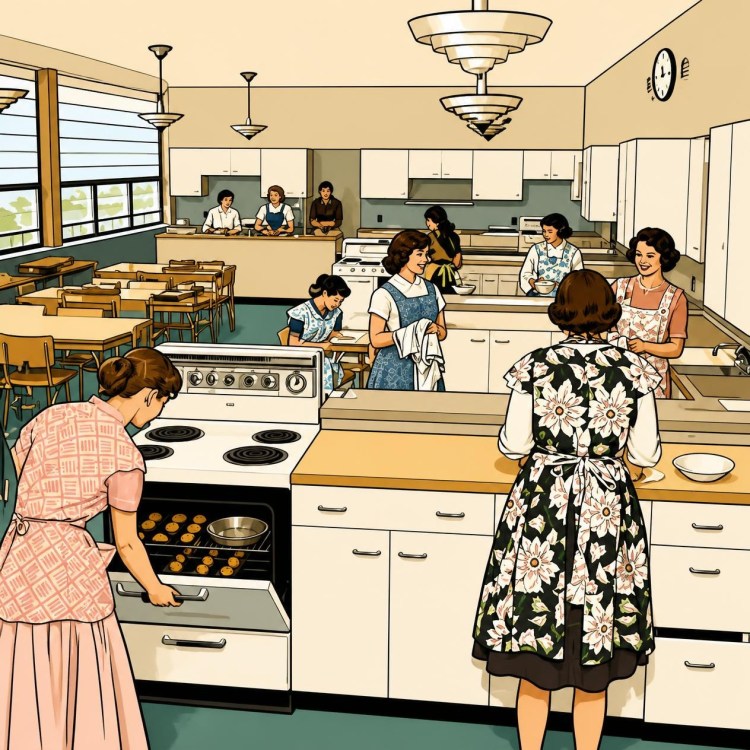
Traditional Domestic Science rooms with ovens and sewing machines have largely vanished, replaced by rushed, one-hour slots where students learn the chemical science of food rather than the life skill of cooking a family meal from scratch.

The ultimate school rite of passage was spending weeks sewing your own apron and matching headband just to be legally allowed to set foot in the cookery room and burn a batch of scones.

The shift toward a heavily academic, test-driven curriculum mandated by the government has forced schools to slash time for practical subjects, leaving children without the precious hours needed to master cooking from scratch.

A thriving society demands a balanced mix of both academic minds and practically skilled individuals to successfully build, lead, and maintain our future.

Integrating real-world applications into core subjects—like using math to calculate household budgets and bills, or using English to draft professional CVs and job application letters—would directly prevent youth debt and ensure all students graduate with essential employment skills.

The ultimate test of teenage willpower in 1970s Home Economics was trying to transport a warm bag of freshly baked scones all the way home on the school bus without devouring them on the spot.

Using ready-rolled pastry is an absolute travesty when the real joy of cooking lies in getting your hands completely claggy and gooey, making it yourself from scratch.

Fund Independence, Not Dependence

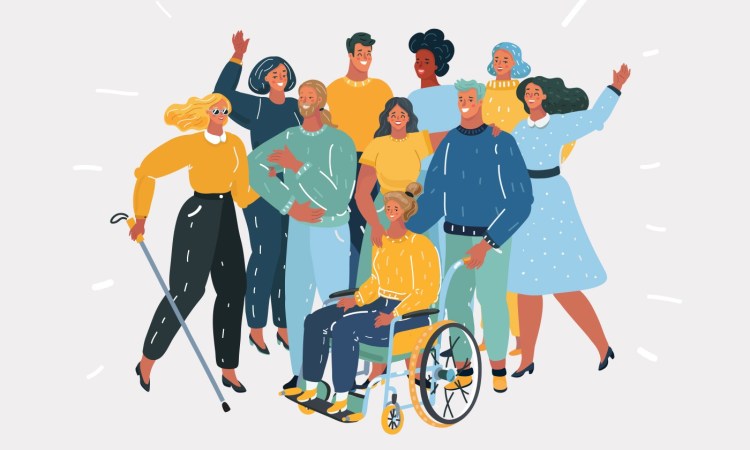
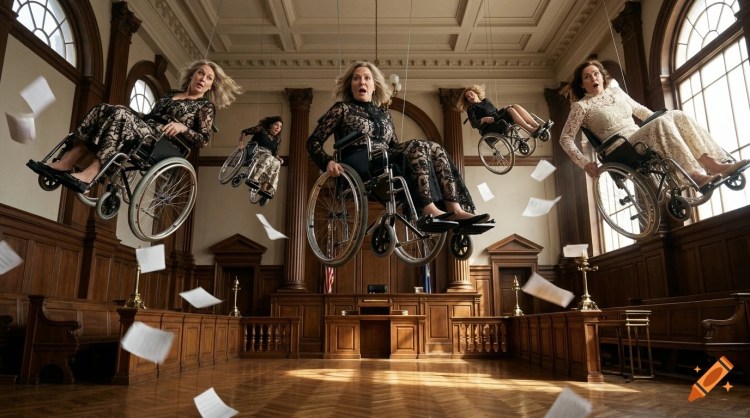
Frances Ryan’s critique highlights a paternalistic system within disability services that limits funding for travel support, effectively treating disabled individuals as passive recipients of care rather than autonomous citizens entitled to live full, independent lives.

A joint investigation across England reveals that local care providers are effectively barring disabled individuals from foreign travel by refusing to fund necessary costs for their personal assistants.

There’s 38-year-old Lucy from Oxfordshire who needs to travel internationally as the president of the European Spinal Cord Injury Federation. And Chelsea from Lancashire, a 25-year-old with cerebral palsy who dreams of swimming in Spain again. Then there’s 40-year-old Joel, who has muscle weakness and works for a global marketing brand but hasn’t been able to leave the UK for nine years.

Whether funded through NHS continuing healthcare or local authorities, high-needs individuals face a rigid institutional wall that bans them from using their care packages abroad, even if they pay the extra travel expenses themselves.

Because there is no national guidance on the issue, disabled people face a strict postcode lottery where local care officials hold the sole power to decide if, where, and at what personal cost they are permitted to travel.

In response to the scandal, high-profile political figures including Debbie Abrahams, Baroness Jane Campbell, and Jeremy Corbyn have called on the government to establish clear national guidelines that guarantee disabled people the right and support to travel.

Critics’ claims that this allows for “free holidays on the NHS” are completely false, as care users already have daily funding in place and routinely pay all extra travel expenses themselves or through employers.

The bureaucratic resistance to disabled people travelling abroad points to a deep-seated cultural prejudice that views them merely as passive care recipients rather than independent adults with careers, families, and full lives.

Despite sixty years of progress toward independent living, a patronising, medicalised approach still targets disabled individuals, reducing their autonomy to cheap compromises and bureaucratic convenience.

An unwritten rule in society—and an explicitly written one in some newspapers—demands that disabled people remain silently grateful for state support, weaponising the fear of being labelled a burden to discourage them from speaking out against systemic injustice.

This insidious form of prejudice is deeply uncomfortable precisely because it is so ordinary, operating not through overt slurs or physical violence, but through a gentle, everyday belief that certain kinds of lives simply come with lower expectations.

It is deeply frustrating when public indifference is fueled by the false assumption that taxpayers are funding “free holidays,” ignoring the clear fact that the day-to-day care budget is already allocated and disabled individuals pay all extra travel expenses out of their own pockets.

Whether it is a rigid ban on using a care package abroad or inflexible 9-to-5 medical delivery windows that disrupt full-time work, these systemic barriers prove that unequal care provision acts as a direct roadblock to independence.

Denying independent adults the right to use their own savings and care packages for travel under full informed consent raises serious safeguarding concerns, exposing a glaring double standard where governing bodies escape the very accountability they demand from individual carers.

Systemic barriers send a clear message that disabled people are quietly permitted to exist, but are certainly not expected to actually live.

Adding insult to injury, society often demands that disabled people remain humble and deeply grateful for their mere survival, weaponising the fear of appearing ungrateful to silence any resistance to systemic inequality.

Widespread “inspiration porn” and infantilisation reduce routine tasks like grocery shopping to spectacles of cheap praise, forcing disabled adults to endure unwanted physical contact and unprompted prayers from strangers who refuse to simply mind their own business.

Service Builds Character

National Service fostered discipline and bridged social divides for millions of young men. It strips away all entitlement, instilling a profound self-reliance and perspective that forges a transition into manhood.

The debate over reintroducing National Service hinges on whether a mandatory scheme would successfully foster social cohesion and national resilience, or if it would simply impose an expensive, impractical burden on a modern, professional military.

Supporters believe reintroducing National Service would break through teenage entitlement by offering a sobering, grounding lesson in the harsh realities of national defence and the true cost of conflict.

Supporters maintain that National Service is inherently character-building because it instils personal discipline, fosters resilience through shared challenges, and cultivates a lasting commitment to civic duty.

Modern examples like Norway’s selective draft, Singapore’s civic-military splits, and Switzerland’s community service pathways prove that National Service can be successfully tailored to build character and resilience without forcing every recruit into frontline combat.

Advocates argue that National Service is essential to counter the perceived softness of modern youth by forcing them out of their comfort zones and teaching them the true value of hard work and resilience.

National Service serves as a transformative rite of passage, utilising rigorous physical fitness, leadership training, and collaborative teamwork to forge a disciplined work ethic and unlock a young person’s true potential.

While public opinion remains deeply divided, reintroducing National Service would ultimately give young people the essential backbone and resilience they need to successfully navigate the hardships of adult life.

By enforcing a strict, standardised regime focused solely on merit and discipline, National Service completely strips away modern political correctness and identity politics to unite all recruits under a single, shared purpose.

A one-year mandatory National Service scheme would provide sufficient time to instil deep discipline, build physical fitness, and deliver meaningful character-building training without permanently disrupting a young person’s long-term career or education.

By proposing a one-year National Service term, the goal is not to deploy young people into active warfare, but rather to use structured, non-combat training as a safe environment for building character, resilience, and practical life skills.

One year of National Service is designed to foster a profound sense of belonging rather than a sense of violence, shifting the focus away from conflict and toward civic pride, teamwork, and community unity.

By adopting the modern military shift from aggressive shouting toward constructive mentoring, this scheme ensures that disciplining recruits focuses entirely on building their character rather than breaking their spirit.

Budget Cuts Shouldn’t Cost Human Dignity

Disabled people fear they are being sacrificed to balance the books. When support is cut, services disappear, and legal aid is stripped away, the most vulnerable often pay the price. A fair society does not balance its finances on the backs of those who need help the most.

Rather than asking disabled people and low-income families to shoulder the burden of spending cuts, the government should focus on ensuring that those who avoid paying their fair share of taxes contribute properly, because a fair society does not balance its books by taking support away from the people who need it most.

Too often, disabled people are made to feel disposable, yet the line between disability and non-disability can be as thin as a single accident, illness, or change in circumstances. The support we provide today is the support any one of us may need tomorrow.

I am appalled by the way certain parts of the establishment seek to demonise disabled people, portraying them as a burden rather than recognising them as citizens deserving of dignity, support, and equal rights.

Many disabled people and pensioners feel increasingly overlooked, as though they are viewed as costs to be managed rather than citizens to be supported. When essential support is cut while concerns remain about tax avoidance, tax evasion, or public spending waste, it is understandable that people question whether the most vulnerable are being asked to carry too much of the burden.

Disability is not something that happens to “other people”. It can arrive in an instant through a stroke, a heart attack, an accident, a diagnosis, or any number of health conditions that can affect any one of us. Too often, people fail to understand the realities of living with a disability or chronic illness until it happens to them, and only then do they discover the financial, physical, and emotional costs that come with it.

What disappoints me most is not the disability itself, but the indifference. We all look after our own interests to some degree, but we are also a society, and a society has a duty to help those who cannot manage alone. Many disabled people are not asking for luxury or privilege; they are simply trying to survive with dignity. The sad reality is that too many people do not understand that struggle until it affects them personally.

Too often, disabled people are portrayed as a burden rather than as human beings facing challenges that most people cannot see. The reality is that many disabilities and chronic illnesses involve constant pain, exhaustion, and daily struggles that are invisible to others. Anyone who is able-bodied and feels envious of a disabled person should remember that most disabled people would exchange their condition for good health in a heartbeat. Before judging, take a moment to consider what it takes just to get through an ordinary day. Many disabled people deserve recognition not for extraordinary achievements, but for the courage and resilience it takes to keep going when every day is a pain day.

LEGAL AID, BRING IT BACK

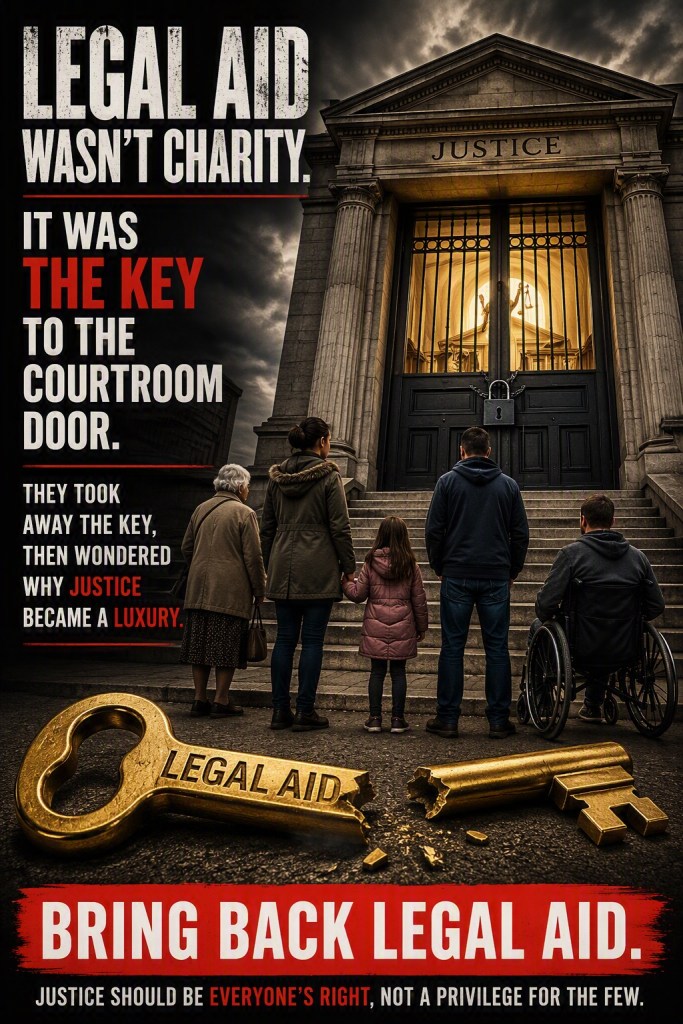
Legal aid wasn’t charity. It was the key to the courtroom door. They took away the key, then wondered why justice became a luxury. Bring back legal aid.

Since the Legal Aid, Sentencing and Punishment of Offenders Act 2012 (LASPO) came into force in 2013, large areas of law were removed from the scope of legal aid, including many family, employment, housing, debt, welfare benefits, and immigration cases.

There have been recent government reviews and proposals to strengthen parts of the system. In 2025, the Ministry of Justice described legal aid as “the cornerstone of our justice system” and proposed increases to some legal aid fees, particularly for housing and immigration work.

No money. No lawyer. No justice. Bring back legal aid.

Legal aid wasn’t abolished; it was hollowed out. The sign stayed on the door, but for millions, the door stopped opening.

Justice is slipping out of reach, and unless legal aid is restored, more people will be left to navigate a complex legal system alone, unable to defend their rights when they need help most.

It’s only right that people should be able to defend their rights, regardless of their income. A fair justice system cannot be reserved for those who can afford it, and legal aid must be there for those who need it most.

We need representation for many reasons: to protect our homes, defend our livelihoods, safeguard our families, challenge injustice, and ensure that ordinary people are not left to face a complex legal system alone simply because they cannot afford a lawyer.

Rights mean nothing if you cannot defend them.

Rights mean nothing if people cannot afford to defend them, which is why access to legal representation should not be a privilege for the few but a safeguard available to everyone, especially those on low incomes.

Most people who need legal representation are not trying to exploit the system; they are dealing with some of the most important issues of their lives, including divorce, housing disputes, child protection proceedings, and family matters. When legal aid is unavailable, many are left to face complex legal processes alone at exactly the moment they need support most.

When your home, your children, or your future is on the line, representation is not a luxury. It’s a necessity.

Many low-income families cannot understand why someone accused of a crime may qualify for legal aid, while parents fighting for their children, tenants trying to keep a roof over their heads, or families facing crisis often struggle to access the same level of support.

In the UK, legal aid in its modern form dates back to the Legal Aid and Advice Act 1949, which was introduced as part of the post-war welfare state. That means legal aid has existed for over 75 years.

It worked for ordinary people. It had been part of British life for generations, helping families protect their homes, their children, and their rights. Then, after decades of service, huge parts of it were swept away, leaving many to face the legal system alone when they needed help most.

Our government must restore legal aid to ensure that those who need it most are not denied justice simply because they cannot afford legal representation. For generations, legal aid has helped ordinary people protect their homes, their families, and their rights. Access to justice should be a cornerstone of a fair society, not a privilege reserved for those with the means to pay for it.

The Illusion Of Agricultural Progress

The dark, satirical image of a skeletal farmer spraying fields under a choked, industrial sky serves as a stark visual summary of our modern food system. It brings to life a profound environmental paradox: humanity is the only species that actively contaminates its own food supply with toxic chemical pesticides while celebrating the practice as technological advancement. Under the false guise of progress, mass-production techniques prioritise short-term chemical yields over long-term environmental and human safety.

Compounding this irony, globalised trade policies frequently force consumers to pay exorbitant prices for imported meats and vegetables that have sacrificed both flavour and nutritional value during long-distance transit, all while high-standard domestic farming systems are left underfunded. Ultimately, a system that prioritises chemical intervention and international shipping miles over fresh, transparent, local farming creates an expensive illusion of choice that sacrifices our health, our environment, and our culinary quality.

We’ve managed to invent a system where we microdose bug spray through our salads, get sick, and then take pill versions of more chemicals to fix it—congratulations, humanity, we’ve successfully monetised the poison loop.

…effectively turning our dinner plates into a science experiment where the vegetables do the spraying for us, all so we can pay a premium later for a pharmaceutical antidote to our own groceries.

Leaving us stranded in a bizarre reality where our tomatoes come with a built-in pest defence system, our medicine cabinets look like chemistry sets, and the only thing truly growing organically is the profit margin of the companies selling us both the poison and the cure.

The reality of the modern global food system means that nearly all non-organic, mass-produced food undergoes some form of chemical treatment or processing long before it ever reaches your kitchen.

This breakdown exposes the uncomfortable truth that our weekly grocery haul undergoes a gauntlet of chemical treatments from seed to supermarket shelf long before it ever touches a frying pan.

Because systemic pesticides are absorbed directly into the cellular tissue of non-organic crops as they grow, they cannot be washed off in the kitchen sink, turning a standard supermarket vegetable into a visual guessing game where consumers have no way of knowing its true chemical load.

Leaving us to blindly trust a corporate supply chain that treats transparency like a trade secret, where our only real choice at the supermarket checkout is deciding which invisible cocktail of chemicals we feel like risking for dinner.

AJEX 2026: Marching For Our Past, Standing For Our Future

The Jewish Military Association (AJEX) is calling on the UK Jewish community to register and march at the Cenotaph on Sunday, 15 November 2026, under the theme “British. Jewish. Proud.”

This milestone event marks 90 years since the Battle of Cable Street and pays tribute to the thousands of Jewish men and women who have served the nation. Pointing to the significance of the event, AJEX Chief Executive Fiona Palmer emphasised that the 2026 parade focuses on honouring history while building a resilient future for the community.

The powerful historic solidarity between the Irish and Jewish communities is one of the most defining aspects of the Battle of Cable Street. On 4 October 1936, Irish dockworkers, trade unionists, and local families actively stood shoulder-to-shoulder with their Jewish neighbours, tearing up paving stones and erecting barricades to block Oswald Mosley’s British Union of Fascists.

This unwavering unity under the legendary rallying cry “They Shall Not Pass” is precisely what the upcoming AJEX Remembrance Parade 2026 seeks to honour as part of its 90th-anniversary commemorations.

The Together on Cable Street campaign, alongside major Unite the Union commemorative events, underscores that the legacy of that historic victory belongs to the entire multicultural, working-class East End community.

Public comments highlight a profound pride in the historic Irish-Jewish solidarity of Cable Street alongside a determination to march under the theme “British. Jewish. Proud.

We should be teaching our children about the Battle of Cable Street, because it provides a powerful way to explore community, standing up against bullying and hatred, and the strength found in solidarity.

Providing children with a comprehensive Holocaust education builds an indispensable historical foundation while imparting vital universal lessons on human rights, empathy, and the extreme dangers of unchecked societal prejudice.

Societal prejudice represents the collective, deeply embedded biases and negative stereotypes that a community holds against specific groups based on their race, religion, ethnicity, or background.

Despite witnessing the catastrophic devastation that unchecked prejudice inflicts throughout history, society remains trapped in a dangerous cycle, repeatedly chanting the same tolerant formulas while failing to confront the root causes of rising division.

At our core, no human being is inherently superior to another, because we all breathe the same air, bleed the same blood, and share the same fundamental humanity.

Tragically, despite our identical biology and the brutal lessons of the past, humanity remains trapped in a destructive cycle, continuously choosing to spill the blood of those we are taught to hate.

Grief Vs. Freedom: The Battle For Harry’s Truth

While Prince Harry’s profound grief over the tragic loss of Princess Diana is universally understood, there is a growing consensus that allowing this enduring trauma to anchor his public narrative risks overshadowing his current achievements and independent future.

Prince Harry was just 12 years old when his mother, Diana, Princess of Wales, tragically died in a car crash in Paris in 1997.

The sudden and chaotic loss of his mother under such an intense global spotlight inflicted a deep emotional trauma that will likely stay with him forever.

Grief carries no expiration date, and no one has the right to dictate how or when another person should heal from a profound loss.

Time does not erase a son’s longing for his mother, and the passage of decades cannot diminish the quiet ache of her absence.

However, honouring Diana’s memory is distinctly different from allowing her tragic death to repeatedly dominate public interviews, documentaries, books, and explanations for modern-day decisions.

For nearly three decades, Harry has consistently linked his personal anxieties, intimate relationships, and deep-seated rifts with the Royal Family directly to the enduring trauma of his mother’s death.

That deep-seated pain undoubtedly deserves absolute compassion.

Continually revisiting that loss on a global stage risks projecting an image of a man permanently anchored to his childhood’s darkest hour.

Prince Harry’s profound and lifelong grief over the 1997 death of his mother, Diana, Princess of Wales, commands deep compassion as a natural and enduring human experience. However, continually anchoring his public narrative, personal decisions, and family rifts to that childhood tragedy risks overshadowing his independent future and current achievements.

The true concern lies in watching her tragic death transformed into recurring public material, or routinely weaponised to validate every modern disagreement and personal choice.

Ultimately, Diana’s legacy was vastly greater than the tragic circumstances of her death, and reducing her memory to an endless catalyst for modern conflict does a disservice to the vibrant, impactful life she actually lived.

She was defined by compassion, courage, warmth, and service.

Though Prince William suffered the same devastating loss at age 15, he has largely chosen to honour her by quietly weaving her values into his public service while protecting his grief as a deeply private matter.

While it is true that we all grieve differently and no two people process trauma the same way, the contrast between the brothers highlights how the same tragedy can manifest in completely different public paths.

While Harry retains an absolute right to mourn his mother, drawing a line between personal tribute and commercial media contracts ensures that an incomparable family tragedy isn’t used to generate multi-million-pound profit.

While it is natural to feel that public mourning should have transitioned into celebrating fond memories years ago, the unpredictable timeline of personal grief means childhood trauma rarely resolves cleanly.

Ultimately, any mother would simply want her son to move forward and live a full, happy life—not to forget her memory, but to step out from its shadow and embrace his own independent future.

By carving out his own path, much to the chagrin of “The Firm,” Harry’s refusal to bow to rigid royal expectations has earned him a distinct popularity among those who celebrate his personal independence.

It is fundamentally unfair for anyone to judge Harry’s feelings or set a deadline on his healing, especially considering the relentless, vile public abuse he and Meghan face alongside a painful rift with an institution that prioritised corporate duty over basic family support.

For those who believe him, Harry’s decision to speak out is a necessary exposure of institutional secrets, rooted in the firm conviction that the ultimate truth will always find a way to come out.

Pharmacy First: GP Bypass, Chemist Bottleneck

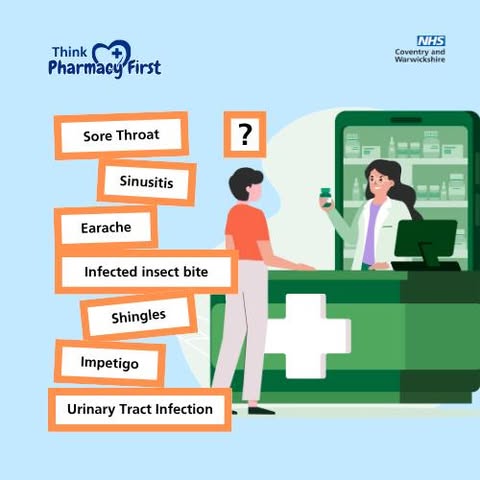
The NHS has expanded its Pharmacy First scheme across England to allow patients to get immediate consultations and prescriptions for migraines, mild-to-moderate acne, scabies, adult ear infections (acute otitis externa), and childhood hay fever (seasonal allergic rhinitis) directly from a participating high street chemist without needing a GP appointment.

This change allows people to get treatment at a time that fits their everyday schedule rather than booking a GP appointment, which the NHS hopes will significantly ease pressure on family doctors.

Dr Amanda Doyle, NHS England’s National Director for Primary Care and Community Services, highlighted that community pharmacy teams have already provided fast, convenient high street treatment to millions of people, emphasising the NHS’s commitment to making healthcare access as easy as possible.

Dr Doyle added that as part of winter preparations, the NHS aims to maximise community support so patients can get help locally and avoid unnecessary hospital admissions.

Dr Doyle concluded that by offering direct pharmacy care for these new common conditions without a GP appointment, family doctors will be freed up for patients who need them most during the colder months.

Prime Minister Andy Burnham supported the decision by noting that the public is tired of the frantic struggle to secure routine GP appointments, emphasising that the pharmacy expansion delivers immediate, localised care without forcing people to take time off work.

Prime Minister Andy Burnham concluded his announcement by promising that the service expansion will give families back precious time by allowing them to walk into a local chemist and receive immediate treatment for these five additional common illnesses.

Prime Minister Andy Burnham concluded by emphasising that the localised expansion of Pharmacy First will bring noticeable, day-to-day relief to families, catching health issues earlier while successfully saving precious time and reducing demand on critical GP and A&E resources.

Health and Social Care Secretary Yvette Cooper championed the expansion, noting that the Pharmacy First scheme already provides millions with quicker, more accessible care closer to home, and expanding it will make it even simpler for people nationwide to get advice and treatment precisely when they need it.

Health and Social Care Secretary Yvette Cooper added that community pharmacies are central to moving treatment into local areas, emphasising that the initiative fully utilises the expertise of skilled pharmacists for on-the-spot care while easing NHS pressure through early medical intervention.

Rob Music, Chief Executive of The Migraine Trust, enthusiastically welcomed the inclusion of migraine in the Pharmacy First scheme, stating that the organisation has actively campaigned for a wider expansion of localised migraine care following the measurable success of a pilot programme in Scotland.

Despite the political optimism, frontline pharmacy workers and trade bodies have raised significant concerns regarding severe workforce shortages and pre-existing operational deficits. Industry representatives warn that because the law requires a registered pharmacist to complete the final clinical and safety check on every single prescription, forcing heavily stretched staff into prolonged private clinical consultations could drastically delay standard dispensing queues.

If they give you a treatment, do you have to pay?

The consultation and medical advice from the pharmacist are completely free, but standard NHS prescription rules apply to any medication you are given.

However, this is absolutely rubbish because when I had a consultation with the pharmacist, I was made to pay for mine, and I am over 60 years old.

This was incredibly frustrating, and I was understandably angry when I found out that I shouldn’t have paid.

If you are over 60, you are legally exempt, and if you are forced to pay after a consultation, then something is very wrong with how the transaction is processed.

Public comments on the scheme reveal a stark divide: while some patients praise the speed of bypassing the GP morning phone scramble, a significant number express immense frustration over hidden retail costs and system confusion, alongside widespread concern from frontline pharmacists who warn that the extra workload is pushing their already exhausted teams to a breaking point.

Create your own website, free on WordPress.com.Create your own website.
Start free