Discharged To Die — Queen’s Failed Her

A Hornchurch woman died only days after being discharged from Queen’s Hospital, with a coroner concluding that the care she received in A&E was inadequate and that she should have been admitted.

Daisy Lyons, who had complex needs and depended entirely on her family and carers, was taken to Queen’s Hospital in Romford on 28 December with a severe, persistent cough.

She waited three hours before being seen and was then discharged with Piriton and codeine syrup, the inquest heard.

Five days later, the 31‑year‑old suffered respiratory arrest due to a severe chest infection, and she died on 2 January after treatment was withdrawn.

After hearing evidence from Queen’s Hospital doctors at East London Coroner’s Court on Friday (August 14), Dr Shirley Radcliffe concluded that “too many small things went wrong which resulted in the death of Daisy”. 

The coroner said the treatment Daisy received at A&E was “inadequate” and that she should have been admitted for further treatment rather than discharged the same day. 

“If she had been admitted, expert opinion was that it was more likely she would not have died at Queen’s Hospital on January 2,” Dr Radcliffe said. 

Sandra and Terry Lyons have long maintained that Daisy’s death could have been prevented.

Sandra said she felt Daisy’s disabilities meant she was consistently treated as “bottom of the food chain” in A&E.

Terry said that, over the years, it had become clear to them that A&E doctors were often uncomfortable treating someone who was non‑verbal.

He said Daisy should still be alive today — laughing, giggling, and sitting out on the patio enjoying the sunshine.

Terry said he hopes Daisy’s death will lead to changes in how people with complex needs are treated in A&E departments.

Daisy had a long‑standing history of severe learning disabilities, scoliosis, dysphagia, and repaired congenital heart conditions.

She was non‑verbal and entirely dependent on a wheelchair.

Despite her complex needs, Sandra said Daisy had spent much of her life “happy and healthy.”

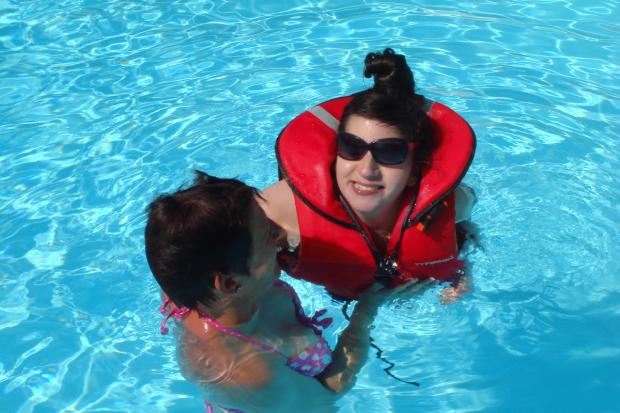
She travelled widely and loved swimming, as well as trips to the cinema, theatre, and fairgrounds.

Sandra said Daisy was “the apple of everyone’s eye,” adding that she had never known anyone more loved.

“She will be missed more than words can ever express.”

The inquest heard from three witnesses from Barking, Havering and Redbridge University Hospitals NHS Trust – which runs Queen’s – and independent expert Professor Jerry Nolan, who is a consultant in anaesthesia and intensive care medicine. 

The hospital’s standards are a matter of serious concern and warrant a full investigation, including unannounced spot checks.

I hope Daisy’s family consider pursuing a compensation claim against the hospital.

Queen’s Hospital need to urgently address these issues, because similar incidents are probably occurring daily.

Queen’s Hospital is a “nightmare”, and its ongoing problems demand urgent attention.

Hospitals should return to the era when matrons led their wards with dedication and pride. Families now often face long waits for assistance, while many nurses remain highly committed; overall standards are inconsistent and leave much to be desired.
The NHS as a whole is in serious trouble, with widespread pressures and systemic failings now impossible to ignore.

Patients are waiting hours just to be triaged, then facing further delays for assessment, and then waiting yet again for a bed — a pattern that is unsafe and systemic.

Demand had risen sharply, particularly from people unable to access GP appointments or urgent community care. As a result, A&E has become the default entry point for almost every type of health concern — from minor injuries to severe crises — overwhelming the system before patients even reached triage.

GPs need to actually see their patients instead of sitting behind their desks having a good old nose‑picking session — because at this rate, the only thing getting examined is their sinuses.
When The Council Shrugs, Families Pay The Fall

A preventable death is a failure of duty — a child lost because warnings went unanswered.

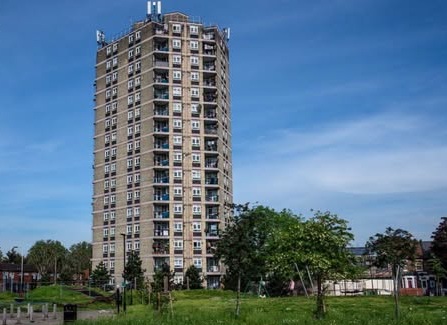
Aalim Ahmed’s fall from a 15th‑floor kitchen window was a preventable tragedy — a child lost in seconds, after months of warnings that went unanswered.

Sahra Osman told the coroner she had repeatedly warned Newham Council about unsafe windows — concerns raised long before her son’s fatal fall.

Sahra Osman said her son’s autism left him with no sense of danger, and that he may have climbed up while reaching for a biscuit. She told the inquest the window restrictors were faulty and that repeated visits from workmen failed to fix them.

Giving evidence, Sahra Osman said she had done everything she could to protect her son. She described feeling scared and horrified when the council placed her, heavily pregnant, in a top‑floor flat needing repairs — a home she never believed was safe for her family.

She told the court she had been advised to accept the flat and raise her concerns afterwards, rather than risk homelessness by refusing the property.

Ms Osman said she kept raising concerns about the windows after moving in, and the court heard she had also notified Newham Council of Aalim’s autism diagnosis by email.

She said she believed she had sent a further letter about his condition, and the inquest heard that people who knew Aalim had also written to the council warning that the family needed to be moved because they were not safe.

Ms Osman told Newham Council’s representative, Sandesh Singh: ‘You guys could have prevented this tragic thing from happening. If you had done your job, he could have been here.

I think that Newham Council failed her as a mum, as a tenant.

Her testimony highlights a systemic failure: repeated safety warnings about a vulnerable child were raised, documented, and reinforced by others — yet no effective action was taken. The risk was known, communicated, and preventable, but the system did not respond.

Her evidence points to a clear systemic failure: she repeatedly raised concerns about the unsafe windows, notified the council of Aalim’s autism and his lack of danger awareness, and believes she sent further written warnings. Others who knew the family also wrote to the council, stating plainly that the flat was not safe and the family needed to be moved.

Despite multiple alerts from different sources, no effective action was taken. The risk was known, documented, and communicated — yet the system failed to respond, leaving a vulnerable child exposed to a preventable danger.

Fifteenth floor with a toddler? That’s not housing allocation — that’s someone at the council playing Jenga with real families.

Fifteenth floor with a toddler? That’s not housing allocation — that’s Newham Council’s idea of an escape room.

Councils have a duty of care to make sure their properties are safe — not just hand over keys and hope for the best.

This is just crazy. People in these flats: if the windows aren’t safe when you’re offered them, safety shouldn’t be something you discover after you move in.

The council should be ashamed of themselves — you can’t ignore warnings, leave families in danger, and then act surprised when something goes wrong.

The parents were asleep — it was 6 am — and the family had already reported the faulty window locks multiple times. This wasn’t bad parenting. This was a safety failure.

Some children can open windows and fall in seconds — she could’ve literally been in the toilet, and it still could’ve happened. There’s no point blaming the parents. The little boy is gone, and he’s not coming back, so can we please just be decent humans and show support, sympathy and respect to each other.

Hop On… If You Can

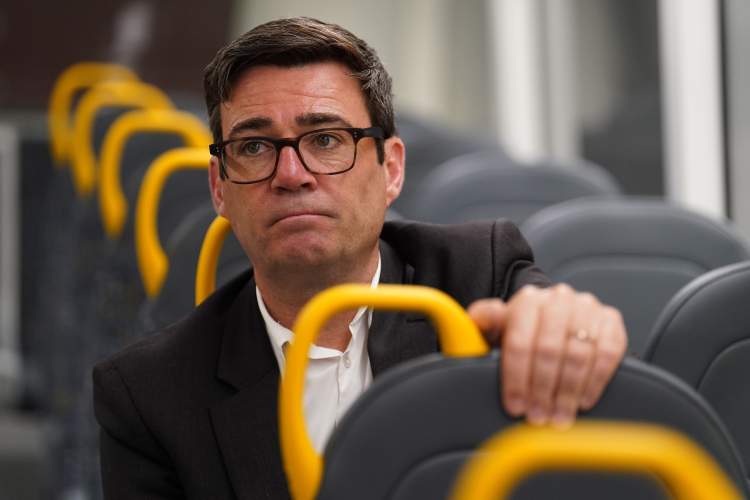
Andy Burnham basically walked out this week and said, “Right, that’s it — disabled people can get on the bus whenever they fancy. Midnight? Dawn? After a kebab? Go on then, hop aboard.”

It’s like he’s handed out 24/7 golden tickets, except instead of Willy Wonka’s chocolate factory, it’s the 86 to Piccadilly with a bloke eating crisps at 7 am.

Honestly, the way he announced it, you’d think he’d just solved world peace. But fair play — he’s ended the bizarre rule where disabled people could only travel after 9:30 am, as if they were vampires who weren’t allowed out before daylight.

Some councils must be fuming: “WHAT DO YOU MEAN they can travel at 8:59?! We’ll have chaos!” Meanwhile, Burnham’s there like: “Grow up. Let people get to the doctor’s without needing a tactical military timetable.”

It’s all very well giving disabled people the “Congratulations, you can ride whenever you want!” Wonka ticket… but have you SEEN a British bus at rush hour?

You’re stood there thinking, “Lovely, I can travel for free now,” while the 7:42 pulls up already full of commuters, school kids, three prams, someone’s emotional support dog, and a bloke who’s decided the priority seat is his personal throne.

The driver opens the doors, looks at the crowd, sighs like he’s doing Shakespearean tragedy, and mutters: “There’s no room. Next one’s in… whenever it feels like it.”

Burnham’s policy: free travel for disabled people, 24/7! Reality: the bus is already full of people who got on at the previous stop because it’s the only one that actually turned up.

It’s like giving everyone VIP access to a nightclub… but forgetting the nightclub is the size of a broom cupboard.

Free travel is brilliant — but you still need a bus that actually arrives, has space, and isn’t “terminating early due to reasons,” which is bus‑driver code for:

“I’m fed up, Sandra. I’m going home.”

Because Burnham can hand out golden tickets like he’s Willy Wonka, but if the 47 is already stuffed with commuters, three prams, a dog wearing a jumper, and someone’s weekly shop balanced like Jenga, then disabled people aren’t boarding — they’re just waving at it as it sails past like the world’s saddest parade float.

And the “terminating early” thing? Oh please. British buses terminate early more often than relationships on Love Island.

You’re stood there thinking, “Lovely, free travel!” and the bus is thinking, “Not today, mate.”

Wheelchair users do have friends, you know — and some of those friends are ALSO wheelchair users. So what exactly are they meant to do? Take turns? Book the wheelchair bay like it’s a meeting room at work?

It’s ridiculous. One wheelchair space on a bus is like saying: “Disabled people may board… but only one at a time, please, form an orderly queue of lifelong friendships waiting outside in the rain.”

And the best part? If two wheelchair users turn up together, the driver gives that look — the one that says: “I wasn’t trained for this. My handbook didn’t cover FRIENDSHIP.”

It’s like the bus companies genuinely believe wheelchair users travel solo, never socialise, never go out in pairs, and certainly never have a mate who also rolls.

Meanwhile, the reality is: Two wheelchair users together? They’re laughing, living their lives, going out, going shopping, going for lunch — and the bus is there acting like it’s been asked to solve quantum physics.

The whole system is basically: “Disabled people can travel freely… as long as they don’t travel together.”

Which is mad. Imagine telling any other group: “Only one of you allowed at a time.” People would riot.

But wheelchair users? They’re expected to negotiate like diplomats at the UN just to get on the 47.

Reform: The Rich Rise, The Rest Get Stripped

Voting Reform is like cutting your own lifeboat because you don’t like the people on the next raft.

Reform voters: turkeys voting for Christmas — and they’ve already basted themselves.

However, Turkeys are way smarter — they’d never vote for the chef holding the carving knife.

What do we have to look forward to under the Reform mob? A shorter queue at the Jobcentre because no one will be able to afford the bus fare.

If the NHS is suddenly “chargeable,” then that £800m a day isn’t going to hospitals — it’s going straight into whatever mate’s pocket gets handed the contract.

Once you start charging patients, the public money doesn’t magically stay in the NHS — it gets siphoned off to whoever’s running the new pay‑to‑play system.

All those shouting “good!” need to remember: life only takes one bad turn, one accident, one diagnosis — and suddenly you’re the one begging for help that no longer exists.

The gravy train isn’t ending — you’re just handing the ladle to people who’ve never shared a meal with you.

The people shouting “our money!” are always the ones who forget they’ll need the NHS, benefits, sick pay, carers, or emergency help the moment life throws a curveball. And life always throws a curveball.

And we thought they were gonna sort things out… yeah right — turns out the only thing they’re sorting is us straight into the bin.

A wise person once said: watch how your government treats animals — because that’s exactly how they’d treat you if they thought they could get away with it.

Cruelty isn’t selective. It’s a habit. And once a government learns it can mistreat one group without consequence, it doesn’t stop there — it expands the circle.

Everything will get stripped to save billionaires from contributing — that’s what “looking after our own” really means: looking after their own, not ours.

When politicians say “tighten belts,” they never mean their belts. It’s always the public services, the safety nets, the rights, the protections — the things ordinary people rely on when life goes sideways.

The rich will get richer whilst the poor get poorer — funny how “trickle‑down” always trickles up.

When governments start “saving money,” they never save it from the billionaires. They save it from the people who actually need the services. Every cut, every restriction, every “efficiency” ends up hitting the same group — ordinary people who didn’t cause the mess but get handed the bill.

People’s comments always hit different when they forget life can flip in a heartbeat — today’s keyboard warrior is tomorrow’s “why isn’t anyone helping me?”

Everyone’s loud until it’s their turn in the storm.

Beds For All Rough Sleepers This Winter

Andy Burnham has declared ending rough sleeping his “moral mission”, launching a national drive to offer everyone on the streets a bed this winter — because apparently Britain needs yet another reminder that letting people sleep in doorways isn’t a quirky national tradition.

Andy Burnham said the scheme will “get everyone in for Christmas”, rolling out emergency accommodation and support across England later this year — because nothing says festive spirit like the Government finally realising people shouldn’t be sleeping outside in sub‑zero temperatures.

Downing Street said the support package — backed by £442 million — will be targeted so that areas with the greatest need get the biggest slice, all to make sure people aren’t left shivering outside like forgotten garden furniture this winter.

Downing Street says Mr Burnham will convene a “first‑of‑its‑kind” national summit this autumn on ending rough sleeping — pulling together leaders from business, finance, health and faith groups to figure out how everyone can chip in, which is basically the political equivalent of saying: “Right, team, gather round — Britain’s been caught napping, let’s fix this before winter turns us into a national snow globe.”  

Andy Burnham wrote in The Mirror that “ending rough sleeping is a moral mission for me”, explaining that growing up he saw deindustrialisation hollow out communities — which is a very polite way of saying, “I watched Britain fall apart in real time, and now I’m here with a mop, a bucket, and £442 million trying to clean up the mess.”

Burnham says he learned early on that when things go wrong for a friend, neighbour, or especially a stranger, you don’t turn your back — you stick out your hand, dust them off, and help them get on… which is adorable, considering Britain has spent the last decade perfecting the art of stepping over people like they’re an inconveniently placed traffic cone.

Andy Burnham’s pledge to end rough sleeping — made outside No. 10 last month — comes with him declaring that his first instruction as Prime Minister would be to end the blight entirely, which is basically him saying: “I’m walking through that door and fixing what everyone else apparently forgot was a problem.”

Downing Street says today’s commitment comes with an extra £102 million on top of the £340 million Burnham announced in week one — all funded from “uncommitted budgets” at the Ministry of Housing, Communities and Local Government, which is Westminster‑speak for “we found some money down the back of the departmental sofa and decided to spend it before someone else does.”

The happy‑clappy liberals will be absolutely over the moon about all this — just so long as the emergency accommodation is strategically placed at least three postcodes away from their artisan coffee shops and mindfulness studios.

The question of who’s paying is, of course, answered with the usual Westminster shrug: the taxpayer — the same taxpayer who’s already had their benefits trimmed, their tax breaks evaporated, their savings squeezed, and their pensions nudged into the “don’t look too closely” zone.

So yes, the public will foot the bill again, because apparently Britain runs on a strict diet of moral missions funded by people who feel morally mugged.

The government have emptied our pockets for a decade, but don’t worry — we’ve found one more coin behind your ear.

Andy Burnham, unlike Farage — or as you’ve christened him, Fartrage — appears capable of handling more than one issue at a time without immediately combusting like a Poundland firework, which in modern British politics practically counts as a superpower.

Rayleigh’s Rogue GP: Licence Gone, Still Cracking On

Dr Majdneya was booted from the register after treating 135 patients without a licence, basically doing GP cosplay in Rayleigh as if it were Comic-Con for dodgy clinicians.

Dr Jairon Majdneya continued working at Audley Mills Surgery in Rayleigh for almost a month despite knowing she no longer held a licence, a Medical Practitioners Tribunal found — essentially freelancing as a GP like it was a side hustle nobody asked for.

The General Medical Council (GMC) withdrew her licence on March 27, 2024, but Dr Majdneya continued to practise as a GP until April 23, 2024 — effectively practising medicine on ‘aeroplane mode’ for nearly a month.

She saw 135 patients during that period, and her actions were found to have been dishonest — which is impressive, really, considering most people struggle to get a GP appointment even with a licence.

Dr Majdneya, who qualified in 2013 and completed her GP training in 2020, was initially suspended from the medical register for 12 months after a tribunal hearing last year — basically put on a year‑long medical “time-out” for behaviour that would make even a locum raise an eyebrow.

But following a review of her case ahead of the end of her suspension, her fitness to practise was again found to be impaired, and the tribunal ordered her erasure from the medical register — essentially concluding that she’d flunked her comeback tour before it even started.

The review heard that Dr Majdneya had submitted no new evidence and had disengaged from the regulatory process — essentially ghosting the GMC like it was a bad Tinder date she couldn’t be bothered to unmatch.

The GMC said she had not demonstrated insight or remediation, nor provided evidence that she had kept her medical knowledge and skills up to date — essentially turning up to a fitness‑to‑practise review with the energy of someone handing in homework they didn’t actually do.

The tribunal noted she had not worked since her suspension and said her prolonged absence from clinical practice meant she would have become “deskilled” — basically suggesting her medical skills had gathered dust like a stethoscope left in the back of a kitchen drawer.

It also found there was no evidence that she had remedied her misconduct and concluded there remained a risk of repetition — basically suggesting she hadn’t fixed a thing and might just try the same stunt again if left unsupervised.

Locals joked they can’t get an appointment with licensed GPs, mums said she must’ve been running on pure vibes, retired nurses laughed at the idea of being “deskilled”, and neighbourhood gossip declared Rayleigh doesn’t need drama — but if it’s turning up, at least make it medical so everyone’s got something to talk about.

WAS MARGARET THATCHER A GOOD PRIME MINISTER?

Margaret Thatcher was a divisive but transformative Prime Minister whose free‑market reforms reshaped Britain while leaving deep social scars, according to historians who analyse her legacy.

Margaret Thatcher was either the nation’s saviour or its super‑villain, depending on who you’re gossiping with at the bus stop.

You could say every PM since Thatcher has taken turns kicking the country down the stairs, and she just gave it the biggest shove.

Thatcher spoke like she’d swallowed a box of iron nails, while today’s politicians speak like they’re terrified one honest sentence might set off a fire alarm.

Thatcher might’ve had the steel spine, but for a lot of people she was the horror story that walked into Downing Street and never quite left the national psyche.

Thatcher marched into every room as if she’d already won the fight, while today’s PMs tiptoe in like they’re worried the lectern might bite them.

Thatcher was basically the Churchill of handbag politics — storming through crises with a granite jaw while modern PMs look like they’re waiting for permission from their media adviser.

Thatcher might’ve strutted around like the female Churchill, but she’ll forever be the PM who snatched school milk and earned herself a nickname that followed her longer than her handbag.

She opened the door for millions to buy their council homes, but the money from those sales was locked behind Treasury rules that stopped councils from building replacements.

Thatcher wasn’t just disliked; she was properly hated by many — the kind of deep, generational hatred that gets passed down like family recipes.

Thatcher nailed some things with iron‑lady precision, but on others she missed the mark so badly the country’s still sweeping up the mess.

Thatcher was pure Marmite politics — you either spread her thick on toast or chucked the whole jar in the bin.

Thatcher had an ego the size of Westminster Abbey, but she wasn’t alone — Farage strutted around with the same “I’m the main character” energy, just without the handbag.

Thatcher didn’t just shake the country; she rewired it — and some of those wires are sparking now, leaving us dealing with problems that started in her era and never got fixed.

On the surface, she looked like a leader grabbing Britain by the scruff and “sorting it out,” but look closer, and she flogged the family silver, unleashed a culture of me‑first greed, and planted the seeds of the social divide we’re still tripping over today.

Not everyone will agree with me, and that’s alright — Thatcher was pure Marmite politics, and people are entitled to love her, hate her, or sit somewhere awkwardly in the middle.

When it comes to Thatcher, people’s comments tell the whole story — half the country calling her a saviour, the other half calling her the architect of Britain’s long‑term mess.

A Woman Was Left On Hospital Floor For Seven Hours

A woman says she was left in agony on a hospital floor for seven hours after almost collapsing while out shopping.

Tammi Radcliffe, 31, almost collapsed from a burst of excruciating stomach pain while picking up groceries in ASDA. She called an ambulance, was given IV paracetamol, and was taken to Royal Preston Hospital in Lancashire, arriving at about 4 pm on Saturday.

Tammi says she was triaged and then left in the waiting room for hours, never seen by a doctor, and ended up lying on the floor in severe pain because there were no beds available. She says her temperature soared to 39°C, yet she wasn’t given stronger fever medication until almost 9 pm.

Seven hours after she arrived, Tammi finally saw a doctor, who couldn’t give her a diagnosis but prescribed IV antibiotics. She says she didn’t actually receive them until 2.30 am, and they were given through her cannula while she was still lying on the hospital corridor floor.

Tammi, an administrator from South Lakes, Cumbria, said she’d never experienced pain so intense, despite normally downplaying how she feels. She said she was crying and doubled over in agony in the waiting room, unable to hide it, and was begging for pain relief as she lay there suffering.

Tammi said she initially assumed the pain was just trapped wind that would pass. She explained: “I’d had cramps all morning, but I just put it down to trapped wind.”

She said she’d only gone to ASDA for paracetamol and some Rennies or Windies, thinking it was just trapped wind. But as she walked around, the pain suddenly intensified. Her vision began to fade, the light dimmed, and she felt extremely light‑headed, as though she was about to pass out.

She said she went to the pharmacy, told staff she was alone and didn’t know what to do, and they sat her down, called an ambulance, and stayed with her as the pain worsened and she cried.

The ambulance took Tammi to Royal Preston Hospital, where her worried husband, Corey, 36, met her, and he said he asked for more pain relief at least six times in two hours, yet staff often didn’t acknowledge him.

Corey said he kept asking for Tammi to be reassessed and re‑triaged, but staff repeatedly told him she’d already been triaged and to sit down, leaving her so exhausted and unwell that she lay on the A&E floor under a wheelchair to escape the bright lights.

Corey said her temperature wasn’t checked for hours, and when it finally was, it had risen to 39°C and she was shaking, and although more morphine eventually arrived, he later had to ask for her temperature to be taken again in case it had climbed further, saying there was a complete lack of observations.

Corey said her blood tests showed sharply raised infection markers, yet despite how unwell she was, it still took around seven hours for her to see a doctor at 11 pm, and although she was prescribed antibiotics then, she didn’t receive them until 2.30 am.

Tammi received her IV antibiotics through a cannula while lying on the floor, and Corey said the department wasn’t even particularly busy, with spare seats available, so he couldn’t understand why everything took so long.

Tammi was moved to a treatment room on the gynaecology ward at around 3 am and ultimately left the hospital on August 16 without a diagnosis, saying doctors weren’t certain what was causing her pain because she still needed swabs and an ultrasound scan.

Public reaction has centred on people’s comments about the ordeal, with many expressing shock at how long Tammi was left waiting.

Hospitals have become appalling, with patients now ending up lying on A&E floors.

No human being should ever be subjected to treatment like this.

We are not living in the dark ages anymore, and people should not be treated like this.

Things should be getting better, not worse, and the NHS is clearly struggling with staffing pressures that are affecting patient care.

It is now taking more than 24 hours for patients to get beds on wards, and many patients are now being sent home simply because there aren’t enough beds available.

Council Blunder: Social Home Sold, Rent Explodes, Tenants Told To Feck Off

Social housing tenants are now at risk of homelessness after a Westminster Council blunder allowed 16 supposedly protected homes to be sold off and turned into private rentals.

Residents living in Gem House, Marylebone, say their new private landlord has hiked rents to as much as eight times their current payments — telling them to either meet the new charges or move out.

The 16 flats were able to be sold to Gem House Limited because a loophole in Westminster’s original agreement with the developer left them unprotected. The council did try to intervene — launching legal action to stop the new owner from turning the social homes into private rentals — but the challenge didn’t succeed.

Earlier this month, the Court of Appeal threw out Westminster’s challenge — leaving the landlord free to charge full Marylebone market rents, which are notoriously steep.

Westminster City Council has told the tenants — many of whom have already spent years shuttled through temporary accommodation — that they must now file a fresh homelessness application in order to be considered for rehousing.

Many families say they still don’t know where they’ll be living once summer ends. They were previously assured their flats were permanent, secure affordable homes — and now they’re blaming Westminster Council for the “blunder” that has left them in limbo.

Mr and Mrs Banjak, who live in Gem House with their three children, say they’ve been told their new rent will jump to £6,850 a month — more than eight times their current social rent of £793.

Unable to afford the increase, the family is now due to be evicted at the end of August, pending the outcome of a legal case.

The council has told them to file a homelessness application — a step the family says could leave them without knowing where they’ll be moved until only a few days before the eviction.

“It’s very, very horrible, especially because we don’t know where we’re going. That’s the biggest problem,” Mrs Banjak told the Local Democracy Reporting Service.

“They’ve given us no time at all. If we at least had an address, we could prepare and move calmly. Instead, we’re just stuck waiting — we still don’t know where we’re going.”

The 16 flats were sold to Gem House Limited after a loophole in the council’s original agreement with the developer allowed the transfer to go through. Westminster City Council later launched legal action in an effort to stop the new landlord from turning the social homes into private rentals.

A local mum called the idea of £6,000‑plus rent “a joke”, saying she struggles to afford her Pret subscription as it is. A retired neighbour remarked that loopholes “never seem to work in favour of ordinary people”. A bus‑stop regular said being told a home was “secure” only to be pushed out shows Westminster “needs to sort itself out”. A teenager said their landlord’s £50 rise “nearly made them faint”, calling £6,850 “criminal”. And a shop worker compared the homelessness application process to “filling out a Nectar card form”.

It’s supposed to be social housing — but at this point it’s about as “social” as a bouncer telling you the club’s full while you can see ten empty tables behind him.

Housing associations charge more than council properties — it’s basically social housing wearing designer prices and pretending it shops at Lidl.

Why are housing associations more expensive? Because they’re basically social housing that’s gone to private school.

They start off all “We’re here for the community!” and then hand you a rent bill that looks like it’s been calculated by someone who thinks a meal deal costs £14.99.

They’re not here for the community — they’re here for profit. Full stop. Housing associations talk like they’re running a warm little neighbourhood charity, but behave like they’re auditioning for The Apprentice.

They’re not here for the community; they’re here for profit — and if you can’t afford to pay it, then feck off. Housing associations have the same energy as a fancy restaurant that charges £19 for a salad and then acts shocked when you ask for tap water.

Heart Scan Mistake — Come Forward For Safety’s Sake

The radiology consultant at Royal Derby Hospital had been under review since concerns were first raised by cardiology colleagues in November 2020.

As the re‑examination progressed, clinical teams began identifying cases where misinterpretation of imaging may have altered treatment pathways, including delayed diagnoses, inappropriate reassurance, and missed signs of serious cardiac disease. The trust subsequently initiated a patient recall programme, contacting individuals whose care may have been affected and arranging follow‑up assessments to determine whether further intervention was required.

The findings also triggered scrutiny from external bodies, with medical examiners reviewing historic cases to establish whether reporting errors could have contributed to adverse outcomes. While the majority of cases were categorised as low harm, a subset was escalated for detailed examination due to the potential for significant clinical impact.

The hospital has since implemented enhanced quality‑assurance measures, including strengthened peer‑review processes, mandatory double‑reading of complex cardiac imaging, and additional training for staff involved in advanced MRI interpretation. The trust stated that these steps were designed to ensure “robust, safe, and consistent reporting standards” across the department.

The situation also prompted renewed scrutiny of governance structures within the imaging department, with external reviewers highlighting gaps in oversight, audit frequency, and escalation pathways. These findings led to a series of recommendations aimed at strengthening clinical accountability, including mandatory cross‑specialty case discussions and more rigorous monitoring of individual reporting performance.

Meanwhile, patient groups expressed concern about the potential impact on those whose diagnoses may have been delayed or altered. Advocacy organisations called for greater transparency from NHS trusts when significant diagnostic failures occur, arguing that patients should be informed promptly and supported through any subsequent investigations or treatment changes.

The trust has stated that it is “committed to learning from the findings” and has begun implementing a phased improvement plan. This includes investment in advanced imaging software, expanded consultant training, and the introduction of a dedicated quality‑assurance lead for cardiac MRI services. Early feedback from staff suggests that these measures have already begun to improve consistency and confidence in reporting standards.

The trust began liaising with national bodies to ensure that its response aligned with wider NHS expectations for diagnostic governance. Early discussions highlighted the need for clearer escalation routes when concerns are raised across specialities, particularly in high‑risk areas such as cardiac imaging where diagnostic accuracy directly influences life‑saving interventions. The trust has since committed to adopting strengthened cross‑departmental reporting pathways to prevent similar issues from recurring.

The publication of the review prompted a wide range of responses from patients and members of the public, many of whom expressed shock that such discrepancies had persisted for so many years. Several individuals who had undergone cardiac MRI scans during the period under investigation said they felt “deeply unsettled” by the possibility that their results may have been misinterpreted, with some describing the recall process as “stressful but necessary.”

Others voiced frustration at what they saw as a failure of oversight, questioning how concerns raised by clinicians in one speciality had not triggered earlier intervention. One patient group representative commented that the situation “highlights the importance of strong cross‑departmental communication in hospitals, especially when diagnostic errors can have life‑changing consequences.”

Among healthcare professionals, reactions were more mixed. Some staff emphasised that the case underscored the pressures facing imaging departments nationwide, noting that high workloads and recruitment challenges can make consistent peer review difficult to maintain. Others argued that the findings demonstrated the need for more robust governance structures, with one clinician stating that “no single consultant should ever be left working in isolation on complex imaging.”

On social media, the story generated significant discussion, with many users expressing sympathy for affected patients while also calling for greater transparency from NHS trusts when large‑scale diagnostic reviews occur. A recurring theme in public comments was the desire for reassurance that lessons would be learned and that similar issues would not be allowed to develop elsewhere.

Create your own website, free on WordPress.com.Create your own website.
Start free