Diana’s Last‑Chapter Love, Sealed In Silence

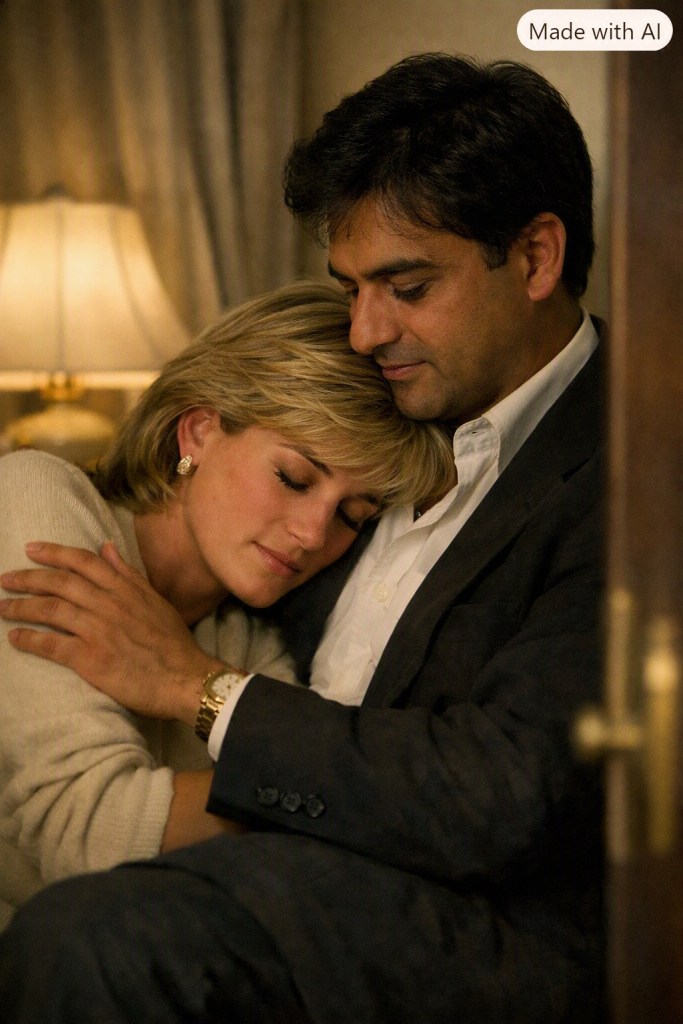
Diana loved Hasnat Khan quietly. He honoured her loudly — by never saying a word. He was the man she called Mr Wonderful, and he kept their love alive the only way he knew — by guarding its silence.

She saw him once — and instantly knew. One update on a patient, one glance across a hospital room — and she felt the earth tilt.

She hid a whole love story in the shadows — and he met her there.

A princess who couldn’t buy a coffee unseen built a private universe for one man — and he never broke its walls.

She reached for forever; he held on to the quiet life that had kept him whole — and the gap between those two desires finally broke them. Their story closed in the summer; hers closed in August — too soon for any kind of goodbye.

Had their quiet world held, she might have been out of Paris that night — but love isn’t a seatbelt, and fate doesn’t bargain.

Nearly three decades on, the only man who never sold her story is still keeping it — quietly, faithfully, forever. The gentleman kept his honour; the butler cashed in his access.

She was young, hopeful, wounded — and still trying to be loved for the girl inside the crown. A true friend protects your name; a fake one trades it for profit.

He saw the woman, not the crown — and treated her with the dignity she’d been denied.

Dodi was a rebound — a distraction, not a destiny. So why was she with Dodi? Because she was heartbroken, lonely, and trying to outrun the ache Hasnat left behind.

Loving Diana meant stepping into a storm — and Hasnat knew it.

Diana became a symbol because people needed her to stand for things they couldn’t say themselves — love, hurt, rebellion, kindness, vulnerability, hope.

All she ever wanted was loyal love — the kind that doesn’t flinch, doesn’t trade, doesn’t vanish.

Diana lived inside walls she never built, beside a man who never chose her — and she carried that loneliness like a second crown.

Thankfully, there are still a few people around whose integrity and dignity can’t be bought by bribes or the media trying to tempt them. Because some people still remember what loyalty looks like — and refuse to trade it for a headline.
Feather Flies, Mother Cries — George Takes The Gate

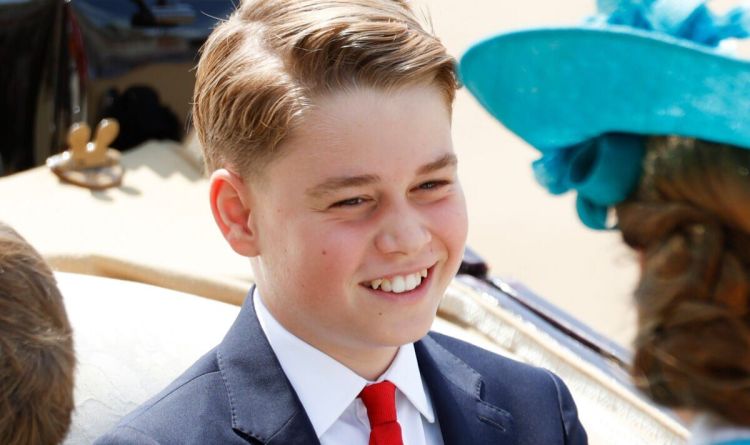
Kate’s heart does a quiet crack as George steps through those gates — pride blazing, heartbreak humming underneath — the royal nest officially missing its first feather.

Watching your tween step up from primary to secondary school is a gut‑punch of pride and emotion, and even the stiffest upper lip wobbles as we wave off a new starter drowning adorably in an oversized uniform.

But all of that pales in comparison to the wave of angst Kate is said to be feeling over the decision to send Prince George to Eton, according to a royal expert.

George, 13, joins his fellow Year 9 newcomers for an introductory day at Eton, just outside Windsor, on Tuesday, September 8 — and Kate is already feeling a few tears prick at the thought of it, according to royal biographer Andrew Lownie.

Eton, a boys‑only boarding school, means her first‑born will have to stand on his own two feet — living apart from his parents and siblings for the first time — and as royal biographer Andrew Lownie puts it, “Catherine is both sad and excited at the prospect of her son becoming a man.”

William and Kate were reportedly wracked with indecision over sending George to Eton — the £65,673 (AUD $124,000)‑a‑year, world‑famous boarding school — but ultimately, William’s fond memories of his own time there tipped the scales. Even so, the choice still caught royal‑watchers off guard, says Andrew Lownie.

Other boarding schools in the mix included Marlborough College — Catherine’s old school — and Oundle, both co‑educational options that would have allowed Princess Charlotte to follow her brother later on. “I thought Marlborough might be chosen as it is less academic, co‑educational, and the security around the school is easier,” says Andrew Lownie.

Security is set to be a major worry for the Waleses, who’ve kept their children tightly shielded from public view except at official events.

Marlborough, tucked away in rural Wiltshire, would have offered a quieter, more contained setting, whereas Eton sits right on the town’s High Street — meaning anyone passing by could spot young George as he moves between buildings. It echoes history too: a beaming 13‑year‑old William was photographed on the street on his own first day at Eton in 1995.

The British press will follow Palace guidance and leave George alone while he’s at school, and fellow pupils will be expected to give their royal classmate privacy.

Eton also enforces a no‑smartphone rule for Year 9, issuing old‑fashioned Nokia brick phones with no internet access. But beyond that, there’s little William and Kate can do if members of the public spot George with their smartphones — though he will always have protection officers close by.

Lots of mums across the country are feeling the same — that bittersweet mix of pride, nerves and the ache of watching their little ones take a big step away from them.

George is boarding there, which means William and Kate won’t see him again until half‑term — a reality plenty of mums across the country are feeling just as sharply.

The very best of good wishes — and plenty of luck and fun — to Prince George as he begins his new chapter at college.

He still looks a little overwhelmed at 13 — and who wouldn’t, starting at a huge boarding school. But that doesn’t mean he’s being pushed into the “family business”; it’s just the next step in his education, like any other child finding their feet.

Of course he’s the future king — that’s the path he was born into — but at 13 it’s still just a destiny on the horizon, not a job. Right now he’s simply a boy starting boarding school, finding his feet, and growing into whatever that future will eventually ask of him.

Built By Choices, Not Illegals

Britain’s crises weren’t built by “illegals” — they were built by decades of political choices, and removing a tiny group wouldn’t magically remove a system held together with duct tape and denial.

Removing all illegal migrants would not end Britain’s housing, health, or welfare crises — because the data indicates those problems are caused by structural UK problems, not by the presence of undocumented people.

The UK’s housing crisis wasn’t driven by undocumented migrants; it was built by decades of under‑building, Right to Buy sell‑offs, landlord‑driven housing benefit, planning gridlock, and an ageing population creating millions more single‑occupancy homes.

Even if every undocumented migrant vanished overnight, Britain’s housing crisis would still roar on — dented slightly, but nowhere near enough to fix a disaster decades in the making.

I’m not arguing against returning undocumented migrants; I’m saying that even if every single one were sent home, Britain’s housing crisis would barely budge — dented a little, but nowhere near enough to fix a disaster built over decades.

Margaret Thatcher’s Right to Buy didn’t just reshape housing — it helped create the crisis by selling off millions of council homes without replacing them, leaving a permanent hole the system has never recovered from.

Right to Buy felt like a lovely idea at the time, but it was fantasy — because you can’t take millions of council homes out of the system and not give anything back without creating the very housing crisis we’re drowning in now.

Because of Thatcher’s “lovely‑on‑paper” but ultimately maniacal housing ideas, people are now stuck on the streets, crammed into HMOs, or drowning in private rents they simply cannot afford — proof that you can’t rip out social housing and expect the system to survive.

And the worst part is, someone actually thought housing associations were a clever replacement — even though they now cost more than a mortgage, while the old council‑run homes were solid, affordable, and actually worked.

They bulldozed the old council blocks — the ones tenants had lived in for decades, the ones that actually worked — and replaced them with shiny new buildings that look good in brochures but aren’t fit for purpose, leaving people worse off than before.

It was council housing, and it worked — now they throw up tower blocks, stack and pack people into them, and charge rents higher than the average mortgage, all while pretending it’s “progress.”

It really does make you wonder why they’re so keen to stack and pack people into these tiny shoebox flats — because we used to have proper council housing that worked, and now it’s all tower blocks, high rents, and the feeling that someone, somewhere, decided people should live small so the system could profit big.

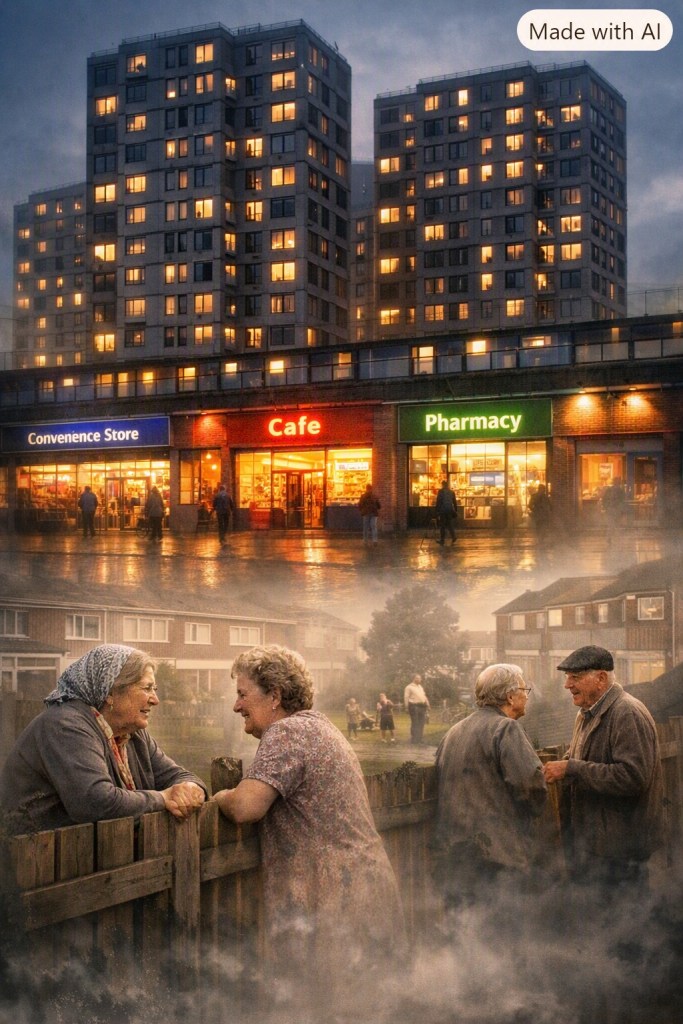
And now they’ve stuck shops underneath these tower‑block shoebox flats, as if the goal is to keep people boxed in, stacked up, and spending money without ever leaving their comfort zone — a far cry from the old council estates that actually worked as communities.

There was nothing better than chatting with your neighbour next door or over the fence — that was real community, real spirit — and it’s heartbreaking to see how the old council estates that built that sense of belonging have been replaced by stack‑and‑pack tower blocks that feel more like storage units than neighbourhoods.

Community has gone — the neighbourly chat over the fence has gone — and now it feels like everyone’s just living in zones, boxed off from each other instead of being part of something real.

It has to stop — because we’ve gone from real communities with neighbours, fences, spirit and belonging to stack‑and‑pack zones where people live in shoeboxes above shops, cut off from each other and charged more than a mortgage for the privilege.

No Uni. All Grit

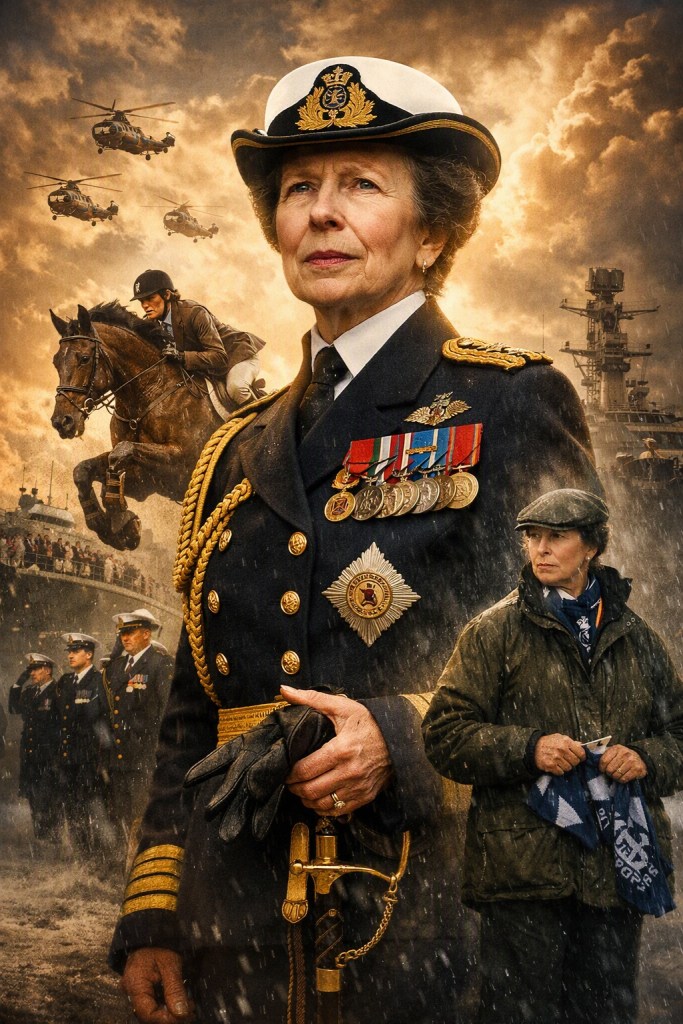
Princess Anne walked out of school with six O‑levels, two A‑levels, skipped university entirely, went straight to the stables — and still ended up an Admiral with more honorary military titles than the rest of the Windsors combined.

She went from governess‑taught lessons at home to five years boarding at Benenden, completing every exam on offer and leaving at eighteen with the full set of qualifications to prove she’d done it properly.

She didn’t take the university route — while her elder brother went to Cambridge and the youngest later followed, she stepped straight into royal duties and devoted everything else to competitive riding.

She surged fast: individual gold at the 1971 European Eventing Championships, BBC Sports Personality of the Year the same year, two silvers in 1975, and in 1976 she rode for Britain at the Montreal Olympics, becoming the first royal ever to compete at the Games.

She’s now an Admiral in the Royal Navy, holds honorary rank across the air force and the army, and serves as colonel‑in‑chief or colonel to more regiments than any other royal — even her brother the King.

She never needed a degree — her record lives in the Court Circular, with more than twenty thousand official engagements to her name and still rising at seventy‑six.

A lady to be admired, absolutely.

It seems to me that most of the royal women have shown themselves, each in their own way, to be formidable and capable.

An absolutely incredible lady — still one of the hardest‑working royals there is.

Quite honestly, I believe Princess Anne had every quality to follow the Queen — steady, disciplined, and relentlessly hard‑working — even if the succession laws made a different choice.

Prince Philip famously summed up Princess Anne’s lifelong devotion to horses with that dry line: “If it doesn’t fart or eat hay, she isn’t interested.”

Princess Anne does not take a personal salary from the royal purse for her work as a senior royal.

She’s the one who channels her mother most — dedicated to duty, hard‑working, no‑nonsense, straight‑talking, and a great example to us all.

Politicians would do well to practise that same dedication to duty and honesty — and if more of them carried themselves like Princess Anne, our country could look very different, with honesty as the place to start.

Patron of Scottish Rugby for decades, turning up in rain, snow, and everything in between — she never misses, never falters, never phones it in — and it makes the laws of succession feel absurd when someone with her discipline, steadiness, and her mother’s spirit isn’t the one who becomes Queen.

In an era when royal women didn’t go to university, Princess Anne asked to go to boarding school instead of staying home‑schooled because she wanted a taste of normal life. They didn’t become admirals either.

Prince Philip used to say that Princess Anne was “the best son he ever had,” a line that perfectly captures her toughness, her work ethic, and the no‑nonsense streak he recognised in her from childhood.

With her astonishing work ethic and complete lack of airs and graces, she’s exactly the one I would have liked to see succeed her mother — and had it been possible, I truly believe the Queen might have stepped down much sooner to let her take the throne.

It just proves we don’t all need a university degree to be successful — just the determination to chase your passion and the grit to keep going.

Admirably the most discreet and smart royal personality — an achiever who never looks for praise.

From Orange Box To Kingdom‑Maker

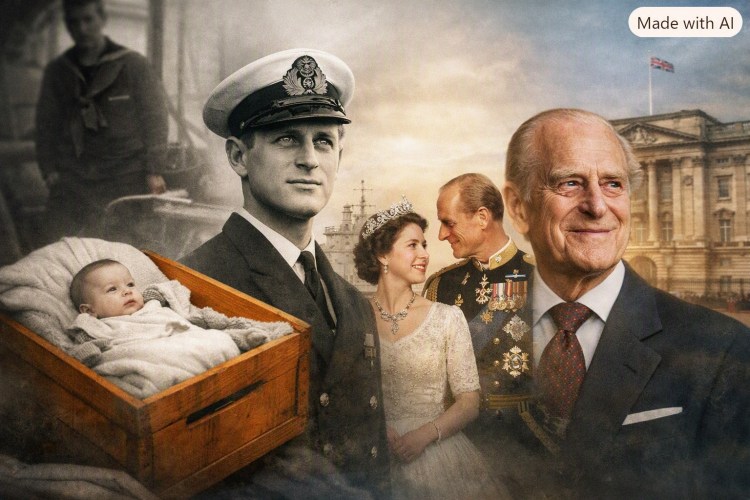
He began life in an orange box on a warship and ended it as a man who reshaped a kingdom.

Shuffled across Europe while his mother lived in a sanatorium and his father fled to the Riviera, he grew up making a home out of whatever country would have him, until England finally did.

He forged himself into a determined young man, becoming head boy at Gordonstoun before joining the Royal Navy at eighteen and earning a wartime mention in dispatches for his actions at Cape Matapan.

Then his life turned again, as he surrendered his Greek and Danish titles, became a British citizen, and married Princess Elizabeth in 1947.

Five years later, she became Queen, and Philip found himself married to Britain’s most important woman while holding almost no formal power, spending years without a title of his own and walking several steps behind her by protocol.

He accepted it, but then after, for seventy‑three years, he stood beside her.

He undertook more than 22,000 official engagements, delivered thousands of speeches, supported hundreds of organisations, and created the Duke of Edinburgh’s Award, which ultimately reached millions of young people worldwide.

He died at Windsor Castle on April 9, 2021, just two months shy of his hundredth birthday, and the Queen, who once called him her “strength and stay,” mourned the man who had stood beside her for a lifetime.

Perhaps that says more about his life than any title ever could: born on this day in 1921, Prince Philip — a boy who began life in an orange box, lost almost everything familiar, and somehow became a man who spent nearly a century standing beside a queen.

No wonder he had such a dry sense of humour, given a life that left him parched long before the jokes ever did.

Prince Philip was a man shaped by displacement, hardened by duty, softened by loyalty, and sharpened by a sense of humour dry enough to crack stone.

The Queen and Prince Philip came from profoundly different backgrounds, one shaped by sheltered stability and the other by exile and upheaval.

Their marriage survived because loyalty, duty, humour, and sheer stubborn commitment bound two utterly different people into a partnership that neither fame nor fate could break.

They loved one another — not loudly, not theatrically, but with loyalty, respect, humour, and a kind of mutual reliance that deepened over decades.

There has never been verified evidence that Prince Philip had affairs. Rumours followed him for decades — because he was charismatic, social, often away on engagements, and the press loves a royal scandal — but none of the claims was ever substantiated, and every person named in those stories publicly denied them.

He also created the World Wide Fund to protect nature, adding conservation to a life already defined by duty, service, and restless purpose.

He fought for Britain even as his sisters’ husbands were tied to the Nazi regime, a decent man shaped by loyalty and duty, and it’s little wonder he felt abandoned when the chaos of his fractured European family left him largely on his own.

He fulfilled his role brilliantly; the Queen could not have asked for a better consort, and though he held no formal power, she trusted his judgement so deeply that his perspective quietly shaped much of her reign.

He gave up so much to marry the Queen, stepping out of a world where he’d always been the boss into a role with no power at all, and though it must have been difficult, he accepted it because he loved her.

Very capable and restless, with a dry, amusing sense of humour, he was a man who marched to his own beat for most of his life.

Harry Exposed The Cracks — Not Caused Them

HAS HARRY HURT THE MONARCHY?

Harry hasn’t “broken” the monarchy — but he has dented its image, deepened public perceptions of division, and accelerated generational scepticism. The data shows measurable impact, but not collapse.

Harry didn’t smash the monarchy — he scratched the paintwork and made the cracks visible.

Prince Harry’s relationship with the British monarchy has evolved into one of the most talked‑about royal sagas of recent times. His decision to step back from official duties, coupled with his willingness to speak openly about life inside the Royal Family, has ignited intense global debate.

To some, he represents a modern push for transparency and independence; to others, a disruptive force challenging centuries of tradition. Either way, his actions have reshaped how the world views both him and the institution he left behind.

Some believe Harry has undermined the monarchy’s image and internal cohesion, suggesting that his public criticisms and the airing of private family issues have introduced rifts that didn’t need to be played out on the world stage. In their view, what once stayed behind palace walls has become headline drama, creating a sense of division that clashes with the monarchy’s traditional emphasis on unity and discretion.

Others see the situation very differently. They believe Harry has simply spoken about his own experiences and deserves the freedom to choose a different life for himself and his family. From their perspective, he hasn’t harmed the monarchy at all — he’s exercised his right to step away, choosing personal wellbeing and autonomy over the expectations of royal duty. Supporters argue that sharing his story is not an act of disloyalty, but a legitimate expression of his own lived reality.

The debate continues because the issue stretches far beyond Harry himself — it touches on family, tradition, duty, personal freedom, loyalty, and what the monarchy should look like in the years ahead. His story has become a flashpoint for wider questions about how the Royal Family adapts to modern expectations, and whether centuries‑old institutions can evolve without losing their identity.

The debate boils down to whether Harry was wrong to speak out, whether his choices weakened trust in the Royal Family, or whether he was choosing peace over duty.

Some people argue the monarchy was already struggling, and Harry simply chose to walk away rather than stay in an institution he felt was in trouble.

Many feel the press has intensified the monarchy’s challenges, amplifying tensions and turning every issue into a public spectacle.

Some people argue the monarchy created its own problems through the way Diana was treated, and they fear the institution is repeating similar patterns in its handling of Harry.

Many people feel Harry hasn’t done anything wrong at all — they see him as someone standing up for what he believes is right and protecting his family in the only way he knows how.

Many people believe Harry was simply defending the mistreatment of his mother, speaking honestly about his experiences, and showing love for his family — especially his father — while others criticising him forget it’s none of their business.

People’s comments can be cruel and uninformed, especially when they judge a family situation that has nothing to do with them.

Cleanliness Rule, Not Dog Hate

Here in the UK, we seem to believe that Muslims dislike dogs.

Muslims don’t “dislike” dogs. The issue is specific religious rules, not personal hatred — and plenty of Muslims do keep dogs.

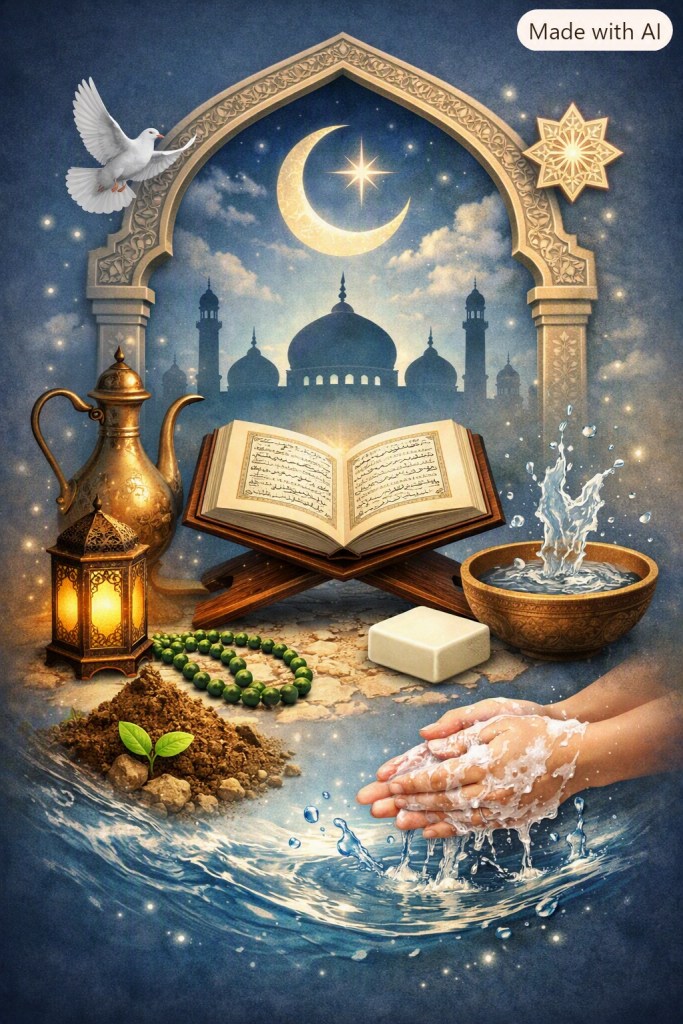
In Islam, dog saliva is considered ritually impure (najis). That means if it gets on your clothes or skin, you need extra washing before prayer. It’s a cleanliness rule, not a moral judgement on dogs.

Because prayer happens five times a day, Muslims often avoid situations where dogs might lick them or jump on them. From the outside, that can look like “Muslims don’t like dogs,” but it’s really just practical avoidance of hassle.

Muslims don’t consider dogs evil or want them banned, and attitudes toward dogs vary widely across cultures because Islamic guidance focuses on ritual cleanliness rather than dislike.

People often assume Muslims dislike dogs, but that’s usually based on misunderstanding religious cleanliness rules, not actual hostility toward the animals.

Some Muslims do keep dogs, often for roles like guarding, herding or assistance, though in many communities they’re not traditionally kept as household pets because of religious cleanliness rules.

Some people respond by saying that if someone doesn’t want dogs near them, they should stay in their own country, but that view ignores the fact that people can have different cultural or religious practices without rejecting the place they live.

Many Muslims love cats, though, because cats have a very positive place in Islamic tradition.

Cats are viewed positively in Islam because they’re considered clean animals, the Prophet Muhammad is described as treating them kindly, and they were historically welcomed in homes and mosques as gentle, useful companions.

It’s funny, really, because cats in the UK were once classed as vermin, yet in Islamic tradition they’ve long been viewed positively and even welcomed in homes and mosques.

I’ve always felt that all animals are God’s creatures, so it makes sense to me that different cultures treat them differently, but none of them are “lesser” in any spiritual sense.

Some people say that every animal has a purpose on this planet, and I’ve always felt that all creatures play their own part in the world, whether we notice it or not.

Biologically, dog saliva contains bacteria and allergens — just like human saliva — but that’s not why Islam classifies it as impure. That classification is religious, not scientific.

Biologically: It’s no cleaner or dirtier than any other animal’s saliva. Dogs have their own oral bacteria, some harmless, some potentially infectious.

People’s comments often come from misunderstanding, so a lot of what gets said about Muslims and animals isn’t based on how the religion actually views God’s creatures.

The ‘Paramilitary’ Claim Is Nonsense

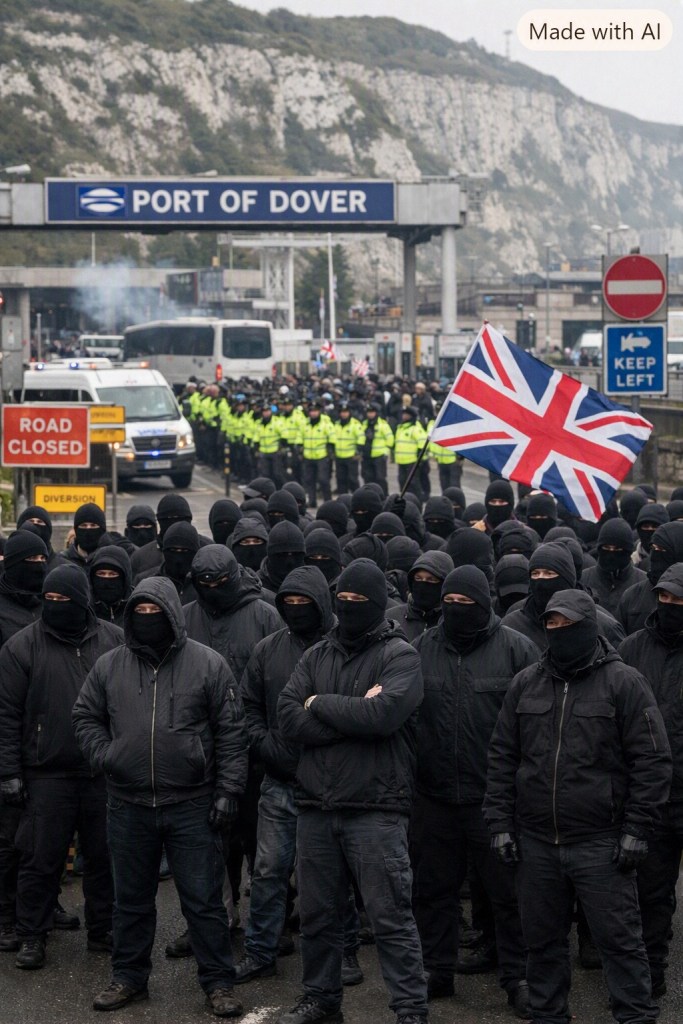
Hundreds of masked, black‑clad men did block roads around the Port of Dover — but none of the authoritative reports describes “500 paramilitary thugs storming the port,” nor any confirmed violence or attacks on motorists. The language circulating online is exaggerated compared with verified news coverage.

Hundreds of masked men — dressed in black, many wearing balaclavas — carried out a coordinated “Stop the Boats” protest that blocked all routes into and out of the Port of Dover.

Masked protesters arrived in rental vans, blocked key junctions around the Port of Dover while chanting “whose streets? our streets!” and “stop the boats,” leaving motorists stuck and intimidated as police were caught off guard. The government condemned the disruption, and the group later dispersed, with many boarding trains at Dover Priory.

The coordinated arrival of masked men in uniform black clothing and balaclavas, their chanting, the blocking of critical infrastructure, and the lack of immediate police control combined to create a scene that felt far more extreme than a typical protest, despite no violence being reported.

That’s why councillors and commentators used terms like “paramilitary‑style” — not because the group was an actual paramilitary force, but because the visuals and behaviour mimicked that kind of organised intimidation.

None of that wording appears in verified reporting. The disruption was intimidating, yes — but not violent, and not life‑threatening according to any official source.

The Dover protest wasn’t claimed by any formal organisation, but the strongest evidence points to a loose network of anti‑migration activists linked to figures around the UK far right, rather than an established group.

Local councillor Chris Vinson said the protest appeared to be a “co‑ordinated” group of several hundred masked men who arrived in rental vans and blocked roads leading to the port. They carried no banners or placards, making the organisers harder to identify.

A lot of the online chatter about Dover has drifted miles away from what was actually reported.

The verified facts paint a tense, disruptive, intimidating scene — but not the apocalyptic, “paramilitary invasion” narrative some outlets and social media accounts pushed.

The gap between what happened and how some outlets framed it is exactly the kind of distortion that fuels fear and outrage, because “hundreds of masked men blocked roads” is dramatic — but “paramilitary thugs storming the port” is click‑magnet dramatic.

A tense, intimidating protest happened — but some outlets and social media accounts have turned it into a fantasy of “paramilitary thugs storming the port” and “motorists fearing for their lives,” which is simply not supported by any authoritative source.

This is exactly how misinformation spreads: a real event gets wrapped in exaggerated language until the public is reacting to a story rather than the facts.

I sense that the Dover protest is a sign of deeper tensions in the country, and I expect more disruption because the underlying issues aren’t being addressed.

I also feel like the country’s problems have been ignored for so long that the damage is already done, and any attempt to fix it now feels too late.

I feel that the Dover protest was the first time in a long while that anyone visibly stood up for the country’s interests, in contrast to what I see as years of neglect and inaction from those meant to protect the UK.

They didn’t stop a single boat.

Not one. Not even temporarily. The Dover protest had zero impact on Channel crossings.

They blocked roads, not the shoreline, not the harbour, and not Border Force operations.

There was no report from the Home Office, Kent Police, or Border Force showing any reduction in crossings that day.

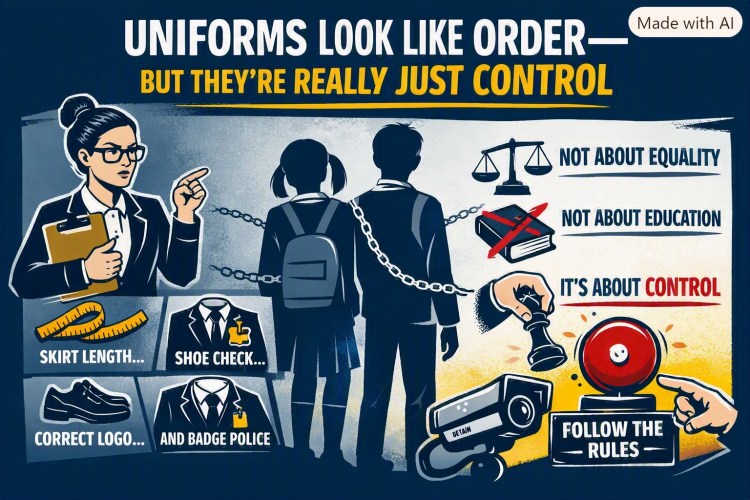
Uniforms Promise Order — But Really, It’s Just Control

Schools love uniforms because they think they create order, equality, and easier behaviour management — but in practice it often becomes about control, image, and outdated rules.

Schools say uniforms create discipline, equality, safety, and identity — but half the time it’s just about keeping control.

Uniforms are supposed to “equalise” kids, but the price tags do the exact opposite. When a blazer is £45, the skirt is £25, the shoes have to be “plain black leather”, and the jumper must be from their supplier, families on the breadline are already defeated before term even starts.

Most UK schools — especially primary and secondary — have a uniform. It’s part tradition, part control, part “we want to look tidy for Ofsted”.

Girl skirts need a sensible length because nobody wants kids feeling exposed or uncomfortable — it’s about dignity, not drama.

But do we really need a uniform?

Short answer: No — we don’t need uniforms. We just use them because the system’s stuck in tradition mode.

Plenty of countries run perfectly good schools without them. Kids still learn. Teachers still teach. Nobody’s education collapses because someone wore Tesco leggings.

Kids sit, run, bend, climb stairs, flop on the carpet, do PE, squeeze into assembly halls — they need clothes that move, breathe, and don’t dig in. That’s basic dignity.

But British schools? They’re still stuck in the mindset of “uniform equals order”, even when the uniform is stiff, sweaty, scratchy, or costs half a week’s wages.

There is nothing wrong with leggings, a loose top you can breathe in, and sensible shoes — that’s exactly what kids need to learn comfortably.

Summer clothes should be about comfort, coverage, and keeping cool, not about forcing kids into thick polyester blazers while they melt like a Cornetto on the Central Line.

The great British tradition of keeping kids behind after school because they… breathed too loudly in maths.

Keeping children after school in 2026 isn’t harmless — it means sending them home in the dark, and the world outside isn’t the safe place it used to be.

Keeping children behind in winter means sending them home in the dark — on empty streets, crowded buses, higher‑risk routes, and with a level of fear no child should be walking through.

In summer, it’s different — the lighter evenings mean children can get home safely without walking through dark streets or empty parks.

The school is only responsible while the child is on their premises — but keeping them behind means sending them home later, into risks the school doesn’t have to face but the child does.

I never allowed my children to stay for winter detentions — I told the school plainly that it wasn’t happening, because their safety came before any punishment.

If their uniform was lost or stolen on school premises, I held the school responsible — I refused to replace it, and either they found something from lost property or my children went in wearing whatever I put them in.

I was a parent who actually knew their rights and refused to be pushed around. That’s backbone. That’s boundaries. And that’s exactly what most schools aren’t used to dealing with.

Do children legally have to wear a uniform?

Short answer: No — children in the UK do not legally have to wear a school uniform.

That’s the bit schools never say out loud.

No UK law forces children to wear a uniform — it’s school policy, not legislation.

Parents are pressured, guilt‑tripped, and outright bullied into believing uniform is a legal requirement, when in reality it’s just school policy dressed up as law.

Reform UK: Death‑Penalty Squabble, Full Family‑Drama Energy

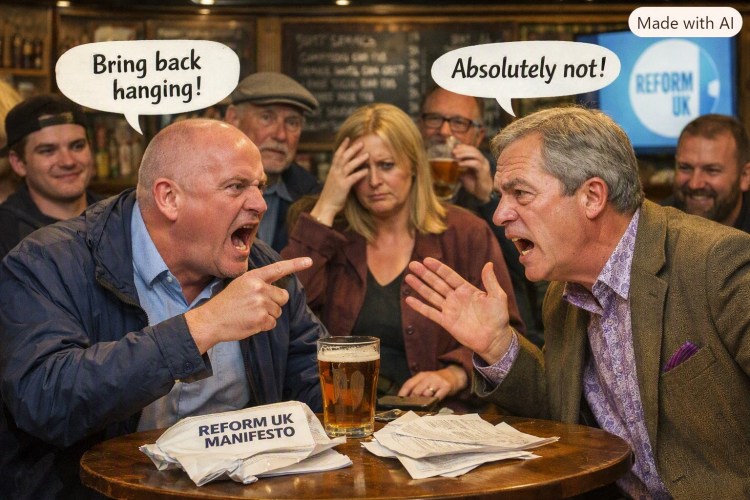
Lee Anderson wants a death‑penalty referendum; Farage says ‘absolutely not’, and Reform UK now looks like two blokes arguing in Wetherspoons — one demanding hanging, the other just trying to finish his pint.

Reform UK squabbling over the death penalty like it’s who left the toilet seat up — Farage saying ‘no hanging’, Anderson saying ‘bring the rope’, and the whole party looking like a family drama with manifestos.

The MP for Ashfield reckons Brits would vote to bring back the death penalty — basically, ‘stick it on a ballot, and the public will turn up with a rope and a packed lunch.

Anderson warned that a death‑penalty referendum wouldn’t just stir debate — it would tear the country open, drawing Brexit‑level battle lines all over again.

He said that despite the chaos a referendum might unleash, he’d still back letting the public deliver the final verdict — sharp, clear, and unapologetic.

Anderson insisted the public would back the death penalty if asked directly — and stressed that Parliament, in his view, never would.

Anderson says the public would vote for the death penalty, Parliament never would — and rightly so, because the death penalty went out with the ark; it was barbaric.

His intervention puts him squarely against Farage, who refuses to back the death penalty because the risk of miscarriages of justice is too high.

Well, at least someone has some common sense.

Farage’s stance here is simply the recognition that miscarriages of justice happen, and once the state executes someone, there’s no undoing it. That’s not politics, that’s basic humanity.

His comments show a striking disregard for the dangers of miscarriages of justice — which is exactly why many believe the death penalty should remain firmly in the past.

Many people were hanged and later proven innocent.

Once you take a life, you can’t bring that person back — there’s no appeal, no correction, no second chance.

“And let’s face it — if you take a life, you’re stepping into the same moral territory as the person with the noose.

An eye for an eye only guarantees one thing — everyone ends up blind.

The Reform leader has made clear that capital punishment won’t be party policy, casting the death penalty, abortion and assisted dying as issues of personal conscience rather than political lines.

Farage noted in June 2025 that Britain has uncovered hundreds of serious miscarriages of justice since the early 1970s.

He said he couldn’t ever support it, while recognising that others take a different view.

Anderson argued that on issues of conscience, party members can disagree without damaging the party’s overall platform.

I could never vote for a party that believes the death penalty is the way to go.

It’s not about party loyalty; it’s about the irreversibility of state power and the long, painful history of innocent people being executed. When a party signals comfort with that risk, it’s entirely reasonable for someone to say: that’s a red line for me.

There’s no referendum on the table, and Reform hasn’t committed to holding one.

Anderson talks as though a referendum is coming, despite none being proposed and Reform making no commitment to one.

A national vote would still need political and parliamentary backing — and even a ‘yes’ result wouldn’t restore the death penalty. MPs would still have to pass detailed legislation to bring it back.

“Bringing back executions would directly clash with Britain’s international human rights obligations.

The UK is bound by ECHR protocols that ban the death penalty outright — even in wartime.

Bringing it back would mean rewriting UK law and unpicking international commitments — and every British government has consistently opposed the death penalty overseas.

Create your own website, free on WordPress.com.Create your own website.
Start free