Offence Is Taken — Hate Is Delivered

Megyn Kelly did discuss UK free‑speech crackdowns with Piers Morgan — and the exchange was fiery, blunt, and very on‑brand for both of them. The most direct coverage of that conversation comes from Express.co.uk, which reported on Kelly “erupting” during Morgan’s TalkTV segment.

Kelly was invited on after the UK government revoked entry visas for two American commentators — Cenk Uygur and Hasan Piker — because their presence “may not be conducive to the public good.” She argued this was part of a wider crackdown on speech in Britain.

Britain’s policing speech so tightly — especially around religion and geopolitics — that people can be criminalised for opinions the US would still legally protect.

She slammed the whole thing as “fing bull****” and said it needs to stop, full‑stop.

It was the first time I’ve seen Piers Morgan go quiet — really quiet — like Kelly’s blast hit him so hard he had to swallow it before speaking.

For a second I honestly thought Piers’ screen had frozen — he was that quiet.

Maybe he went quiet because, for once, he actually agreed with every word she said.

She left him speechless — properly speechless — the kind of silence you only get when Piers Morgan actually agrees with every word but doesn’t dare say it out loud.

He’s been silenced quite a lot lately; he might actually be learning something.

It’s that rare Piers Morgan phenomenon: not a technical glitch, not a frozen screen, not a dramatic pause — just the unmistakable look of a man realising someone else has said the thing he’s been circling for months.

He wasn’t quiet because he froze — he was quiet because he’d been completely out‑manoeuvred, and for once he knew it.

Offence isn’t an object. It’s a reaction. You can’t give someone offence like handing over a parcel; they have to take it. It’s an internal emotional response, not an external physical act.

You can say something with every intention of offending someone, and they might laugh, shrug, or not care at all. In that moment, no offence has been taken, because offence is a reaction, not an object you can hand over.

Equally, you can say something harmless, neutral, or even kind — and someone else might still decide to be offended. That’s because offence lives in their interpretation, not your intention.

Offence doesn’t live in the words themselves; it lives in how those words are received, interpreted, and reacted to.

Words are just sounds or symbols until someone decides what they mean to them. Two people can hear the same sentence and have completely different emotional responses — one laughs, one shrugs, one gets furious. The words didn’t change; the interpretation did.

Offence isn’t proof of wrongdoing; it’s proof of how someone interpreted what they heard.

We can’t control how every person reacts to what we say. Being offended is a choice, a reaction, and ultimately a personal responsibility.

Someone can tell a joke, the whole room laughs, but one person decides to take it personally — even though it was just a joke. The offence wasn’t in the joke; it was in their reaction.

Society would be a lot healthier if we remembered that offence is a reaction, not a wrongdoing — we’ve become far too quick to blame others and far too slow to look at ourselves.

I’m not talking about hate speech — which does carry intent, harm, and responsibility. You’re talking about everyday interactions where offence is simply a reaction, not an act.

What we think in our minds or say out loud is simply how we feel, and in a free society we’re entitled to express that. That’s the core of freedom of speech: the right to voice thoughts, feelings, opinions, frustrations, jokes, disagreements — without the automatic assumption that doing so is a crime or a moral failing.

Hate speech is different because it carries intent — intent to harm, intimidate, threaten, or dehumanise someone based on their faith, their colour, or where they come from.

If you threaten to hit your neighbour, that’s intent. That’s an action aimed at causing fear or harm. There’s no ambiguity there. It’s not about interpretation; it’s about what you meant to do.

Offence is taken, but hate is delivered.

Do Young People Eat Enough Fruit And Vegetables?

Not even close — they’re barely hitting half their fruit and veg.

Kids are swimming in processed rubbish, and it’s no surprise their fruit and veg intake has fallen off a cliff.

Processed food dominates because it’s everywhere, it’s cheaper than real food, it’s marketed straight at kids, it’s the quickest thing for busy parents to grab, and it’s engineered to be addictive.

Kids are being blasted with junk‑food adverts from the moment they wake up, and it’s shaping what they crave long before they ever see a piece of broccoli.

When I was at school, back then we got a hot dinner, a proper pudding, and a drink — today’s kids get adverts for crisps.

We sat down to real food — proper meat and veg, a warm pudding, a sensible drink, and it all felt normal because everyone ate the same wholesome meal.

Today’s kids get grab‑and‑go junk, neon drinks, and whatever’s quickest, not whatever’s good.

Scurvy is creeping back, and it’s because some people (including kids) aren’t getting enough fresh fruit and veg.

Not Victorian‑era levels, but doctors in the UK are seeing more cases than they used to, especially in people with very poor diets.

Most kids today won’t touch vegetables, and it’s not because they’re naturally fussy. It’s because the whole food environment trains them to prefer junk.

Kids grow up on loud, addictive junk, constant adverts, quick convenience, tight budgets, and taste training that makes broccoli feel like punishment — no wonder veg loses every time.

Junk food is a cocktail of cheap fats, sugars, chemicals, and flavour tricks designed to keep kids hooked.

Junk food is built from cheap fats, hidden sugars, chemical salts, artificial flavours, bright dyes, long‑life preservatives, and stabilisers that make fake food behave like real food.

Junk food isn’t toxic, but the ingredients are dangerous when they replace real food.

A diet of cheap fats, sugar, salt, chemicals, fillers and barely any fruit or veg sets kids up for lifelong health problems.

How can children thrive when their diet is built on the cheapest, loudest, least nutritious stuff?

A lot of people react with shock when they realise how many additives, stabilisers, dyes, and preservatives go into everyday snacks. They say it feels more like manufacturing than cooking.

The cost‑of‑living crisis has pushed parents into buying whatever fills the stomach, not whatever feeds the body.  

We should stop feeding kids cheap processed rubbish and bring back proper, nutritious school meals cooked in real kitchens — not delivered like takeaway.

Proper school meals used to feed kids — today’s processed substitutes just fill them.

And when we see on TV, taste the difference, there really is a difference.

Nobody cooks anymore — it’s freezer food into the air fryer and dinner’s done.

Convenience, exhaustion, cost, lost skills, and constant advertising have replaced cooking with reheating.

Cooking from scratch isn’t just the cooking — it’s planning, shopping, prepping, cleaning. Many families simply don’t have the hours.

Most people don’t cook from scratch anymore because nobody ever taught them, and life never gave them the time.

Butcher’s meat used to be cheap — now you need a mortgage just to buy something fresh.

Meat was cheap because it stayed local — now every step costs money, and families feel it.

People aren’t imagining it — farming is under pressure, and many feel pushed out by rising costs, changing regulations, and industrial competition. That’s very different from “doing away with farmers,” but it does feel like the traditional farmer is being squeezed.

Keep going the way we’re going, and dinner won’t come from a farm — it’ll come from a machine.

Care Leavers Hit 18 And Fall Off A Cliff

Care leavers are dying young because the system drops them the moment they turn 18 — a “care cliff” that leaves teenagers suddenly alone, unsupported, and unsafe.

Chloe Pomfret’s story is one of those moments that stops you cold: a 16‑year‑old, suicidal and homeless, taken to A&E by her teachers — and told to go home, run a bath, and write in a journal.

It’s the kind of response that shows exactly how badly the system can fail a child in crisis. A teenager with nowhere safe to go, actively asking for help, and the advice she receives is the sort you’d give someone having a stressful day, not someone fighting for their life.

Care leavers shouldn’t be cut off at 18 — they should be supported until 25, just like any other young adult.

However, real life is messier than the neat “no parent would ever do that” line. Plenty of young people are kicked out at 18, sometimes even earlier, and the law doesn’t swoop in to protect them. That’s a brutal truth, and it deserves to be acknowledged plainly.

Care leavers aren’t just “young people”. They’re young people who’ve already been through trauma, instability, loss, and often neglect. They don’t have the fallback options that some kicked‑out teens do — no auntie’s sofa, no mate’s mum who’ll take them in, no family WhatsApp group to ask for help.

A 16‑year‑old is still a child — and with all the change and uncertainty they face, they need support and guidance, which is why care leavers should be supported until at least 21.

Most of us don’t even realise how lucky we are to have someone to call, someone who checks in, someone who notices if we disappear for a day. Care leavers don’t have that. And the fact that they’re expected to survive without it is genuinely terrible.

Most of us have someone to call — care leavers don’t, and it’s terrible; real change is needed.

Basic care for everyone has slowly disappeared — the things that used to be guaranteed now feel optional, patchy, or gone altogether.

As human beings, we no longer exist — that’s how it feels when a government stops seeing people and starts seeing only numbers, targets, and budgets.

When you’re disabled or elderly, it feels like you stop being seen as a person and start being treated like a “resource” — useful only until you’re not, and then ignored.

It sometimes feels like if you’re disabled or elderly, the government sees you as a burden rather than a person — and that’s why people fear what would happen if the law ever allowed anything as extreme as euthanasia.

This is the human condition: we live, we outlive our usefulness, and we die — and not always with the dignity every person deserves.

There’s no empathy left — everything is numbers and figures, and if you can’t work or you’re elderly, you’re treated as “not fit for purpose” and you fall through the cracks like you never existed.

This is sad but true — instead of being seen as human beings, we’re treated like statistics on a spreadsheet.

Governments get away with this because, as human beings, we fear — and fear makes us easy to manage.

Richard Tice Slammed Andy Burnham On GMB

On Good Morning Britain, Reform UK MP Richard Tice launched a scathing on-air rant aimed at Andy Burnham, accusing him of doing a “bad job” on government spending and borrowing costs.

Tice interrupted the presenters, slammed Burnham’s handling of borrowing costs, and mocked him as a politician who’s been “in nappies” since entering politics.

That’s the “humiliating blow” the headline is talking about — a televised dressing‑down, not an official political defeat.

Tice hammered it home in Birmingham, declaring Britain “broken” and insisting only Reform could fix it.

Some say Reform could fix a broken Britain; others insist it would only break it differently.

I believe Britain isn’t just struggling — it’s gone past the point where any party can truly fix it, and that’s my honest view.

The real problem is a government forever “fixing” things that weren’t broken, then blaming everyone else when their tinkering breaks them.

You wouldn’t rip open a perfectly working boiler, but our government keeps doing exactly that — “fixing” what isn’t broken, then blaming everyone else when their meddling breaks it.

It feels like the government keeps breaking things that worked, then turning around and blaming disabled people and the elderly while cutting their support.

Of course there’ll always be a few shirkers and lurkers, but that tiny minority doesn’t justify punishing disabled people or the elderly.

If anyone fits the “shirkers and lurkers” label, you’d say it’s the government and MPs with their second homes and freebies.

If anyone needs a pay cut and a reality check, it’s the MPs who take the perks, pocket the freebies, and give very little back to a country they don’t seem to love.

The only things MPs truly chase are the title, the money, and the power over everyone else.

You thought oppression was something Britain had left behind, but to me it feels like it never died at all — it’s still here, still alive, still kicking.

The government’s “liberties” feel less like freedoms and more like a barter — they hand you a privilege with one hand and take a piece of your life with the other, right up until the end.

To me, it feels like the government doesn’t see people as human beings at all — just worker ants to be managed, directed, and squeezed.

Nothing will ever be the same again because the damage runs too deep — and while people point fingers at Andy Burnham, I see a man inheriting a mess built by governments before him, trying to steer a ship where the real power sits with advisors who aren’t even in his corner.

Robotaxi Britain: Pay The Fare, Trust The Toaster

London’s got its first driverless cab, but everyone’s wondering if it’ll steal cabbies’ jobs and whether anyone actually fancies being chauffeured round by a glorified toaster.

42% say ‘no chance’, 29% say ‘go on then’, and the rest are waiting to see if it survives a roundabout at Elephant & Castle.

Robotaxis start taking paying passengers on Thursday, and cabbies are already wondering if they’re about to be replaced by a Nissan with commitment issues.

Uber’s adding autonomous trips in London, and every other operator’s lining up like it’s Black Friday for robots.

Wayve’s robotaxis are rolling out with a human babysitter behind the wheel for now, but the cars are meant to drive themselves — basically London’s first cab that insists it’s independent while still needing someone to watch it like a toddler near a plug socket.

Uber’s Wendy Lee says this launch is about reaching ‘driver‑out technology’, which is a polite way of saying the cab eventually turns up without a human — like a minicab that’s ghosted its own driver.

These modified Mach‑Es have a radar on the roof doing all the thinking, and once TfL gives the nod, we’ll have Nissan Leafs driving around with no human at all — basically London’s first taxi that can judge your route choices without a driver rolling their eyes.

Uber insists there’s ‘no race’ to ditch the driver, yet 140,000 people have already signed up — proving Londoners will try anything once, even a cab that might turn up with nobody in it but the car having an existential crisis.

Ms Lee says autonomous cars have a ‘super‑human track record’, which is bold considering half of them have already behaved like they’re auditioning for Robot Wars.

Waymo wandered into a crime scene, and Uber once hit someone in Arizona, so when Ms Lee says autonomous cars have a ‘super‑human track record’, Londoners are thinking: yeah — super‑human in the sense of a Marvel villain on its first day out.

Ms Lee says London’s been ‘pretty positive’ about robotaxis, but with 100,000 Uber drivers watching, it’s less a warm welcome and more the feeling you get when a new hire shows up who’s clearly been brought in to replace you.

GMB’s David McMullen says we need to be careful rolling out driverless cars or we’ll trigger ‘unprecedented disruption’ — which is union‑speak for: don’t be shocked when a robot tries to take your job, and 100,000 cabbies collectively go absolutely spare.

People’s comments basically boil down to: ‘Great, another thing in London that can run you over, ignore you, and still charge surge pricing.

Opt‑Out Means Nothing If The System Opts You Back In

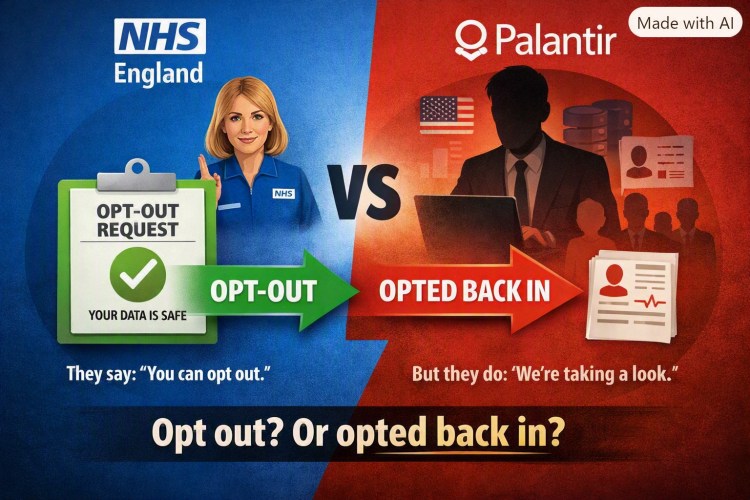
NHS England says you can “opt out”, but the Palantir platform ignores it, overrides GDPR objections, and still gives contractors access to identifiable patient data.

MPs and senior civil servants aren’t “officially exempt”, but their medical records sit in protected systems that never touch Palantir, creating a quiet, practical exemption for them and not for the public.

Private records are exactly that: private — and no government or company should access or override them unless it’s strictly necessary for investigating a crime or preventing serious harm.

The UK government let private companies access NHS data while pretending an opt‑out protected patients, turning confidential medical records into a commercial asset for Big Pharma and future private insurance.

When leaders misuse public trust or mishandle private medical data, the public’s anger is justified — and the proper response is a full investigation and real accountability through the law.

The UK scrapped its paper‑based safeguards without building a trustworthy alternative, and many people now wish we’d kept card indices and locked filing cabinets rather than handing private medical records to digital systems that can’t guarantee privacy.

There is always a choice, and no system should ever override a person’s right to consent to or refuse their own private information, but really there is no choice; especially when you try to withdraw consent, the system simply refuses, proving that consent isn’t real if the option to say no doesn’t exist.

The Fabian Society looks like wolves in sheep’s clothing — presenting gentle reform while quietly steering the country in directions the public never truly consented to.

If people believe their data rights were violated, the lawful path is to demand transparency, challenge it through the courts, and hold those responsible accountable under proper legal process — because no one is above the law.

Many people feel that Westminster puts private interests ahead of the public good, and when trust breaks down like that, the only lawful remedy is transparency, scrutiny, and holding decision‑makers accountable through proper democratic and legal processes.

When people feel pushed aside and unheard, the real way to rise is through lawful pressure, organised public action, and the demand for accountability — because that’s how a society truly revolutionises without harming itself.

It’s our lives and our data, and no system has the right to treat people as if they’re owned or controlled — that’s exactly why data protection laws exist.

They tell you your medical data is protected by law, yet they can share it without your consent while forcing you to file formal requests just to see your own records — and no wonder people are asking what on earth is going on.

The real question isn’t just that Palantir holds NHS data, but which other states might now have indirect access to it — and that’s why people are demanding answers.

Not acceptable — Mr Burnham needs to sort it out and prove he’s actually on the side of the people.

If Andy Burnham wants the public’s trust, he needs to end that contract, because my medical information belongs to me and I alone decide who sees it.

If leaders truly wanted accountability, they’d find lawful grounds to challenge the contract instead of pretending their hands are tied — because protecting people’s data should come before protecting Palantir.

The problem isn’t that Palantir stole anything — it’s that our own government handed over access, and that’s exactly why people feel betrayed.

Third‑party companies aren’t a law unto themselves — they only look that way when governments hand them power without proper oversight.

If the UK government keeps bringing in US executives to reshape the NHS from the inside, then of course it feels like nothing can be done — because the system is already halfway down the road to privatisation.

Tagged Like A Criminal

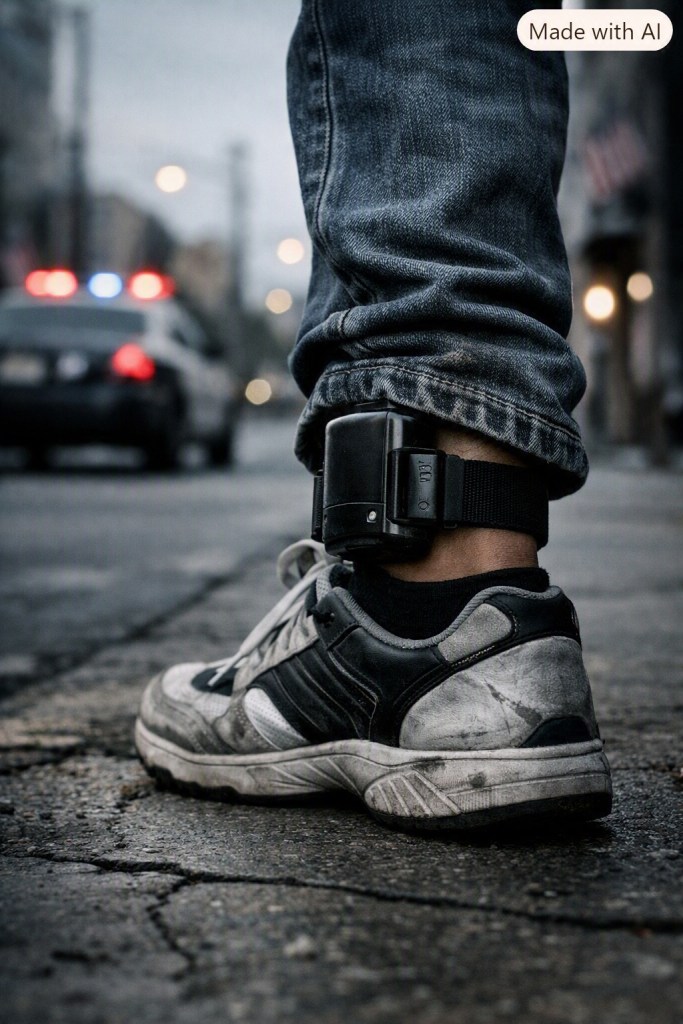
Forced to wear an ICE shackle, a young student broke before the system ever bent.

Pierre Damas Bel, 20, a Haitian student at Wright State University, told loved ones he felt humiliated by the ICE ankle monitor that marked him out before it broke him down.

The honour‑roll student and college athlete took his own life after months of wearing an ICE ankle monitor — a device meant for detention, not a young man trying to study, train, and build a future.

After months of bullying, he stepped into oncoming traffic in Ohio and died from his injuries — a young man pushed past the point where dignity and hope could survive the weight of that ankle monitor.

His father said he begged him to come home so they could talk — and then, just hours later, police were at his door telling him his son had thrown himself under a truck.

Pierre immigrated to the US in 2024 through the CBP One app — the system designed to fast‑track processing for travellers and foreign nationals — hoping it would be the start of a safer, steadier life.

He and his family settled in Springfield, Ohio, where he became an honour‑roll student, joined the junior ROTC, was recruited to play football at a nearby university, and dreamed of medical school — a whole future mapped out, his lawyers said, before the ankle monitor and the bullying began to crush it.

In July, the future he’d been building was abruptly stalled when ICE placed him in an “alternatives to detention” programme while his protected status was reviewed — a bureaucratic pause that landed on him like a punishment.

Pierre was forced to wear an ankle monitor for months, and wrote on social media that he came to the US to study — not to “commit a crime or hurt anyone” — a plea that made the device on his leg feel even more like a punishment he didn’t deserve.

He wrote that he never came to America to harm anyone — yet now he was walking its streets with a GPS shackle on his leg, carrying a shame and humiliation he never imagined he’d be made to feel.

Guerline Jozef, who leads the Haitian Bridge Alliance, said that on top of the bullying Pierre was already enduring, he was terrified of being sent back to Haiti — a country where gang violence is rampant and where he believed returning could cost him his life.

With every freedom denied — the first shame, the first humiliation, the first chain — a whole society is diminished, because the moment one person is forced to carry that weight, we all feel the fracture.

The warning is that the damage doesn’t stay with the person wearing the chain. It spreads. It stains. It marks everyone who let it happen.

In the US, being foreign isn’t a crime — but the way the system treats you can make it feel like one, which is a bitter irony for a country built by immigrants from the ground up.

He was an asylum seeker — a young man fleeing danger, studying hard, harming no one — yet the system still tagged him as if he were a threat.

He was an honour student, thriving in class, recruited as an athlete, and dreaming of becoming a doctor — a young man building a life, not someone who needed to be tagged as a threat.

He was tagged not because of anything he did, but because the system treated his immigration status as a risk — an honour student dreaming of becoming a doctor, monitored like a criminal for nothing more than seeking safety.

Burnham’s Gone Full Hammer On Thatcher’s Legacy

Andy Burnham, he’s absolutely swinging the hammer, isn’t he — no polite throat‑clearing, straight in with “Britain is suffering from Thatcher’s legacy.”  

And to be fair, that line is popping up across multiple outlets, so it’s not just me noticing it.

The key thing Burnham is doing here: he’s framing the last 40 years as one long consequence of Thatcherism — deindustrialisation, weakened unions, privatisation, centralisation in London, and the hollowing‑out of northern towns. That’s why his message lands with such force: he’s not blaming the last government; he’s blaming the entire economic settlement since 1979.

Burnham’s gone full throttle: blaming Thatcher for today’s housing and inequality mess, casting himself as Britain’s reset button, and breaking from Starmer with a bold, headline‑grabbing economic shake‑up.

Thatcher may have started the rot, but it’s successive governments that have steered Britain into the mess it’s now stuck in.

Thatcher stopped free school milk for children over seven in 1971 because the government was demanding spending cuts, and she chose to save money in education by ending universal milk provision.

Thatcher cut school milk because the Treasury demanded savings, the programme was costly, and she wanted to redirect the money into new school buildings and other education priorities.

Right to Buy wasn’t some warm‑and‑fuzzy housing gift — it was Thatcher’s cheeky way of shrinking council stock, boosting homeowners, and nudging Britain into a full‑blown property‑mad marketplace.

She might have been called the Iron Lady, but the only iron she should’ve been handling was the one on her ironing board.

She might’ve shaken up Britain, but blaming her for the internet and AI is like blaming the Hoover for the state of the carpet — the mess came from decades of governments who never kept up with the world they were building.

Now we’ve got feral kids roaming the streets with machetes — the fallout from decades of governments letting social support, youth services, and community policing crumble.

Now we’re in such a state that it feels like we need another Thatcher to Hoover up the mess she helped create — talk about cleaning up after your own DIY disaster.

It feels impossible to find a decent prime minister these days — not because “everyone’s gone woke”, but because decades of governments have dodged the hard choices and left the country running on political autopilot. They jumped off that moving aircraft years ago — and we’ve been left picking up the pieces while the cockpit’s still spinning.

20,000 Licences Binned — SIA Couldn’t Vet A Goldfish

Over the past three years, more than 20,000 security guard licences have been revoked after checks revealed the holders had no legal right to work in Britain.

Security work in the UK has long been dominated by migrant workers — not because of race, but because the sector has high demand, low entry barriers, tough hours, and recruitment pipelines that draw heavily from new arrivals and specific communities. The workforce looks the way it does because of economics and hiring patterns, not design.

The UK security industry has been flooded with poorly trained, poorly vetted guards because weak SIA oversight, fraudulent training centres, and profit‑driven agencies now push people through courses who can’t meet the basic English or competency standards that used to define the job.

The industry is a shambles because weak regulation, corrupt training centres, and profit‑driven agencies keep pushing through unqualified, poorly vetted workers, while the SIA stands by and lets standards collapse.

Undocumented workers end up with SIA badges because fraudulent training centres pass people without proper ID checks, subcontractors rely on fake or borrowed documents, and the SIA only verifies right‑to‑work at the moment of application — meaning someone can appear “legal” on paper one day and still hold a valid badge months after their immigration status changes.

The SIA didn’t pick it up because they only check right‑to‑work and identity at the moment someone applies, rely on training centres to verify documents, and have no continuous monitoring — meaning fraud, fake IDs, and status changes slip straight through the cracks.

The SIA licensing process has been a joke for years, with fraudulent training centres letting people bypass English requirements, sit exams on behalf of others, and slide through identity checks while the regulator turns a blind eye.

It’s a complete failure by the SIA, and no doubt they’ll trot out the usual ‘lessons will be learned’ line while doing nothing to fix the weak vetting, fraudulent training centres, and broken oversight that allowed this mess to happen.

Large contractors like Serco rely heavily on subcontractors, and those subcontractors often hire people without properly checking right‑to‑work, identity, or training — meaning individuals who shouldn’t be working end up placed in hotels, accommodation centres, and public‑sector contracts because the SIA’s oversight is weak and the supply chain is chaotic.

If people enter the country illegally and then end up working illegally, that’s not a coincidence — it’s a sign of a completely broken system where the SIA, subcontractors, and training centres fail to enforce even the most basic checks.

There needs to be a full investigation into how individuals with no English proficiency or knowledge of UK law are passing SIA assessments and entering frontline security roles, because it suggests serious failures in training oversight, identity verification, and regulatory enforcement.

Employers rarely get fined because subcontracting shields them from responsibility, the SIA focuses on individual licence holders rather than the companies hiring them, and enforcement bodies don’t have the resources or legal mechanisms to trace accountability up the chain.

Large Home Office contractors rely on subcontractors who cut corners, meaning people with poor English, no knowledge of UK law, and sometimes unclear right‑to‑work status end up in asylum‑hotel security roles because the SIA’s oversight is weak and the vetting pipeline is full of loopholes.

That’s the truth. That’s the scandal. That’s the part that needs fixing.

Poundland can afford security because they often use subcontractors who supply very low‑paid guards, sometimes with minimal vetting, minimal English, and minimal training — and the SIA’s weak oversight allows that pipeline to exist.

People aren’t “overrunning” the UK — but the systems that manage immigration, employment checks, and enforcement have been weak, slow, and badly coordinated for years, which creates the feeling of chaos and unfairness.

SEND Crisis In Four Words: Councils Failing Disabled Families

A young mum being forced to homeschool her autistic son isn’t just a sad little human‑interest story — it’s part of a national SEND crisis where councils are routinely failing to provide legally‑required specialist placements. The case of Sharanjeet Rodrigues and her son Xavier in Leicester is a textbook example.

A mum is being forced to turn her living room into a makeshift classroom because the council won’t give her autistic son the specialist school place he legally needs.

Xavier, who has AuDHD, experiences such severe emotionally based school avoidance that even imagining himself in a classroom triggers physical pain and overwhelming distress.

Sharanjeet says that every Sunday night, when the thought of school creeps back in, Xavier becomes so anxious he stays awake all night, spirals into severe dysregulation, and feels genuine physical pain because he cannot face the classroom.

Sharanjeet, who has no teaching experience, has been forced to homeschool Xavier because council delays and red tape have blocked him from enrolling him in the specialist school that’s equipped to meet his needs.

Her ordeal is part of a growing national crisis, with charities warning that vulnerable SEND children across the UK are being pushed out of education altogether.

Children who need extra support are assessed for an Education, Health and Care Plan — a legally binding document detailing the provision they require — but Menphys chief executive Robert Martin warns that councils are routinely failing to deliver on those obligations.

Menphys CEO Robert Martin says families are repeatedly forced to battle for appropriate provision, and that too many children whose needs cannot be met in mainstream classrooms are still being denied the specialist support they rely on.

After finding a specialist school perfectly suited to children with cognitive, learning and social needs, Sharanjeet submitted medical evidence of Xavier’s EBSA, private OT reports, educational psychology assessments, and statements from his teachers confirming that his current school cannot meet his needs.

Sharanjeet says she submitted everything to the council, only to be met with cancelled meetings, staff‑shortage excuses and complete silence — leaving her feeling ignored, dismissed and utterly ghosted.

After involving their MP, the council finally issued an amended EHCP in May — but Sharanjeet says crucial evidence had been removed from the document.

She says the council left out the doctor’s note and teacher statements when presenting his case to the panel, and unsurprisingly the panel then named a mainstream school that Xavier is simply unable to attend.

This isn’t a new problem — families have been battling these failures in the SEND system for a very, very long time.

And underneath all of it — the delays, the denials, the panels, the ghosting — sits the same ugly truth: it always comes down to money.

If she’s found a suitable specialist school and the council is blocking it purely on cost grounds, that’s unlawful — she needs a SEND solicitor, because specialists can get results quickly even though it’s expensive, and frankly I wish her every success; the SEND system is failing children across the UK, and Leicestershire County Council in particular desperately needs a full investigation into why so many families are being let down.

There are thousands of families in the same position, and she’s far from alone; many people argue that when past governments closed large numbers of specialist schools in the name of inclusion, it created the shortage we’re now living with, leaving today’s councils unable to provide places for the children who desperately need them — a situation that clearly demands serious investigation.

This is exactly how so many disabled people and their parents or carers end up being treated — with outright contempt — by local councils and authorities across the country.

Create your own website, free on WordPress.com.Create your own website.
Start free