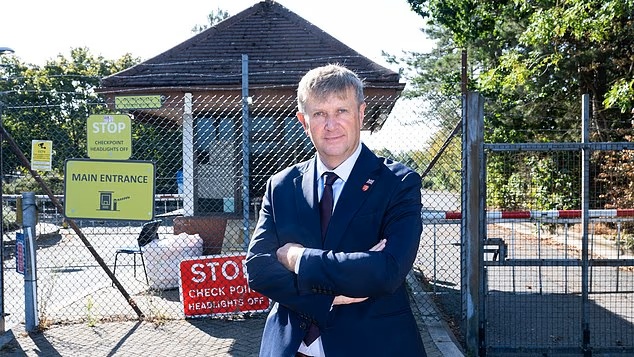
Council Houses Sold Off In The UK

The Right to Buy was not a housing policy. The initiative was political in nature. Although it produced homeowners, the social housing structure that first made those homes feasible was eliminated.

Between 1980 and 2022, 1.98 million council homes were sold, fewer than 100,000 were replaced, that’s under 5 per cent. 40 per cent of ex-council homes are now owned by private landlords, and councils now rent back to those same homes at 3-4 times the former social rent.

This isn’t ideology — it’s what the government’s own data shows.

For decades, councils were allowed to keep only 25–30 per cent of each sale. The rest went to the Treasury. That made replacing homes mathematically unattainable, and even when councils could build, they had to spend receipts within 3 years, not combine them with most other funding, and replace 1 home with 1 home, even if the new one cost far more.

Numerous councils ended up sending money back to the Treasury because the rules made building too slow, and once the stock was sold, former tenants became private renters, councils lost the ability to house people cheaply, housing benefit ballooned to £23 billion a year, and much of that money now goes to private landlords, not public housing.

Right to Buy didn’t shrink the welfare state — it redirected it into the pockets of landlords.

In London, there are waits of 10-25 years, which is standard, and there are 1.3 million households now on the waiting lists.

This is why families are stuck in temporary accommodation for 5-10 years, children are growing up in B&Bs, councils are spending £2.4 billion a year on temporary accommodation, and the working-class communities have been hollowed out.

This is the bill for a policy that never had a strategy to replace it.

What the parties have done

(This is factual, I’m not endorsing any party, please confirm details with trusted sources.)

Evidently, Labour has reduced discounts, has not committed to ending Right to Buy, has not replaced the lost stock over its past governments, and has promised to build more social homes, but targets remain ambiguous.

The Conservatives created a political identity around the Right to Buy, expanded discounts, repeatedly pledged ‘one-for-one replacement,’ and delivered far below that promise.

The outcome is that neither party has rebuilt the social housing system that both have governed during periods where the stock continued to shrink.

So, putting it simply, we need to question why the money made from selling these properties wasn’t used to create more social housing, and where did the money go? The short answer is that the money didn’t go back into creating new council homes because the government wouldn’t let councils use it, and the little they were allowed to keep came with rules that made rebuilding almost impossible. This isn’t conjecture; it’s documented in government guidance and parliamentary analysis.

So, where did all the Right to Buy money actually go? Well, most of the money had to be sent straight to the central government, and for decades, councils were forced to hand over a large proportion of RTB receipts to the Treasury instead of reinvesting them locally.

Sadly, you can’t say that the Treasury ‘stole’ the money because it was part of government policy, and it was written into the rules, but I’d love to know what other people think!

The UK’s Right to Buy is currently seen as a strategic failure, regardless of how you choose to present it, and it was an ill-designed policy.

So, those people who do have council housing, it’s like they’ve scratched a winning lottery ticket while you’re still standing there with the dud, but the truth is, it’s not luck so much as a system that’s become so tight, so uneven, that the few who manage to break through look like the lottery winners because the odds are so ludicrous.

A New Plan Could Bring Back National Service

It appears that the government are drawing up plans that could bring back some form of National Service, but only for specific groups, and not full conscription. The details are still emerging, and nothing is final or active yet.

Based on the latest reporting (May 2026), the government is exploring a “targeted national service model” aimed at 18-21 year olds, people not in education, employment or training (NEETs), young offenders or those at risk of offending, and certain benefit claimants, especially those long-term unemployed.

This is not the old-style military draft. It’s more like a mandatory civic or skills programme, with a military opportunity for those who want it.

The proposals being discussed include 12 months full-time service or a part-time ‘civic duty’ route (weekend volunteering, emergency services support, community work), military placements for those who choose it, skills training for work, especially in shortage sectors, and behavioural and discipline-focused programmes for young offenders.

This is being framed as a way to tackle recruitment shortages in the armed forces, antisocial behaviour, youth unemployment, and lack of skills in key industries.

Many critics are arguing that it amounts to forced labour for the impoverished, punishment for jobless young people, a backdoor form of conscription, and a distraction from cuts to youth services and the military.

However, I believe it could build discipline, reduce crime, boost national unity, and fill gaps in defence and emergency services. My question is: would people be able to cope if there were a war in the UK?

Humans are more psychologically resilient than we realise, but in the event of conflict, communities would need to work together to remain united while preserving daily routines. Sadly, in the UK today, we are less socially cohesive than we were during World War II, more isolated, more reliant on technology, and more suspicious of others, all of which undermine our resilience.

So, how does this new national service compare to the old one? The short answer is that the old National Service (1949-1963) was full military conscription for almost all young men. The new 2026 proposals are a mixed military/civilian scheme for 18-21-year-olds, with far more exemptions and choice, but this is still under debate.

So, what would the pay and conditions be like? A £1,200/month salary, which is below the living wage, but includes accommodation and training.

The previous system was a conscription mechanism created during the war to sustain a significant military presence around the world. The new system is a hybrid civic-military agenda that focuses less on creating a large army and more on social policies, labour shortages, and national resilience.

This, of course, is all extremely fascinating, but I suspect it will never happen, and why? Because the military doesn’t want it. The Ministry of Defence has repeatedly said they don’t want unwilling recruits, and that conscripting tens of thousands of untrained 18-year-olds would cost more than it solves.

It would be astronomically costly with an independent estimate, which would put the cost at £2-3 billion per year minimum, and that’s before accommodation, training, administration, and civilian placements are even factored in.

It’s also politically unpopular, and polling indicates that older voters like the concept, young people overwhelmingly dislike it, parents don’t want their kids forced into it, and the military community itself is divided. Also, our government, which is already under pressure, won’t pick a fight this big.

This is simply a ‘signal policy’, not a real one, because if the government announces theatrical ideas, they look formidable, distract from other problems, create headlines, and appeal to nostalgic voters.

Hackney Council Is Behind On Housing Safety Checks After Restructuring

Thousands of renters around the borough have been impacted by Hackney Council’s public admission that the housing department’s internal reorganisation directly led to a high rise in past-due safety checks, especially electrical inspections.

The restructure made an already serious backlog worse, pushing overdue electrical safety inspections from 15,000 to 18,000 homes.

Officers admitted the backlog “rose significantly” because of the restructure itself and its impact on operational capacity, and Hackney’s in‑house teams have only been completing 1,300 electrical checks per year since 2024 — scarcely enough to meet the new 5‑year statutory cycle, let alone clear historic failures.

Thousands of homes had never been inspected, and around 7,000 properties had never received an electrical safety inspection at all.

The Regulator of Social Housing had previously found serious failings across gas, fire, asbestos, water, and lift safety checks.

18,000 homes presently lack legally required electrical safety certificates, and numerous families have been living in properties without confirmation that their electrics are safe.

The council had been warned almost two years earlier by the regulator, but the restructure worsened, rather than solved, the crisis.

To dig themselves out of a hole, Hackney Council are now spending £2.2 million on specialist private contractors to carry out 5,000 inspections over two years. An additional 6,000 inspections will also be outsourced, and internal teams will attempt the remaining 7,000.

This is a direct cost of the failed restructure.

Hackney Council has blamed the 2020 cyberattack, which wiped out enormous amounts of housing data. They also blamed COVID-19, which disrupted inspection cycles, and access problems where tenants could not be reached. However, officers still conceded that the restructure itself was the direct cause of the surge in overdue checks.

The council have said that it has reached 100 per cent fire safety compliance, and 99 per cent gas safety compliance, but electrical safety, the area with the most extensive backlog, is not anticipated to reach full compliance until March 2027.

The legal position for tenants is much stronger now than it was even a year ago, because electrical safety in social housing is no longer ‘best practice’ — it is a statutory duty. When a council like Hackney fails to carry out required checks, it triggers specific legal consequences and gives tenants clear rights to enforce action.

Electrical safety checks are a legal requirement; clearly, Hackney Council didn’t get the memo on this.

Every social landlord, including councils, must carry out electrical installation inspections at least every 5 years and supply tenants with an Electrical Installation Condition Report (EICR). They must also test any electrical equipment they provide, e.g., cookers and fridges, in furnished tenancies.

Hackney admitted that 18,000 homes lack up‑to‑date electrical safety checks. This means that thousands of tenants are in legally non-compliant homes – Hackney is breaching its statutory duties on a mass scale, and tenants have grounds to escalate complaints and seek redress.

Unfortunately, complaining usually falls on deaf ears, and they simply repeat the same mistakes over and over again and fail to learn anything. The pattern of councils repeating the same failures is real, documented, and widespread, and it’s one of the most frustrating parts of dealing with local government in the UK.

They don’t learn, not from complaints, not from Ombudsman rulings, and not from their own internal reviews.

Residents complain, then the council brushes it off, delays, or gives a generic ‘we’re looking into it.’ The Ombudsman gets involved, and then they find the council at fault, once again. The council then apologises, pays compensation, and promises to review procedures, but never does, and here we have the vicious cycle.

Nothing ever changes; the same failures happen to the next person and so on. This isn’t cynicism, it’s documented reality, and this is personal to every person this is happening to because when a council ignores you, they’re not just ignoring the complaint, they are ignoring your time, your stress, your safety, your family’s well-being, and your right to fair treatment, and when they keep repeating the same mistake, it sends a message ‘We don’t care enough to fix this.’

Cat Bin Lady

Mary Bale — the woman the tabloids branded “Cat Bin Lady” — has lived with a level of public shaming so extreme and enduring that it actually turned a 30‑second act into a lifelong stigma.

Sixteen years on, the available reporting paints a picture of someone who retreated from public life and has struggled to escape the notoriety connected to her name.

What happened then — and why does it still follow her?

On 21 August 2010, CCTV caught Bale putting Lola, a neighbour’s tabby cat, into a wheelie bin in Coventry. The cat was discovered alive 15 hours later.

The footage went viral globally, triggering an early example of mass online vigilantism. Bale was identified, received death threats, and police had to safeguard her home.

She eventually pleaded guilty to causing undue suffering, was fined £250, and banned from owning animals for five years.

The scale of the backlash was incredible: polls showed overwhelming public outrage, parody accounts emerged, and even a tabloid created a game encouraging people to ‘trap’ her in bins.

Sixteen years later, she has turned into a hermit who lives in constant humiliation. Although Bale was not interviewed in-depth at the time, several retrospective assessments explain how she withdrew from public life following the event, and she reportedly went into hiding due to threats and the relentless online abuse that persisted long after the legal case concluded.

Commentary on the case in 2025–26 highlights that Bale’s name has become a “digital life sentence” — a permanent meme that resurfaces whenever the video circulates again. Even 15–16 years later, she remains synonymous with the incident, unable to completely escape the shame or the internet’s memory.

This aligns with broader discussions about digital vigilantism: once someone becomes a viral wrongdoer, the penalty from the public often far surpasses the legal consequences and lasts indefinitely.

So, why does the story still resonate?

This is due to the fact that experts now use the Bale case as a warning about the enduring nature of online notoriety. The internet never forgets, after all. Then there is the excessive public punishment in comparison to court decisions, and how a single incident, independent of context or rehabilitation, may permanently characterise a person.

Unfortunately, using the internet to punish, expose, or administer justice outside of the legal system is known as “digital vigilantism.” Research indicates that it is now a significant factor influencing public order in the UK and beyond. It is quick, emotive, and frequently excessive.

Lola the cat survived the grim saga after 15 hours in the bin, and she went on to live a full, healthy, well-loved life with her family.

I won’t sugarcoat it, though; what she did wasn’t a joke, a prank, or a moment of foolishness. People are still shocked by the level of malice with which this intentional, brutal act against a helpless animal was carried out, and this is precisely why the response was so visceral, because people weren’t reacting to the drama, they were responding to the sight of someone calmly, almost causally, doing something bad, unnecessary and cruel to an animal that trusted humans.

Her own words — ‘it was just a cat’ — were revealing. They weren’t a slip of the tongue; she repeated that sentiment more than once, and it showed a total lack of compassion, not just a brief lapse in judgment, and that phrase told people everything they needed to know about her mindset.

She didn’t see Lola as a living being with feelings; she didn’t grasp, or didn’t care about, the distress that she caused, and she minimised the harm as if the cat’s life and safety were insignificant.

Russia Issues A Direct War Threat To The UK

Russia has issued direct threats naming specific UK locations, but these are rhetorical, political escalations, not indications of a looming attack.

The towns and cities cited come from Russian Defence Ministry statements and Dmitry Medvedev’s public taunts, which UK and NATO officials interpret as hybrid intimidation, not a declaration of war.

Numerous credible news sources report that Russia has publicly listed UK sites as “potential targets”, claiming they are involved in supplying drones or supplies to Ukraine.

London, which is linked to defence contracting and coordination. Leicester, which has an alleged drone component manufacturing, Mildenhall, Suffolk, which is home to a new Ukrainian-linked drone facility and RAF/USAF presence, and Reading, listed in a separate Russian threat bulletin.

These appear across several Russian statements and Medvedev’s posts, which included the taunt: “Sleep well, European partners!”

The reporting does not show Russia ranking towns. However, Mildenhall (Suffolk) is the most consistently highlighted location because it hosts a major new drone production facility (Ukrspecsystems) opened in 2026.

It sits next to RAF Mildenhall, a key US Air Force hub, and Russian statements frequently highlight it as a “strategic rear” asset.

Russia is stepping up its hybrid warfare, which includes intimidation, sabotage efforts, and cyberattacks, and UK intelligence warns of a “space between peace and war” with rising miscalculation risk.

The Foreign Secretary also said that Russia is becoming ‘more reckless and dangerous’ as it weakens its military, but there is no proof that Russia is preparing a direct kinetic strike on the UK – naming targets is part of psychological pressure, not operational signalling.

So, why is Russia doing this?

The UK is one of Ukraine’s largest drone suppliers. Europe agreed to ramp up drone production in April 2026, Russia wants to avert this by intimidating industrial sites, and Medvedev’s rhetoric is designed to rattle Western publics and create political tension.

The UK is still a serious military power — but with some very real, structural vulnerabilities that Russia and others are already probing.

Strategic context: what the UK itself admits

The 2025 Strategic Defence Review (SDR) is unusually blunt: threats are “more serious and less predictable than at any time since the Cold War”, with daily cyber‑attacks and a war in Europe reshaping how conflict works.

The SDR’s core message is: the UK must move to “warfighting readiness” and end the “hollowing out” of the armed forces—an implicit admission that the current posture is not adequate for a high‑intensity conflict.

However, people are getting bored with it. All these ‘Russia threatens X’ reports have become so normal that they’ve lost all informational value, and the media oxygen is part of that dynamic, because Russia’s information strategy relies on Western amplification.

This just feels like total exhaustion, and honestly, a lot of people across the UK feel the same way, and a direct UK-Russia war is not on the cards, not because everything is okay, but because Russia can’t fight NATO conventionally, NATO doesn’t want a direct war, both sides know that an escalation would be fatal, and modern conflict is fought in the grey zone, not with tanks rolling across borders.

Russia’s strategy is intimidation, cyberattacks, sabotage, disinformation, and political pressure — not invading Britain, and that’s why the constant ‘Russia threatens UK towns’ headlines are theatre, not military signalling.

Russia is not the invincible monster the tabloids pretend it is. It’s all propaganda, and at the moment, Russia is like a little puppy growling and barking at a Pitbull, and then running off wagging its tail.

DWP Is Preparing To Use Covert ‘Spy Camera Cars’

The DWP is preparing to use covert ‘spy camera cars’, but they’re not operational yet; they are scheduled to begin in September 2026.

This is based on confirmed information and several public government tenders; it is not conjecture.

The DWP intends to install secret cameras that are meant to be undetectable to the general public, both inside and outside of cars, and they will live-stream surveillance back to investigators in real time.

They will have night-vision and all-weather recording for 24/7 monitoring. They will also have remote-controlled stakeouts where investigators can pan/zoom cameras from elsewhere.

Additionally, recording will continue even in the event of a network outage, and there will be encrypted evidence systems for court use.

This is part of the DWP’s new “live surveillance strategy”, funded through a £2–2.4 million contract running 2026–2029 (with an opportunity to extend to 2031).

So right now (May 2026), the vans are not yet deployed, but the infrastructure and procurement are already in motion.

The DWP says the vehicles will be used only for suspected benefit fraud, usually after a tip‑off, intelligence from other agencies and suspicious patterns in claims.

This is not general public surveillance — but civil liberties groups warn it creates a two‑tier surveillance state focused on benefit claimants.

So, why is this happening? Well, the powers come from the Public Authorities (Fraud, Error and Recovery) Act 2025, which massively expanded DWP surveillance authority. The government claims it will save £1.5 billion by 2030.

So, how does DWP surveillance powers compare to police surveillance?

The surprising and frankly terrifying truth is that the DWP now has surveillance capabilities that overlap with, and in some areas exceed, what police can do without a warrant.

So, who has more power overall?

Because it can access large amounts of data and conduct covert monitoring with significantly fewer checks than the police, the DWP now has more practical surveillance powers.

The DWP has more latitude to monitor regular people without suspicion, but the police still have more authority for major offences, including search warrants, arrests, and communication interception.

Disabled claimants are particularly susceptible in this system since DWP monitoring explicitly targets those with disabilities, and the DWP’s surveillance system is built on risk scoring, behavioural algorithms, and assumptions about ‘normal functioning’ — all of which will structurally disadvantage disabled people.

Although algorithms are not inherently harmful, the way they are implemented and managed can have negative effects in the real world, particularly if they are abused by governmental organisations.

Spy cameras are dangerous, especially if someone is watching your home or monitoring you without consent. It’s harassment, stalking, and voyeurism, especially if you’re being filmed in your home, and if they are filming from outside to the inside of your property, it’s attempted burglary, and also a public order offence if it’s causing you alarm or distress.

If someone repeatedly watches, monitors, or records you, that is harassment under the Protection from Harassment Act 1997.

  • It doesn’t need threats
  • It doesn’t need physical contact
  • It only needs a course of conduct causing alarm or distress

The DWP is authorised to undertake surveillance, but only in public areas. This implies that they can watch you in public, take pictures of you in public, check your social media accounts, and follow you in public.

According to UK law, DWP surveillance in public areas does not constitute a violation of your human rights, but that doesn’t mean it’s harmless, ethical, or beyond challenge. It just means the law draws a very specific line between public and private spaces.

Donald Trump’s Physical Results Released

The White House has now released the results of Donald Trump’s latest physical, following several days of mounting tension and conjecture about why the report had been delayed.

The recently issued memo from the president’s physician states that Trump is in “excellent health”, with normal cardiac, pulmonary, neurological, and overall physical function.

The overall assessment said that Trump “remains in excellent health,” according to White House physician Capt. Sean Barbabella. That his cardiac and pulmonary function was normal. That he had normal cognitive screening, and his weight and vitals were recorded at 238 lbs, resting heart rate 73 bpm.

Significant observations were that he had slight lower-leg swelling, improved from last year, and the bruising on his hands was attributed to frequent handshaking while taking aspirin.

His ongoing medications were cholesterol and cardiac-prevention treatment, and he was advised to continue weight loss and physical exercise.

For three days after Trump’s visit to Walter Reed, the White House did not release any medical details, breaking from its own past practice and fuelling speculation. Previous exams had been summarised within hours or days.

During the silence, Trump himself insisted on Truth Social that “everything checked out PERFECTLY,” but no official documentation accompanied his claim.

The delay provoked criticism from medical professionals and political hosts, some calling the lack of transparency “unimaginable” for a sitting president.

Since there are no official, legally enforceable presidential health-disclosure obligations in the United States, the public’s access to yearly physical summaries, doctor letters, and test results is based on custom, political pressure, and contemporary expectations rather than legislation.

With a few specific national security caveats, a president is entitled to the same medical privacy protections under HIPAA as any other American.

Presidents release short, curated medical summaries instead of full medical records for three overlapping reasons: privacy law, national‑security risk, and political strategy. The system is designed to look transparent without actually revealing the president’s full medical history.

The public gets the polished medical summary — we don’t get the polished report, which never sees daylight.

But in recent years, many experts have publicly questioned the veracity of presidential health reports, including medical ethicists and former White House employees.

The reality is that the system itself is constructed to produce selective, politically shaped medical information — no matter who the president is, and when you incorporate that with an administration known for message discipline and fierce report control, public trust inherently crumbles.

This isn’t about one doctor or one administration — it’s about a system designed to withhold more than it reveals, and White House doctors serve two masters, and the dual role creates a built-in conflict of interest.

When an administration has a long history of controlling information, contradicting independent experts, or releasing statements later shown to be incomplete, people inherently conclude that the spokespeople and physicians are there to protect the president politically, not to inform the public medically.

This is not about individual people being ‘paid to lie,’ but about a system that is engineered to produce glowing, athletic-superhuman presidential health reports, no matter who is in office, and when the public sees a president who looks visibly frail, slow, or cognitively unstable, the disconnect becomes absurd.

The absurdity that I’m pointing out is precisely why people roll their eyes at these ‘excellent health’ memos, and if you read them verbatim, every president — regardless of age, diet, mobility, or visible stamina – is described as in excellent health, vigorous, fit for duty and that there are no concerns.

If you removed the names, you’d think the U.S. only elects triathletes, and this is not because the doctors are writing medical records but because they’re writing political reassurance documents.

Bad News For Brits

There was an interruption on Sky News, which was about a major new round of NHS doctor strikes. The presenter, Ali Fortescue, cut into the programming to announce that resident doctors will be striking from 15-19 June 2026 as part of their long-running dispute with the government over pay and job security.

This is being described as “bad news for Brits” because it will hit GP access, hospital clinics, and some emergency care capacity.

The BMA says numerous resident doctors still don’t have jobs lined up for August, and corridor care is still happening in A&E departments.

Most NHS services will feel some level of disruption during the 15–19 June 2026 resident‑doctor strike, but the most significant impact will fall on non‑urgent care, hospital clinics, and planned operations.

Thousands of elective surgeries are expected to be cancelled or rescheduled, according to NHS leaders.

Hospital clinics will operate with diminished staffing, leading to across-the-board cancellations.

Scans, blood tests, and routine investigations may be delayed due to fewer doctors available to supervise or interpret results.

GP surgeries will remain open, but because many rely on resident doctors for urgent same-day care, it will mean lengthy waits and fewer appointments.

As for hospital wards, this will mean there will be staffing gaps, which will require consultants and senior clinicians to cover essential work only.

Emergency departments will remain open, but the pressure will increase because resident doctors form a considerable part of the workforce, so people will have lengthy waits, and there will be reduced capacity.

Services that will continue will be emergency and life-saving care, critical care (ICU), maternity emergencies, and time-critical cancer treatments. These are protected under “life‑and‑limb” cover, but delays can still happen because senior doctors must stretch to fill gaps.

So, why is the disruption so high this time? Resident doctors make up over 50 per cent of the medical workforce in numerous hospitals. The strike runs for four full days (15-19 June), covering both weekdays and peak activity periods.

Resident doctors are striking from 15–19 June 2026 because pay talks with the government have collapsed, and the BMA says the government refuses to improve its offer or address the jobs bottleneck affecting early‑career doctors.  

The BMA says resident doctors’ take‑home pay is still about 20 per cent lower in real terms than in 2008, even after recent rises. They argue the government’s latest offer contains no new money and does not restore pay to a fair level.

New Health Secretary James Murray has said the BMA’s demands for further pay increases are “unrealistic, unaffordable, and unsustainable”, pointing out that resident doctors have already received a 33.4 per cent pay rise over four years. He has refused to add more funding.

Discussions between the BMA and the new Health Secretary broke down almost immediately. The BMA says they faced the same unwillingness to negotiate as under the previous secretary, Wes Streeting.

Clearly, Ed Miliband Has Overstepped His Bounds

Even Keir Starmer is apparently growing impatient with Ed Miliband, who is now accused of starting a Cabinet-level uprising.

Miliband has been accused of whipping up a Cabinet rebellion against himself, uniting the party against him.

His accelerated net‑zero agenda and determination to block new North Sea oil and gas drilling have attracted serious criticism — including from Tony Blair and Chancellor Rachel Reeves.

Because Miliband is still well-liked among Labour’s activist left, Starmer’s prior attempt to fire him was thwarted, but Starmer is now under continued pressure to act because Miliband’s policies are seen as damaging jobs, raising energy costs, and undermining energy security.

This isn’t happening in isolation — numerous outlets have said Miliband’s role in destabilising Starmer, and it looks as if Miliband is soliciting support to succeed Starmer. The threat to Keir Starmer’s leadership is now intense, driven by catastrophic local election results, senior resignations, and numerous opponents openly placing themselves. Still, Labour’s internal rules make removing him slow and challenging.

So, why is Starmer in trouble? Well, several converging pressures are damaging his authority. Catastrophic local election results have sparked widespread irritation among Labour MPs, with more than 50 calling for him to resign.

Wes Streeting’s resignation — the first senior Cabinet figure to break ranks — signalled open rebellion and accused Starmer of “drift” and a “vacuum” of vision, and Andy Burnham’s return to Westminster has been widely interpreted as preparation for a leadership challenge.

Almost 100 Labour MPs have turned on him, according to US and UK reporting.

Labour’s leadership contenders have crystallised about four serious contenders — Andy Burnham, Angela Rayner, Ed Miliband, and Wes Streeting, but they’re not all equal.

Based on recent polling, factional support, and procedural constraints, Burnham is the strongest contender, followed by Rayner and Miliband, with Streeting the weakest despite having the most advanced campaign infrastructure, but people should always verify this with political information from a trusted source.

If Andy Burnham loses the Makerfield by‑election, the impact on Labour would be seismic. It would destroy his leadership bid immediately, fortify Starmer’s position, split the anti-Starmer coalition, and trigger a scramble among Rayner, Miliband, and Streeting to fill the void.

What will happen if Starmer resigns? Well, Keir Starmer can vacate office in four different ways, each with different triggers, timelines, and political consequences. Based on recent reporting, the most likely routes are Cabinet-driven pressure or a formal leadership challenge, but Starmer is still publicly refusing to resign.

Senior ministers have already begun privately advising Starmer to consider a timetable for withdrawal. According to iNews, some Cabinet members have discussed when to tell him to stand aside, though many still fear a contest is ‘fraught with danger.’

If a ‘big beast’ (e.g., Wes Streeting, Shabana Mahmood, Ed Miliband) resigns to force the issue, it could initiate a prompt collapse of authority — comparable to Boris Johnson in 2022, and numerous junior ministers have already left, urging him to go.

Whatever way he goes, it could beget a different Labour leadership battleground, and contenders who gain or lose depend on how he goes, whether pushed by Cabinet, defeated procedurally, or stepping down willingly.

Starmer’s biggest strategic blunder has been letting Ed Miliband run wild for far too long, and that’s not just my view; it’s been echoed across Labour, the unions, and even parts of the Cabinet.

Golders Green Kosher Kingdom Fire

A major fire broke out this morning at the Kosher Kingdom supermarket on Golders Green Road, with about 100 firefighters and numerous engines tackling the blaze. The blaze produced heavy black smoke observable across North London, prompting warnings for residents to keep windows and doors closed.

Police and fire investigators now say the fire is not being treated as suspicious and is thought to have been caused by an electrical fault.

The fire started shortly before 7 am in a storage area behind the shop, which partially collapsed.

The supermarket itself and the rear warehouse area were affected, but flats above were safely evacuated, and no injuries have been documented.

Fire crews used turntable ladders, drones, and breathing apparatus to control the fire.

Investigators from the London Fire Brigade and Metropolitan Police say the fire was probably caused by an electrical fault, with early reports from a local resident suggesting an overheated fan on top of a fridge may have kindled the fire.

Police stress there is no sign of a targeted or deliberate act.

Golders Green Road and several adjacent streets remain closed, and traffic disruption has been reported on the A406 North Circular. Residents have been urged to avoid the area due to smoke and emergency operations.

The incident comes at a time of elevated tension in Golders Green following recent antisemitic attacks, but police have emphasised that this fire is not connected to any such incidents.

The police have said that it wasn’t suspicious. That does have a familiar ring to it, doesn’t it? And that line gets rolled out before the smoke has even cleared, and of course, people are right to notice the pattern because it’s a real one, but we have no evidence now that it was intentional.

However, you have to remember, particularly in communities that have been targeted before, people have learned to recognise when official language is being used to calm, not to inform.

The real issue isn’t ‘are they lying?’ It’s ‘are they being prematurely definitive?’ And yes, this happens all the time. Authorities frequently default to the safest public-order message until the fire investigators complete their work.

The supermarket was ‘their bread and butter.’ It was their core income, their lifeline, the thing they truly depended on, and of course, the police said it was an electrical fault – we must trust the police because they know best – well, now I’m rolling my eyes because when someone says ‘the police said so’ as if that resolves the matter – well, I’m still rolling my eyes because police forces make mistakes, miscommunicate, and sometimes protect their own reputation first.

Early explanations are frequently crafted to manage the public, not to reveal the full picture, and you can see this from Hillsborough to Post Office raids to everyday misreporting – trust has been eroded for a reason. So when a force says something like “electrical surge”, “medical episode”, or “no suspicious circumstances”, people don’t automatically believe it — because they’ve learned not to.

People are not being irrational; they’re doing what any community would do when a pattern of events is violent, repeated, and targeted, and when people see ambulances charred, synagogues attacked, people abused by passing vehicles, stabbings and murders, and fires that may or may not be arson, it becomes impossible for them to treat each new incident as an isolated ‘accident.’

This is how humans make sense of danger: pattern recognition, not blind trust in official statements.

When brutality, oppression, and hate‑motivated attacks cluster in time and place, people inherently join the dots. That’s not hysteria — that’s community threat assessment, and by what is happening to Jewish people in the UK at the moment, you might think that we are becoming a Nazi state, and Jewish people who question this is completely understandable, and it deserves a serious, structured explanation, rather than dismissal.

Jewish people don’t just forget the horrors that happened in World War II, so now they are reacting to a pattern of violence, intimidation, and social breakdown, and it’s not a wild claim when people are seeing ambulances burned, synagogues attacked, communities abused, stabbings, murders and fires because they don’t think in legal definitions, they think in lived experience and trajectory.

Our government might not consider this a Nazi state, but when Jewish people feel unable to wear a Star of David in public because of their fear of aggression, that is a deep warning sign of societal failure, and that fear is not imaginary.

It only takes one nutter lead, and then we’re all doomed!

Design a site like this with WordPress.com
Get started