Rayleigh’s Rogue GP: Licence Gone, Still Cracking On

Dr Majdneya was booted from the register after treating 135 patients without a licence, basically doing GP cosplay in Rayleigh as if it were Comic-Con for dodgy clinicians.

Dr Jairon Majdneya continued working at Audley Mills Surgery in Rayleigh for almost a month despite knowing she no longer held a licence, a Medical Practitioners Tribunal found — essentially freelancing as a GP like it was a side hustle nobody asked for.

The General Medical Council (GMC) withdrew her licence on March 27, 2024, but Dr Majdneya continued to practise as a GP until April 23, 2024 — effectively practising medicine on ‘aeroplane mode’ for nearly a month.

She saw 135 patients during that period, and her actions were found to have been dishonest — which is impressive, really, considering most people struggle to get a GP appointment even with a licence.

Dr Majdneya, who qualified in 2013 and completed her GP training in 2020, was initially suspended from the medical register for 12 months after a tribunal hearing last year — basically put on a year‑long medical “time-out” for behaviour that would make even a locum raise an eyebrow.

But following a review of her case ahead of the end of her suspension, her fitness to practise was again found to be impaired, and the tribunal ordered her erasure from the medical register — essentially concluding that she’d flunked her comeback tour before it even started.

The review heard that Dr Majdneya had submitted no new evidence and had disengaged from the regulatory process — essentially ghosting the GMC like it was a bad Tinder date she couldn’t be bothered to unmatch.

The GMC said she had not demonstrated insight or remediation, nor provided evidence that she had kept her medical knowledge and skills up to date — essentially turning up to a fitness‑to‑practise review with the energy of someone handing in homework they didn’t actually do.

The tribunal noted she had not worked since her suspension and said her prolonged absence from clinical practice meant she would have become “deskilled” — basically suggesting her medical skills had gathered dust like a stethoscope left in the back of a kitchen drawer.

It also found there was no evidence that she had remedied her misconduct and concluded there remained a risk of repetition — basically suggesting she hadn’t fixed a thing and might just try the same stunt again if left unsupervised.

Locals joked they can’t get an appointment with licensed GPs, mums said she must’ve been running on pure vibes, retired nurses laughed at the idea of being “deskilled”, and neighbourhood gossip declared Rayleigh doesn’t need drama — but if it’s turning up, at least make it medical so everyone’s got something to talk about.

WAS MARGARET THATCHER A GOOD PRIME MINISTER?

Margaret Thatcher was a divisive but transformative Prime Minister whose free‑market reforms reshaped Britain while leaving deep social scars, according to historians who analyse her legacy.

Margaret Thatcher was either the nation’s saviour or its super‑villain, depending on who you’re gossiping with at the bus stop.

You could say every PM since Thatcher has taken turns kicking the country down the stairs, and she just gave it the biggest shove.

Thatcher spoke like she’d swallowed a box of iron nails, while today’s politicians speak like they’re terrified one honest sentence might set off a fire alarm.

Thatcher might’ve had the steel spine, but for a lot of people she was the horror story that walked into Downing Street and never quite left the national psyche.

Thatcher marched into every room as if she’d already won the fight, while today’s PMs tiptoe in like they’re worried the lectern might bite them.

Thatcher was basically the Churchill of handbag politics — storming through crises with a granite jaw while modern PMs look like they’re waiting for permission from their media adviser.

Thatcher might’ve strutted around like the female Churchill, but she’ll forever be the PM who snatched school milk and earned herself a nickname that followed her longer than her handbag.

She opened the door for millions to buy their council homes, but the money from those sales was locked behind Treasury rules that stopped councils from building replacements.

Thatcher wasn’t just disliked; she was properly hated by many — the kind of deep, generational hatred that gets passed down like family recipes.

Thatcher nailed some things with iron‑lady precision, but on others she missed the mark so badly the country’s still sweeping up the mess.

Thatcher was pure Marmite politics — you either spread her thick on toast or chucked the whole jar in the bin.

Thatcher had an ego the size of Westminster Abbey, but she wasn’t alone — Farage strutted around with the same “I’m the main character” energy, just without the handbag.

Thatcher didn’t just shake the country; she rewired it — and some of those wires are sparking now, leaving us dealing with problems that started in her era and never got fixed.

On the surface, she looked like a leader grabbing Britain by the scruff and “sorting it out,” but look closer, and she flogged the family silver, unleashed a culture of me‑first greed, and planted the seeds of the social divide we’re still tripping over today.

Not everyone will agree with me, and that’s alright — Thatcher was pure Marmite politics, and people are entitled to love her, hate her, or sit somewhere awkwardly in the middle.

When it comes to Thatcher, people’s comments tell the whole story — half the country calling her a saviour, the other half calling her the architect of Britain’s long‑term mess.

A Woman Was Left On Hospital Floor For Seven Hours

A woman says she was left in agony on a hospital floor for seven hours after almost collapsing while out shopping.

Tammi Radcliffe, 31, almost collapsed from a burst of excruciating stomach pain while picking up groceries in ASDA. She called an ambulance, was given IV paracetamol, and was taken to Royal Preston Hospital in Lancashire, arriving at about 4 pm on Saturday.

Tammi says she was triaged and then left in the waiting room for hours, never seen by a doctor, and ended up lying on the floor in severe pain because there were no beds available. She says her temperature soared to 39°C, yet she wasn’t given stronger fever medication until almost 9 pm.

Seven hours after she arrived, Tammi finally saw a doctor, who couldn’t give her a diagnosis but prescribed IV antibiotics. She says she didn’t actually receive them until 2.30 am, and they were given through her cannula while she was still lying on the hospital corridor floor.

Tammi, an administrator from South Lakes, Cumbria, said she’d never experienced pain so intense, despite normally downplaying how she feels. She said she was crying and doubled over in agony in the waiting room, unable to hide it, and was begging for pain relief as she lay there suffering.

Tammi said she initially assumed the pain was just trapped wind that would pass. She explained: “I’d had cramps all morning, but I just put it down to trapped wind.”

She said she’d only gone to ASDA for paracetamol and some Rennies or Windies, thinking it was just trapped wind. But as she walked around, the pain suddenly intensified. Her vision began to fade, the light dimmed, and she felt extremely light‑headed, as though she was about to pass out.

She said she went to the pharmacy, told staff she was alone and didn’t know what to do, and they sat her down, called an ambulance, and stayed with her as the pain worsened and she cried.

The ambulance took Tammi to Royal Preston Hospital, where her worried husband, Corey, 36, met her, and he said he asked for more pain relief at least six times in two hours, yet staff often didn’t acknowledge him.

Corey said he kept asking for Tammi to be reassessed and re‑triaged, but staff repeatedly told him she’d already been triaged and to sit down, leaving her so exhausted and unwell that she lay on the A&E floor under a wheelchair to escape the bright lights.

Corey said her temperature wasn’t checked for hours, and when it finally was, it had risen to 39°C and she was shaking, and although more morphine eventually arrived, he later had to ask for her temperature to be taken again in case it had climbed further, saying there was a complete lack of observations.

Corey said her blood tests showed sharply raised infection markers, yet despite how unwell she was, it still took around seven hours for her to see a doctor at 11 pm, and although she was prescribed antibiotics then, she didn’t receive them until 2.30 am.

Tammi received her IV antibiotics through a cannula while lying on the floor, and Corey said the department wasn’t even particularly busy, with spare seats available, so he couldn’t understand why everything took so long.

Tammi was moved to a treatment room on the gynaecology ward at around 3 am and ultimately left the hospital on August 16 without a diagnosis, saying doctors weren’t certain what was causing her pain because she still needed swabs and an ultrasound scan.

Public reaction has centred on people’s comments about the ordeal, with many expressing shock at how long Tammi was left waiting.

Hospitals have become appalling, with patients now ending up lying on A&E floors.

No human being should ever be subjected to treatment like this.

We are not living in the dark ages anymore, and people should not be treated like this.

Things should be getting better, not worse, and the NHS is clearly struggling with staffing pressures that are affecting patient care.

It is now taking more than 24 hours for patients to get beds on wards, and many patients are now being sent home simply because there aren’t enough beds available.

Council Blunder: Social Home Sold, Rent Explodes, Tenants Told To Feck Off

Social housing tenants are now at risk of homelessness after a Westminster Council blunder allowed 16 supposedly protected homes to be sold off and turned into private rentals.

Residents living in Gem House, Marylebone, say their new private landlord has hiked rents to as much as eight times their current payments — telling them to either meet the new charges or move out.

The 16 flats were able to be sold to Gem House Limited because a loophole in Westminster’s original agreement with the developer left them unprotected. The council did try to intervene — launching legal action to stop the new owner from turning the social homes into private rentals — but the challenge didn’t succeed.

Earlier this month, the Court of Appeal threw out Westminster’s challenge — leaving the landlord free to charge full Marylebone market rents, which are notoriously steep.

Westminster City Council has told the tenants — many of whom have already spent years shuttled through temporary accommodation — that they must now file a fresh homelessness application in order to be considered for rehousing.

Many families say they still don’t know where they’ll be living once summer ends. They were previously assured their flats were permanent, secure affordable homes — and now they’re blaming Westminster Council for the “blunder” that has left them in limbo.

Mr and Mrs Banjak, who live in Gem House with their three children, say they’ve been told their new rent will jump to £6,850 a month — more than eight times their current social rent of £793.

Unable to afford the increase, the family is now due to be evicted at the end of August, pending the outcome of a legal case.

The council has told them to file a homelessness application — a step the family says could leave them without knowing where they’ll be moved until only a few days before the eviction.

“It’s very, very horrible, especially because we don’t know where we’re going. That’s the biggest problem,” Mrs Banjak told the Local Democracy Reporting Service.

“They’ve given us no time at all. If we at least had an address, we could prepare and move calmly. Instead, we’re just stuck waiting — we still don’t know where we’re going.”

The 16 flats were sold to Gem House Limited after a loophole in the council’s original agreement with the developer allowed the transfer to go through. Westminster City Council later launched legal action in an effort to stop the new landlord from turning the social homes into private rentals.

A local mum called the idea of £6,000‑plus rent “a joke”, saying she struggles to afford her Pret subscription as it is. A retired neighbour remarked that loopholes “never seem to work in favour of ordinary people”. A bus‑stop regular said being told a home was “secure” only to be pushed out shows Westminster “needs to sort itself out”. A teenager said their landlord’s £50 rise “nearly made them faint”, calling £6,850 “criminal”. And a shop worker compared the homelessness application process to “filling out a Nectar card form”.

It’s supposed to be social housing — but at this point it’s about as “social” as a bouncer telling you the club’s full while you can see ten empty tables behind him.

Housing associations charge more than council properties — it’s basically social housing wearing designer prices and pretending it shops at Lidl.

Why are housing associations more expensive? Because they’re basically social housing that’s gone to private school.

They start off all “We’re here for the community!” and then hand you a rent bill that looks like it’s been calculated by someone who thinks a meal deal costs £14.99.

They’re not here for the community — they’re here for profit. Full stop. Housing associations talk like they’re running a warm little neighbourhood charity, but behave like they’re auditioning for The Apprentice.

They’re not here for the community; they’re here for profit — and if you can’t afford to pay it, then feck off. Housing associations have the same energy as a fancy restaurant that charges £19 for a salad and then acts shocked when you ask for tap water.

Heart Scan Mistake — Come Forward For Safety’s Sake

The radiology consultant at Royal Derby Hospital had been under review since concerns were first raised by cardiology colleagues in November 2020.

As the re‑examination progressed, clinical teams began identifying cases where misinterpretation of imaging may have altered treatment pathways, including delayed diagnoses, inappropriate reassurance, and missed signs of serious cardiac disease. The trust subsequently initiated a patient recall programme, contacting individuals whose care may have been affected and arranging follow‑up assessments to determine whether further intervention was required.

The findings also triggered scrutiny from external bodies, with medical examiners reviewing historic cases to establish whether reporting errors could have contributed to adverse outcomes. While the majority of cases were categorised as low harm, a subset was escalated for detailed examination due to the potential for significant clinical impact.

The hospital has since implemented enhanced quality‑assurance measures, including strengthened peer‑review processes, mandatory double‑reading of complex cardiac imaging, and additional training for staff involved in advanced MRI interpretation. The trust stated that these steps were designed to ensure “robust, safe, and consistent reporting standards” across the department.

The situation also prompted renewed scrutiny of governance structures within the imaging department, with external reviewers highlighting gaps in oversight, audit frequency, and escalation pathways. These findings led to a series of recommendations aimed at strengthening clinical accountability, including mandatory cross‑specialty case discussions and more rigorous monitoring of individual reporting performance.

Meanwhile, patient groups expressed concern about the potential impact on those whose diagnoses may have been delayed or altered. Advocacy organisations called for greater transparency from NHS trusts when significant diagnostic failures occur, arguing that patients should be informed promptly and supported through any subsequent investigations or treatment changes.

The trust has stated that it is “committed to learning from the findings” and has begun implementing a phased improvement plan. This includes investment in advanced imaging software, expanded consultant training, and the introduction of a dedicated quality‑assurance lead for cardiac MRI services. Early feedback from staff suggests that these measures have already begun to improve consistency and confidence in reporting standards.

The trust began liaising with national bodies to ensure that its response aligned with wider NHS expectations for diagnostic governance. Early discussions highlighted the need for clearer escalation routes when concerns are raised across specialities, particularly in high‑risk areas such as cardiac imaging where diagnostic accuracy directly influences life‑saving interventions. The trust has since committed to adopting strengthened cross‑departmental reporting pathways to prevent similar issues from recurring.

The publication of the review prompted a wide range of responses from patients and members of the public, many of whom expressed shock that such discrepancies had persisted for so many years. Several individuals who had undergone cardiac MRI scans during the period under investigation said they felt “deeply unsettled” by the possibility that their results may have been misinterpreted, with some describing the recall process as “stressful but necessary.”

Others voiced frustration at what they saw as a failure of oversight, questioning how concerns raised by clinicians in one speciality had not triggered earlier intervention. One patient group representative commented that the situation “highlights the importance of strong cross‑departmental communication in hospitals, especially when diagnostic errors can have life‑changing consequences.”

Among healthcare professionals, reactions were more mixed. Some staff emphasised that the case underscored the pressures facing imaging departments nationwide, noting that high workloads and recruitment challenges can make consistent peer review difficult to maintain. Others argued that the findings demonstrated the need for more robust governance structures, with one clinician stating that “no single consultant should ever be left working in isolation on complex imaging.”

On social media, the story generated significant discussion, with many users expressing sympathy for affected patients while also calling for greater transparency from NHS trusts when large‑scale diagnostic reviews occur. A recurring theme in public comments was the desire for reassurance that lessons would be learned and that similar issues would not be allowed to develop elsewhere.

Jealous Of A Motability Car

If you’re jealous of a Motability car, then be honest with yourself: you’re not coveting the vehicle, you’re throwing a full‑body tantrum because disabled people get the accommodations that stop them being trapped indoors — so if you want the car, take the pain, the fatigue, the hospital bingo card and the mobility aids too, because what you really despise isn’t the scheme, it’s the scandalous notion of disabled people having freedom, and that makes you look less like a taxpayer and more like a Victorian landlord.

…and if you’re still stamping your feet about disabled people getting a car they literally need to leave the house, then do go ahead and complete the look: pop on your top hat, grab your monocle, and announce to the nation that you believe mobility aids are ‘unfair advantages,’ because at that point you’re not critiquing policy — you’re auditioning for the role of Victorian Moral Inspector, policing who’s allowed outside and who should remain indoors for the comfort of your delicate sensibilities.

Once you’ve finished lecturing disabled people about the ‘luxury’ of being able to leave their own front door, you can complete your transformation by drafting a stern pamphlet titled ‘Mobility: A Perk Too Far’, in which you bravely argue that ramps are clearly society’s slippery slope into moral decay, because nothing frightens you more than the idea of someone with chronic pain getting to Tesco without your permission.

…and once you’ve finished drafting your pamphlet about how ramps are clearly society’s downfall, you can hold a public meeting where you bravely propose that disabled people should apply for ‘permission to exist outdoors,’ complete with a committee, a clipboard, and a man called Barry who decides whether someone’s chronic pain is ‘sufficiently inconvenient’ to warrant leaving the house — because at this point you’re not critiquing benefits, you’re running a one‑person nostalgia festival for the era when compassion was considered a dangerous modern invention.

After your public meeting about ‘permission slips for disabled outdoor time,’ you can round off your crusade by launching a nationwide campaign demanding that wheelchairs come with hazard lights so you can be warned in advance when someone with chronic pain is about to commit the outrageous act of entering a public space — because at this point you’re not debating policy, you’re essentially running a heritage project dedicated to preserving the ancient tradition of making life harder for people who already have enough on their plate.

From Barry insisting disabled people should file outdoor‑permission slips, to Sharon thinking Motability cars are handed out with flu jabs, to Colin claiming his one sore back in 2014 entitles him to a free vehicle, to Maureen warning that ramps will trigger societal collapse, to Darren diagnosing a conspiracy because his neighbour’s car looks nicer, to Linda declaring disabled people should be grateful for the privilege of existing in public, to Geoff reminiscing about the good old days of endless stairs, to Kyle basing his outrage on a meme, to Trish reporting seaside trips as evidence of corruption, all the way to the lone sensible commenter pointing out that being jealous of someone’s mobility aid is unhinged — the chorus proves the same thing: people aren’t angry about cars, they’re angry that disabled people dare to have freedom.

From the people who sneer that disabled people ‘get everything handed to them,’ to the geniuses who insist Motability cars are ‘basically free,’ to the keyboard warriors claiming chronic pain is ‘just laziness,’ to the Facebook philosophers announcing that mobility aids are ‘special treatment,’ to the bloke who says disabled people should ‘be grateful they’re allowed out,’ to the neighbour who reports seaside trips like they’re tax fraud, to the woman who thinks ramps are ‘encouraging dependency,’ to the man who believes hospital appointments are ‘holidays,’ all the way to the loudest complainers who genuinely think disabled people having independence is an insult to them personally — the nasty comments always reveal the same thing: they’re not angry about benefits, they’re angry that disabled people dare to exist with dignity.

People are jealous of disabled people because they’ve convinced themselves that mobility aids are basically VIP passes, hospital appointments are spa days, Motability cars are luxury company vehicles, blue badges are golden tickets to Narnia, and ramps are evidence that disabled people are living some kind of high‑life while everyone else suffers — which is wild, because if they spent five minutes in an actual disabled body, they’d be begging for the return policy before you could say ‘accessible parking.

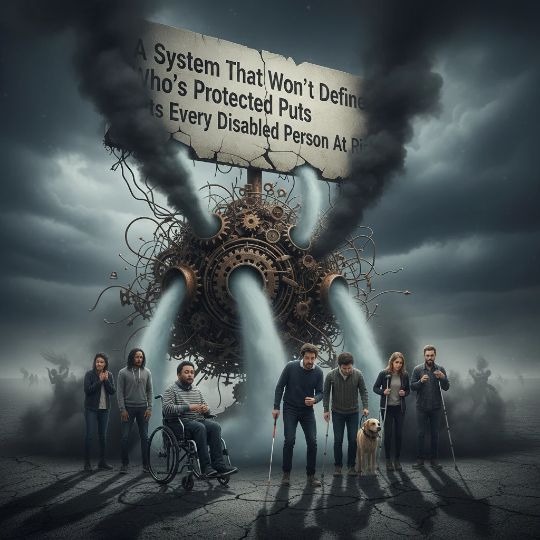
A System That Won’t Define Who’s Protected Puts Every Disabled Person At Risk

Reform UK’s welfare plan is dangerous because it creates a harsher, undefined category of “severely disabled,” leaving millions of disabled people unsure whether they would still qualify for essential support, despite evidence from the IFS that their system would be significantly harder to access and risk repeating past failures that have already caused serious harm and deaths.

When a welfare system is redesigned to narrow eligibility without clearly defining who remains protected, it creates a cliff‑edge where millions of disabled people could suddenly be recategorised as “not severe enough,” losing vital support overnight and being pushed into assessments, conditionality, and sanctions that have already been shown to cause profound harm.

Once you create a system that deliberately shrinks the definition of disability, you inevitably create a population of people who are still genuinely disabled but suddenly labelled “not disabled enough,” left to navigate harsher assessments, reduced payments, and work requirements that ignore the reality of their conditions.

Once you start stripping back unconditional support, you create a system where disabled people are forced to constantly prove and re‑prove their own suffering to sceptical assessors, turning everyday life into an exhausting cycle of justification rather than the stability and dignity they deserve.

When a government builds a system that demands constant proof of incapacity, it inevitably punishes those whose conditions fluctuate, whose symptoms are invisible, or whose disabilities don’t fit neatly into bureaucratic boxes, leaving them exposed to cuts, sanctions, and scrutiny that take a brutal toll on their health and stability.

When politicians pretend that tightening eligibility will only catch “cheats,” they ignore the reality that every past crackdown has swept up thousands of genuine disabled people, leaving them fighting for basic support. At the same time, the system insists their lived experience is somehow invalid.

Every time eligibility is tightened under the guise of “fairness,” it is disabled people with complex, misunderstood, or invisible conditions who end up paying the price, because systems built on suspicion always hit the vulnerable long before they ever touch the mythical fraudster.

Every time a government redraws the boundaries of disability, it creates fear and instability for people who already live with enough uncertainty, because the prospect of losing essential support is not an abstract policy debate but a direct threat to their health, safety, and ability to survive.

When policymakers treat disability as a narrow, easily defined category, they erase the reality that millions of people live with complex, overlapping conditions that don’t fit neat labels, leaving them vulnerable to being dismissed, downgraded, or cut off entirely by a system that no longer recognises their needs.

When public debate reduces disabled people to stereotypes or punchlines, it becomes even easier for harsh policies to slip through unchallenged, because the real human impact gets drowned out by dismissive comments from people who will never have to live with the consequences.

And people’s nasty comments only make it easier for harmful policies to take root, because when disabled people are already being mocked, doubted, or dismissed in everyday life, the system feels entitled to treat them the exact same way — with suspicion first and humanity last.

Look After Our Own Collapses When The Vulnerable Become The Targets

The “look after our own” argument collapses the moment the same politicians turn around and target the very people they claimed to be protecting — disabled, sick, low‑income British citizens.

When politicians say “look after our own” but target disabled people, they expose the truth that cruelty never protects anyone — it only spreads, and any one of us could need the very safety net they’re dismantling.

And once that truth is out in the open, you can see exactly how hollow the slogan really is — because a country that genuinely “looks after its own” doesn’t redraw the definition of who counts the moment it becomes politically convenient.

Once you see that line shift, you realise it was never about protecting anyone — it was about deciding who is expendable, and disabled people were simply next on the list.

Once you recognise that, you start to understand the greater danger: if a government can quietly redefine disabled people as optional, it can do the same to anyone whose needs become inconvenient, expensive, or politically unfashionable.

Once you accept that possibility, you realise the real threat isn’t just to disabled people — it’s to the very idea of a shared society, because the moment support becomes conditional on being convenient, anyone can fall outside the circle overnight.

Once that circle starts shrinking, you realise how fragile the whole promise always was — because a society built on conditional compassion can unravel the moment someone decides your needs, your illness, or your crisis no longer fit their definition of “deserving.”

Once you see how easily “deserving” can be rewritten, you realise the danger isn’t just policy — it’s the mindset that says some lives are worth supporting and others can be quietly abandoned when the political weather changes.

Once you recognise that mindset for what it is, you realise how dangerous it becomes — because the moment a government decides support is a privilege rather than a right, anyone who falls ill, gets injured, or simply grows old can find themselves reclassified as a burden instead of a citizen.

Once you see how easily that reclassification can happen, you realise the real horror is this: a society that treats support as conditional will eventually treat humanity as conditional too, and nobody is safe when compassion becomes something you have to qualify for.

That’s why this moment matters so much: because when a government starts treating compassion as conditional and support as negotiable, it isn’t just disabled people who should be worried — it’s everyone who believes in a society where citizenship means solidarity, where vulnerability isn’t a disqualifier, and where the safety net exists because life can change without warning. If “looking after our own” is supposed to mean anything at all, it has to include every single one of us — not just the people who happen to be healthy today.

Those people out there who believe it will never happen to them need to understand that it can, at any given moment; anybody can become disabled for any number of reasons, and the safety net they think they’ll never need could become the only thing standing between them and complete freefall.

People’s comments always sound so confident until life proves how fragile that confidence really is; the truth is that disability doesn’t check your bank balance, your job title, your age, or your politics before it arrives, and the people who dismiss the safety net today may find themselves depending on it tomorrow.

People’s nasty comments always come from the same place: the belief that disability is a distant problem, something that happens to “other people,” something they can mock, minimise, or dismiss because they think they’re safely on the outside of it. But that confidence is paper‑thin. Illness doesn’t ask permission. Accidents don’t check your attitude. Life doesn’t reward cruelty with immunity. And the people who sneer today may be the ones praying for compassion tomorrow.

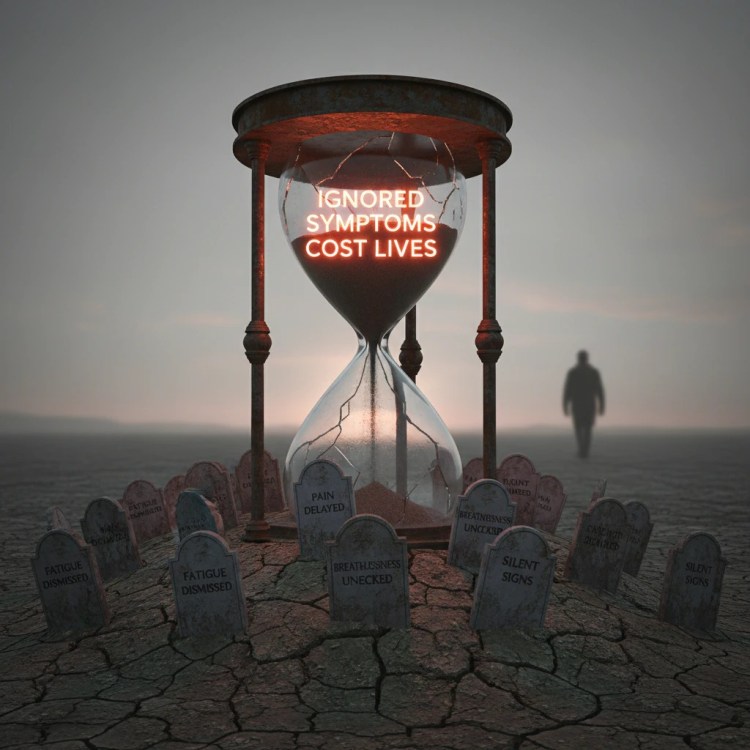
Ignored Symptoms Cost Lives

Zahida Allen’s situation is exactly that: serious. Her father’s death wasn’t just a private family tragedy; it became a public example of how symptoms can be missed, dismissed, or normalised until it’s too late. The timeline she described — repeated GP visits, persistent bowel symptoms, blood in stool, weight loss, fatigue, and still being sent home with laxatives — is the kind of thing that makes families feel utterly powerless. It’s the sort of story that hits close to home for anyone who’s watched a loved one fight for proper medical attention.

Her father, Anhar Miah, died in February 2023 at 62, a year after finally being diagnosed with stage‑four bowel cancer. By the time the scans were done, the disease had already spread. Zahida has been very clear: she believes earlier investigation could have changed the outcome.

This isn’t gossip, it isn’t entertainment — it’s a reminder of how quickly things can escalate when symptoms are brushed aside. And it’s why she’s now pushing hard for people to recognise the signs of bowel cancer and not feel embarrassed talking about them.

What Zahida said about her dad’s long‑term stomach issues being blamed on “a rich diet” is one of the most troubling parts of the story, because it shows how an old explanation can cling on even when the symptoms evolve into something far more dangerous.

For years, he had digestive problems — discomfort, irregular bowel habits — and the assumption was that it was just his food choices. That kind of anchoring is common: once a benign cause is established, it can overshadow new evidence. But in 2021, his symptoms didn’t just continue; they changed. They became sharper, more persistent, more alarming.

Anhar was severely fatigued, rapidly losing weight, suffering week‑long bouts of constipation, and finding blood in his stool — symptoms that clearly signalled a serious underlying bowel condition.

He visited his GP several times, but each time he was simply sent home with laxatives that did nothing to address the severity of his symptoms.

It wasn’t until February 2022, after an A&E visit, multiple scans and a biopsy, that Anhar was finally told he had stage‑four metastatic, incurable, inoperable, terminal bowel cancer.

By this point, Zahida, now 32, said the disease was “just so far gone”, and it had already spread to his abdomen, kidney and stomach.

Speaking about her dad’s illness, she said he was in an insufferable, incomprehensible amount of pain.

Zahida, who also appeared on Ex on the Beach, believes that if her dad’s symptoms had been taken seriously and testing for bowel cancer carried out sooner, more could have been done to prolong — or possibly even save — his life.

Bowel cancer is now a leading cause of death worldwide, and it remains the second most common cause of cancer death in the UK.

People commented that his symptoms had been repeatedly overlooked, and many said the delays in investigating his condition were deeply concerning.

National Sauna‑Tragedy

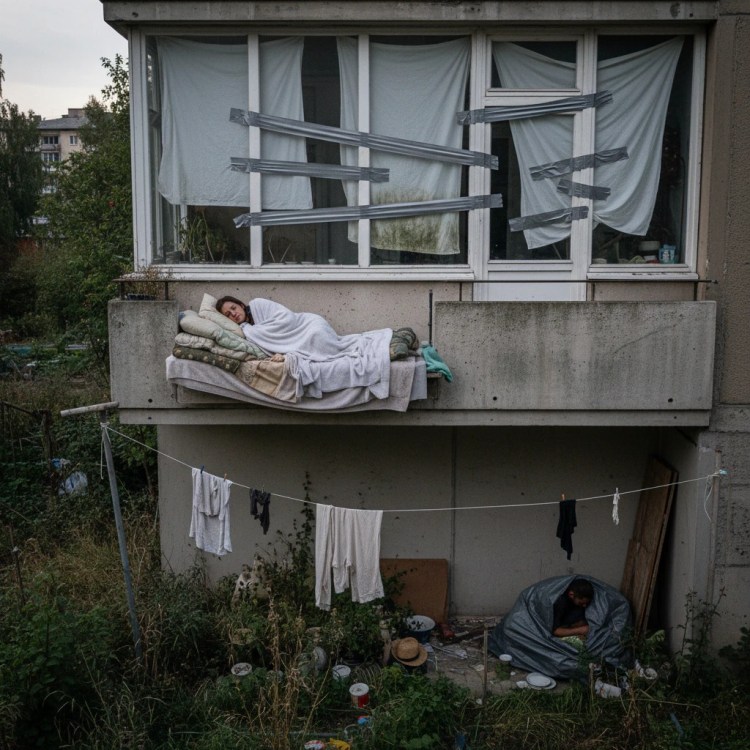
A recent study found that some social renters had been driven to sleeping on balconies and in gardens, or using makeshift solutions like taping damp sheets to windows.

These flats are so bloody hot it’s basically a slow cooker with rent — and if the council thinks that’s acceptable, they can go round and sit in it themselves until their knickers melt.

Across the UK, it’s hitting 38 bloody degrees, and half the poor sods in social housing can’t even cool their flats — it’s like being slow‑roasted by the council.

Liam Russell’s stuck in a third‑storey flat with three miserable little windows — it’s so hot in there I’m amazed he hasn’t basted himself like a Christmas turkey.

In January, the occupational therapist literally wrote that the heat was a major factor in Liam’s autism and sensory needs, and Hyde still ignored it. Honestly, that’s the sort of nonsense that makes me want to march down there and shout until someone’s trousers catch fire.

He says it’s unbearable even in winter — the flat feels like the heating’s on, the sun blasts straight into the bedroom and front room, and with no windows in the kitchen, bathroom or hallway there’s not a single draught; honestly, it’s like Hyde has put him in a bloody Tupperware.

He works night shifts and can’t sleep during the day because the flat’s hotter than Satan’s sauna, and even though it’s affecting him, his girlfriend, and the two poor dogs, Hyde still hasn’t lifted a finger.

Citizens Advice now says that poorly designed homes are basically heat traps, and people can’t afford air‑con, so everyone’s left feeling helpless — honestly, it’s like the country’s been slow‑cooked and told to just get on with it.

Citizens Advice found that 11 per cent of social renters are stuck in homes that are always uncomfortably warm, causing real physical distress, and some are so desperate they’re sleeping on balconies or taping damp sheets to the windows — it’s like Britain’s turned into a budget sauna run by people who’ve never broken a sweat in their lives.

And now 30 per cent of people say they’ve actually lost money because of the heat — higher bills just to stop themselves from frying — honestly, it’s daylight robbery with a side of sunstroke.

They’re saying 1.59 million children live in homes that get uncomfortably hot — nearly two million kids roasting in flats that feel like someone’s left the oven door open; it’s disgraceful. I’d like to grab whoever’s responsible and shake them until their clipboard rattles.

And people’s comments have become pure theatre — you’ve got folks declaring their flats are hotter than Hades, swooning like Victorian heroines, taping damp sheets to the windows as if they’re auditioning for Les Mis, and sleeping on balconies like tragic Shakespearean lovers — all while the housing providers sit there pretending nothing’s amiss. It’s a national farce, and not even a good one.

Design a site like this with WordPress.com
Get started