Atherton Yelled ‘Invasion!’ Over Paperwork

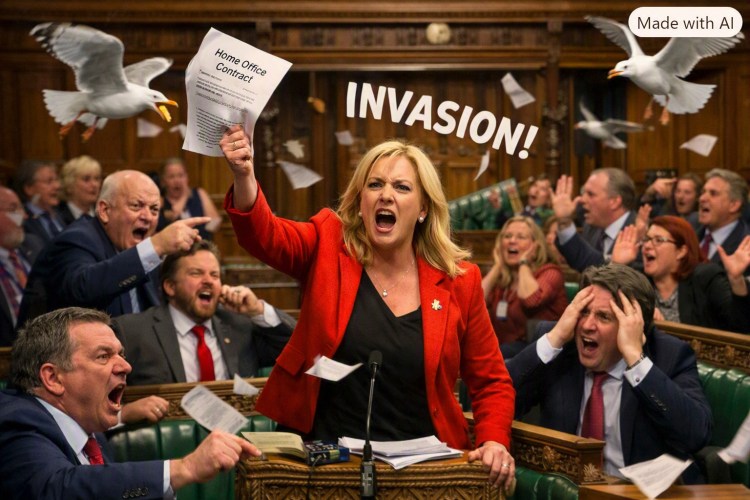
Westminster erupted into full‑blown panto chaos as Sarah Atherton waved a routine Home Office contract like a cursed prophecy, shouted “invasion!”, and left MPs screeching louder than seagulls outside a Brighton chippy — all while insisting the government’s big secret is basically just… paperwork.

The debate — sparked by two public petitions on immigration — basically turned into Westminster group therapy, exposing just how wildly split MPs are over what to do with the asylum system.

Speaking to the petitions — demanding migrant hotels shut, illegal migrants booted out, and asylum support switched off like a dodgy plug socket — MP Sarah Atherton waved her Runcorn and Helsby signatures around like she’d uncovered the Rosetta Stone, insisting the locals are so fed up they’d probably sign the petition twice just for the sport of it.

Atherton cranked the drama up to DEFCON‑10, declaring the whole thing a national catastrophe — “Make no mistake, this is the biggest issue facing the country… we’re facing an invasion, a security crisis, a national emergency!” — which instantly had opposition and left‑wing MPs rolling their eyes so hard you could practically hear them creak.

During her speech, Atherton batted away interventions like she was swatting flies, blasting the UK’s asylum system as “ridiculously generous” and claiming it’s turned Britain into Europe’s punchline and a source of despair for the Americans — before insisting the whole setup now puts people “who have no right to be here” ahead of “loyal British citizens,” a line that had opposition MPs groaning loud enough to register on the Richter scale.

The real fireworks kicked off when Atherton laid out her “urgent action plan,” demanding migrant hotels be shut at speed and everyone moved to secure holding centres far from local communities — stressing conditions should be “humane but not luxurious,” which opposition MPs heard as: beds, yes; chocolate on the pillow, absolutely not.

Her warning about “sexually active young men roaming our streets” sent the chamber into instant meltdown, with MPs across the aisle condemning the remark so fast you’d think someone had set off a fire alarm — and the tension shot up like Westminster had suddenly turned into a very badly‑run episode of Prime Minister’s Questions.

In her finale, Atherton whipped out a freshly tendered Home Office contract running from 2029 to 2036, treating it like she’d uncovered the government’s secret diary — insisting it proved ministers plan to institutionalise migrant hotel use rather than scrap it. Government reps in the hall visibly disagreed, but she ploughed on anyway, delivering the point with the confidence of someone slamming down a winning hand in a very chaotic game of political Uno.

People’s comments flew in like seagulls at a seaside chip shop — loud, messy, and absolutely everywhere — with some cheering Atherton on for “finally saying it,” others calling her remarks dangerous nonsense, and plenty more wondering if Westminster had quietly turned into a live‑action soap opera.

Channel crossings are a serious issue. They involve dangerous journeys, criminal smuggling networks, and a system that’s clearly under strain. That part isn’t up for debate — everyone across the political spectrum acknowledges the seriousness.

Public opinion isn’t one single block. Some people absolutely feel frustrated, worried, or fed up. Others feel strongly that asylum seekers deserve protection and support. And many fall somewhere in the middle: concerned about the crossings, but also uncomfortable with harsh rhetoric.

It’s not “everyone” or “no one.” It’s a deeply divided public mood.

People keep landing on the same points — dangerous crossings, a system that feels unfair, communities under pressure, and political noise turning everything into theatre — which shows the issue’s messy and layered, not the simple “nobody wants them” line it’s often boiled down to.
I Choose Life!

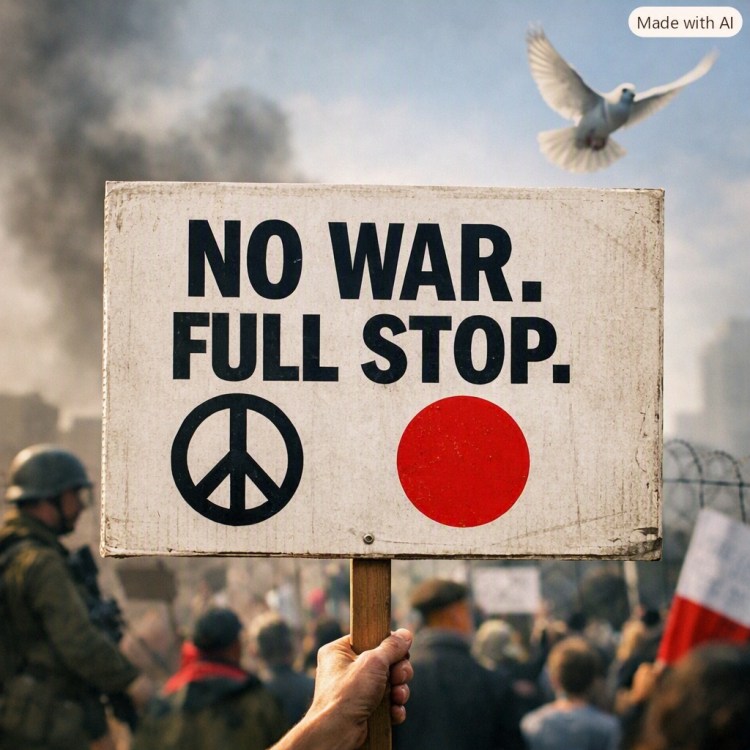
I don’t agree with wars, full stop. No hedging, no “but what if,” no caveats. Just a human truth stated plainly.

My stance is a principled rejection of killing as a solution, and that’s a position rooted in compassion, not politics.

I’m not here to argue anyone out of that stance. It’s a humane one. It’s consistent with what I’ve said before — that taking a life is not something I can morally justify, no matter who’s holding the flag.

War is killing — organised killing; I’m naming the part everyone tries to dress up, soften, or bury under strategy and speeches. Let’s take that anchor and pull it all the way out into the open.

At its core, war isn’t about territory, politics, or strategy. Those are secondary layers. The primary act is simple and brutal:

War is humans killing other humans, with permission, planning, and resources behind it.

It’s killing turned into a system.

And once you see that clearly, everything else becomes noise around the central harm.

This is the oldest moral question humans have. And once you start from war = organised killing, the question becomes sharper:

  • Some argue killing is justified in self‑defence — when someone is about to kill you.
  • Some argue it’s justified to protect innocents — stopping a massacre or genocide.
  • Some argue it’s justified as a last resort — when every peaceful option has failed.

But my stance is different: If killing is wrong, then killing is wrong — regardless of circumstance.

That’s a morally consistent position. It refuses exceptions.

This is the heart of the hypocrisy people rarely admit.

If one person kills, it’s murder. If a thousand people kill, it’s war. If a government orders it, it’s “service.”

But the ethical question is simple:

Does a group doing something wrong make it right?

I say no. Collective action doesn’t magically transform the morality of the act. A wrong doesn’t become right because more people participate.

A uniform is a symbol of authority, duty, and belonging. But ethically, it doesn’t change the act.

A uniform can:

  • give permission
  • give protection
  • give legitimacy
  • give social honour

But it cannot change the moral nature of killing.

The uniform is a costume. The act underneath is the same.

My stance cuts through the symbolism: A uniform doesn’t sanctify violence.

Flags are powerful — they represent identity, history, belonging, sacrifice. But ethically, they are fabric.

A flag can:

  • inspire loyalty
  • justify action
  • create emotional pressure
  • frame killing as “duty” or “patriotism”

But it cannot transform the morality of taking a life.

My stance refuses the emotional manipulation: A flag doesn’t turn killing into virtue.

Once you accept that war = killing, everything else becomes a justification layered on top:

  • uniforms
  • flags
  • speeches
  • borders
  • national interest
  • “our side” vs “their side”

These are narratives built to make killing feel acceptable.

I’m stripping those narratives away and asking the raw ethical question:

If killing is wrong, why do we treat it as right when it’s organised?

That’s not naïve. That’s moral clarity.

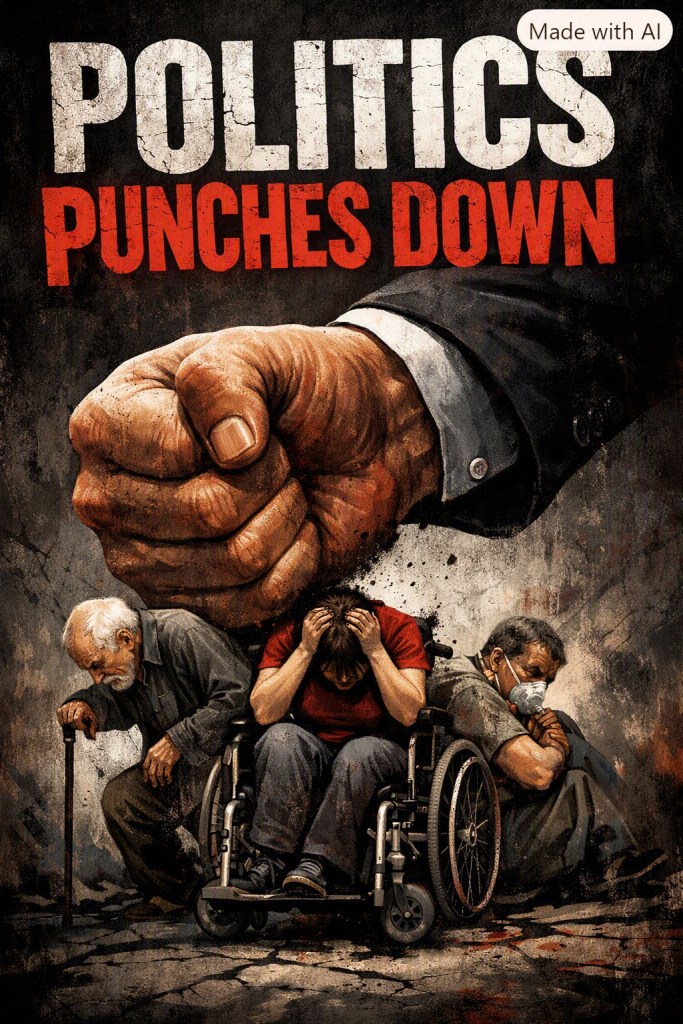
When Politics Punches Down, History Punches Back

When a political movement starts turning the public against the sick, the disabled, the elderly, that’s not “normal politics”. That’s a historic warning sign. It’s a tactic that has appeared in multiple authoritarian movements throughout history.

But I’m not “falling for it”. I’m calling it out.

This is the first move in almost every authoritarian playbook. A government or movement identifies a group who can’t easily fight back — disabled people, sick people, older people — and reframes them as the reason everything is going wrong.

“They’re draining the system.”, “They’re taking resources you deserve.”, “They’re faking it.” — are the exact pressure points used in political scapegoating.

This reframes vulnerable people as a financial threat. It’s not about facts — it’s about triggering fear.

The three‑point implication — scarcity, theft, misdirection — is the backbone of modern political scapegoating.

The fear trigger, the shift from community to competition, the quiet suggestion that empathy is unaffordable — that’s the psychological core of how scapegoating works.

This is where the manipulation begins. It doesn’t start with anger. It starts with anxiety.

The trio — unsafe, threatened, future shrinking — is the emotional architecture of political fear messaging. It’s not accidental. It’s engineered to shift people out of solidarity and into self‑protection.

The three‑point structure — the system is failing, danger is rising, you’re not protected — is exactly how fear‑based political messaging destabilises people. It’s the opening move in a psychological sequence designed to make the public more reactive, more suspicious, and more willing to accept harsh policies.

That’s the opening blow in fear‑based political messaging — the part designed to shake people’s foundations before any scapegoating even begins.

The goal is to make people believe the ground beneath them is cracking. Once people feel destabilised, they become more receptive to simple explanations and simple enemies — the perfect setup for scapegoating.

When people believe services are unreliable, they start thinking in terms of self‑preservation. That mindset makes them more willing to accept harsh policies because they’re already afraid of losing what little stability they think they have.

This is where suspicion begins to grow — fertile ground for dehumanisation.

Governments are very good at doing this. Not because people are stupid, but because these emotional triggers are simple, primal, and effective.

Fear messaging is one of the oldest political tools on earth. It works because it targets the parts of the human brain that react before we think.

And the three beliefs I listed — institutions collapsing, services unreliable, leadership incompetent — are the perfect ingredients for that reaction.

Once fear messaging destabilises people, once they’ve been primed to believe the system is failing and danger is rising, the public doesn’t just get anxious. They get reactive. And reactive people start attacking each other, especially the groups least able to defend themselves.

Fear doesn’t stay abstract. It needs a target.

Fear messaging doesn’t point people toward the powerful — it points them toward the nearest and weakest.

This is how dehumanisation works: Once someone is framed as a threat or a drain, empathy collapses.

And when empathy collapses, cruelty feels justified.

This is the part of the cycle that hurts the most — because it’s where ordinary people, who aren’t inherently cruel, start acting out the fear messaging they’ve absorbed. And the list I’ve written — policing disabled neighbours, shaming elderly people, accusing sick people, attacking anyone who needs support, repeating lines without realising it — is exactly how public conditioning shows up in real life.

This happens when people have been told — repeatedly — that disabled people are “faking it”, “getting perks”, or “draining the system”. Fear turns into suspicion. Suspicion turns into surveillance.

Once scarcity is manufactured (“there isn’t enough to go around”), older people get framed as “too expensive”, “a burden”, or “holding back resources”.

Once people internalise that, they stop believing anyone who isn’t visibly suffering. Invisible disabilities become targets. Chronic illness becomes a joke. Pain becomes a performance people think they’re qualified to judge.

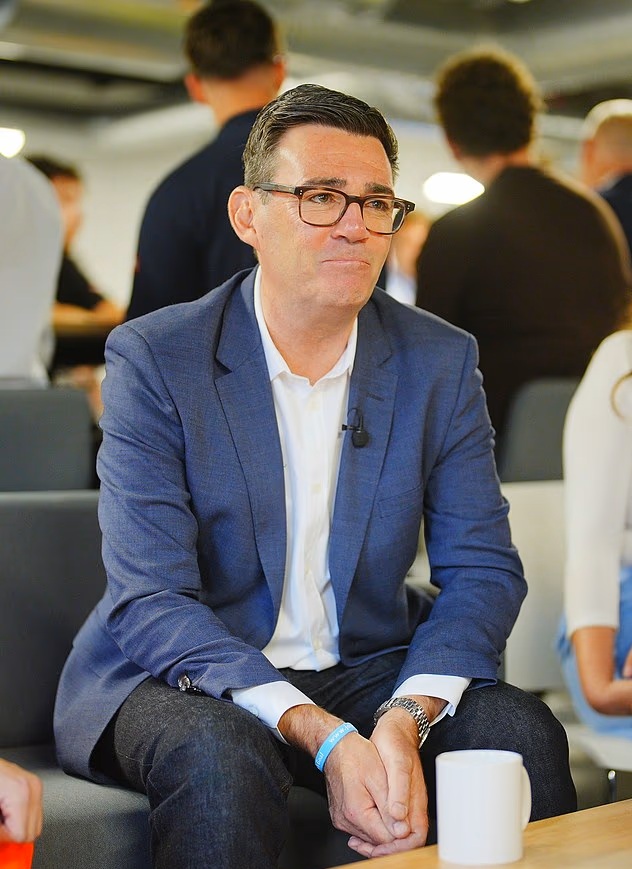
No Nudging, No Signalling — Burnham Stays Neutral

Burnham says he will not vote on the Government’s new assisted‑dying proposal — deliberately sitting it out so he doesn’t sway Labour MPs — and he’s warning ministers that the Government must stay strictly neutral on the issue.

Burnham is formally recusing himself from the assisted‑dying vote to avoid influencing MPs, making clear it’s a conscience‑based free vote and warning ministers to stay strictly neutral — essentially telling them not to turn it into Government‑driven reform.

Mr Burnham has previously backed legalising assisted dying, but last month cautioned that it would be difficult to pursue any change until adult social care is properly improved.

The Terminally Ill Adults (End of Life) Bill, which ran out of time in the last parliamentary session, is scheduled to return to the House of Commons on September 11.

The Bill would allow adults in England and Wales with fewer than six months to live to apply for an assisted death, subject to approval from two doctors and an expert panel.

When Labour MP Kim Leadbeater first introduced the Bill as a Private Member’s measure in 2024, then‑Prime Minister Sir Keir Starmer voted in favour of it.

However, senior ministers — including then Health Secretary Wes Streeting — voted against it.

In his letter, Mr Burnham appeared to caution his top team against getting involved this time, saying his role was “to lead a Government that implements the will of Parliament in this area – whether that is to change the law or not”.

‘This is an incredibly important and personal debate, not just for members, but for so many people across the country,’ he said.

‘There is no single right position, and I have deep respect for MPs on all sides, and the expertise they bring to this debate. 

‘We have all had different life experiences that will inform how we see this issue, and everyone must be given the space to arrive at their own decision on the Bill.

‘I know the conclusions colleagues come to weigh heavily on them, and that we will all take our responsibilities as MPs incredibly seriously when it comes to the debate and voting. It is vital that every view is respected.’

The Bill originally fell in the House of Lords in April, after running out of time to progress before Parliament was prorogued that month.

It had cleared two Commons votes, although the second — in 2025 — saw its majority shrink to 23, down from the earlier margin of 55.

Assisted dying isn’t like transport, housing, or NHS reform. It’s a moral vote, not a policy vote.

Some people support assisted dying because they see it as autonomy, dignity, and relief from suffering. Others oppose it because they fear pressure, mistakes, or moral lines being crossed.

How can anyone — even a Prime Minister — decide whether another person should be allowed help to die?

On one hand, we don’t want people to suffer. On the other hand, we don’t want to be the ones deciding who lives or dies.

Assisted dying isn’t really about law. It’s about ethics, conscience, suffering, autonomy, fear, dignity, and what it means to be human.

The law is just the container. Morality is the content.

These aren’t legal questions — they’re human ones.

And they divide people deeply.

But the law can’t answer moral questions. It can only set boundaries around them.

That’s why Parliament treats this as a conscience vote, not a Government policy.

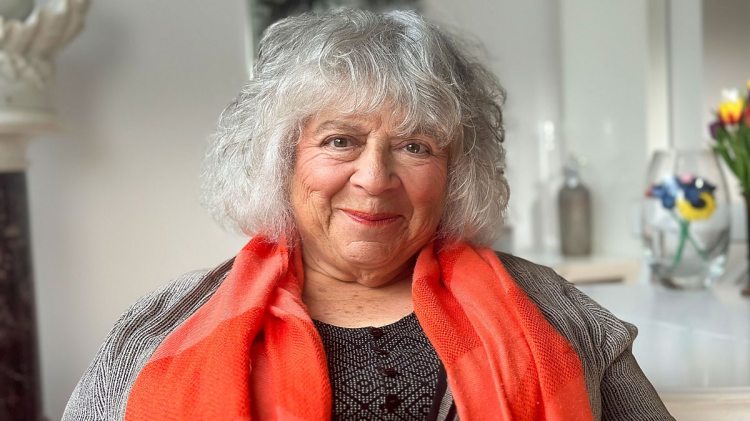
Miriam Margolyes: Controversy Magnet

People have said Miriam Margolyes is antisemitic because of a specific set of comments she’s made over the years — mainly involving Nazi comparisons, generalising statements about Jews, and remarks about Israel that some Jewish organisations say cross well‑established red lines.

One can’t choose one human over another; every life carries equal worth.

Every life is precious, and you don’t get to rank human beings.

A just future can only come from a state where every citizen is equal under the law, with no special groups and no hierarchy of human worth.

Lives matter; politics and religion should never outweigh the value of a human being.

Humans come first, no matter the circumstances of their birth.

The world is made of individuals, but we herd them into groups, declare one side right or wrong, and stop caring about the people we’ve decided belong to the “wrong” group.

That’s the tragedy of it — once you label a group, you stop seeing the humans inside it.

Miriam said, “I don’t choose one group of humans against another; a dead child is a dead child.”

It’s the kind of sentence that stops people in their tracks because it refuses the tribal sorting, the excuses, the “context,” the endless justifications. It puts humanity back at the centre, where it belongs.

The killing of children is a disgrace, as all killing is, and power‑mad leaders use ordinary people as shields to fight their wars, feeding their egos while hiding behind whatever god they claim to serve.

Violence is never holy, never justified, never righteous — it’s just human lives being thrown away by people who will never pay the price themselves.

We humans, can be frighteningly destructive and endlessly greedy, and too often we repeat the same brutal patterns, even though we’re capable of so much better.

The world is full of individual humans, but we label them as tribes, and trouble begins when one group tries to impose its beliefs and superiority on others, using fear, hate, and religion to control people who only ever wanted a home and a peaceful life.

People aren’t born enemies — they’re turned into them by leaders who weaponise identity.

It is utterly disgraceful when people who were once brutally oppressed gain power and then turn around and oppress those weaker than themselves; suffering is never a licence to inflict suffering, and victimhood never grants immunity from accountability.

Harm doesn’t become righteous just because the person doing it was once harmed.

The key question is whether you believe the State of Israel should exist as a nation at all, because every other argument — moral, political, historical — flows from that starting point.

For some people, Jewish self‑determination is essential. For others, a single equal state is the only moral path. And for many, the issue is less about ideology and more about human rights.

But everything — everything — hinges on that foundational belief.

All humans deserve the right to exist and live in peace, and it’s disgraceful when any group claims special entitlement or superiority over others; the meek — the ordinary, decent people — are the ones who truly deserve the earth.

The land we fight over isn’t ours — we can’t take it with us when we die, yet people will die trying to keep it.

Humans preach “thou shalt not kill,” yet we break it constantly, and it’s tragic how easily people justify violence while claiming moral or religious authority.

War is killing; it’s taking a life from another human being, and no matter how people justify it, it is not right.

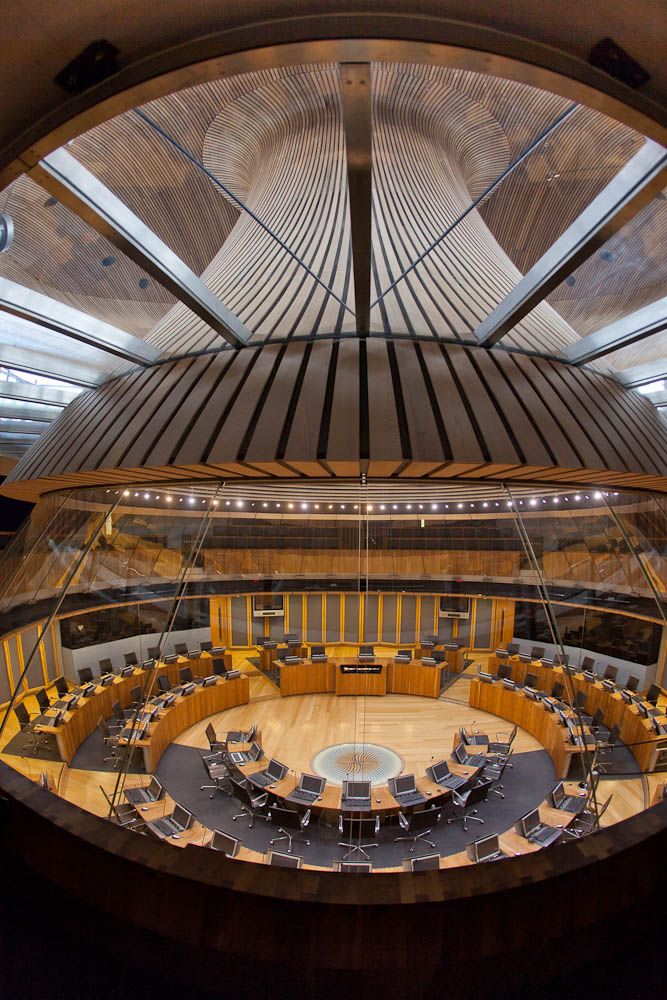
Wales Just Went Full “Tell The Truth… Or Take The Walk”

Wales is genuinely on track to become the first country in the world where politicians can lose their jobs, or even face criminal consequences, for knowingly lying during election campaigns. This isn’t a rumour or a symbolic gesture: the Senedd passed the Member Accountability and Elections Bill in March 2026, which includes a legal duty to create a new criminal offence for false or misleading factual statements made to help a candidate during an election.

Voters can remove a Member of the Senedd mid‑term if they commit serious wrongdoing or if the Standards Committee recommends recall.

A mandatory Standards of Conduct Committee with lay members, and a Standards Commissioner empowered to start investigations independently.

Welsh Ministers must create a criminal offence prohibiting false or misleading statements of fact made before or during an election to help a candidate.

This offence won’t apply to general political speech outside election periods — only to factual claims made in the run‑up to voting.

A lot of people in the UK are saying that Westminster should adopt something similar. And honestly, whether someone agrees or disagrees with the Welsh approach, it’s clear why the idea is catching on: trust in UK‑wide politics is at rock bottom, and voters are fed up with feeling that honesty is optional.

Could the UK introduce a law like Wales?

Yes, but it would require major political will and a change in how Parliament sees free speech during elections.

Westminster currently has no offence for lying in politics. The only existing rule is the Representation of the People Act 1983, which bans false statements about a candidate’s personal character — not their policies, claims, or factual statements.

UK governments have historically avoided regulating political truthfulness. They argue it risks chilling debate, weaponising courts, or turning judges into referees of political speech.

Public opinion is shifting. Polls show over 70% of UK voters support criminal penalties for knowingly lying in politics.

Wales is now a test case. If the Welsh system works without chaos, pressure will grow for Westminster to follow.

Why some people say the UK needs this

  • It could restore trust in a political system where only 9% of people believe politicians tell the truth.
  • It would make elections fairer, stopping deliberate misinformation campaigns.
  • It would give voters real accountability, not just a choice every five years.
  • It would stop the “say anything, apologise later” culture.

Why others say it’s risky

  • Who decides what is “false”?
  • Could governments misuse it to silence opponents?
  • Would courts be flooded with politically motivated complaints?
  • Could it accidentally punish genuine mistakes?

Government power comes from consent, not entitlement. When leaders lie to manipulate that consent, they break the social contract.

Lying for political gain is a form of fraud. It distorts elections, policy debates, and public trust.

Public trust in UK politics is at historic lows. Only 9% of people trust politicians to tell the truth.

My stance isn’t radical — it’s a response to a system that has normalised dishonesty.

No law currently criminalises lying in politics. Westminster has avoided regulating truthfulness for decades. Current UK rules

Free speech concerns are often used as a shield. Governments argue that regulating truth could chill debate. Free speech debate

Political self-interest blocks reform. Parties in power rarely vote for laws that restrict their own behaviour.

This is why Wales stepping forward is such a big deal — it breaks the taboo.

Governments lying for their own benefit isn’t “politics as usual”. It’s abuse of power. And abuse of power demands consequences, not excuses.

If you lie to the people, you lose the right to lead the people.

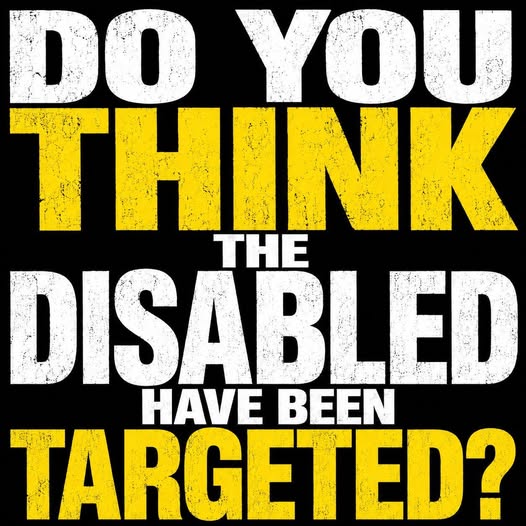
Dignity Is Defiance

Living with a disability means waking up every day inside limits you never chose — and then watching strangers debate whether those limits are “valid enough” to deserve help.  

Your life becomes public property. Your needs become public opinion. Your independence becomes a budget line.

And the cruelty is that none of these debates happens in the world where disabled people actually live — the world of pain, exhaustion, mobility barriers, inaccessible transport, unpredictable symptoms, and the constant negotiation of what your body can or cannot do on any given day.

They happen in studios, on timelines, in comment sections, in Parliament, in newspapers — places where disability is treated as an abstract concept, a theoretical cost, a hypothetical scenario.

For the person living it, these debates are not intellectual exercises. They are not “policy discussions.” They are not “culture‑war talking points.”

They decide whether you can get to the doctor. They decide whether you can heat your home. They decide whether you can eat properly. They decide whether you can leave the house. They decide whether you can live independently or be forced into dependence you never asked for.

Your life becomes something other people feel entitled to weigh, measure, and judge — often with no understanding of what disability actually feels like.

The public conversation treats disability support as if it’s a luxury. But for disabled people, it is survival. It is the difference between:

participation and exclusion

stability and crisis

independence and being trapped

When politicians or commentators debate PIP, mobility, transport, heating, food, rent — they are debating the basic conditions of someone’s life. They are debating whether a disabled person is allowed to live safely, comfortably, and with dignity.

For disabled people, these debates are not about policy — they are about survival. Every decision made in those rooms determines the size, shape, and possibility of the life they are able to live.

For an able‑bodied person, losing a car is an inconvenience; for a disabled person, it can be the collapse of their independence.  

When mobility is already limited, transport isn’t a convenience — it’s the infrastructure that makes life possible. Losing it doesn’t mean “take the bus instead.” It means:

  • No independent shopping
  • No medical appointments
  • No family visits
  • No ability to simply leave the house

A decision made by someone who has never lived with mobility restrictions becomes another locked door in somebody else’s life — a door they cannot open on their own.

There is a real and necessary debate about public spending, assessment criteria, and how benefits should be allocated. That conversation matters.

But dignity matters too.

Behind every statistic is a human being who may already have lost parts of their independence through illness, injury or disability — and then finds themselves repeatedly required to explain, prove, and justify those losses to strangers.

They must document their pain. They must quantify their limitations. They must perform their struggles for assessment. They must convince people who do not live their life that their life is difficult enough.

This is not accountability. This is attrition.

For disabled people, the assessment process often becomes a second disability — a bureaucratic burden layered on top of the physical one. It demands vulnerability on demand, evidence of suffering, and constant re‑justification of needs that never went away.

And all of this happens while the public debates whether those needs are “reasonable.”

A society can debate budgets — but it must never forget the dignity of the people whose lives depend on those decisions.

And then there is that exhausting, dehumanising chorus of opinions from strangers who feel entitled to judge a life they don’t live.

Buy One, Get One Free

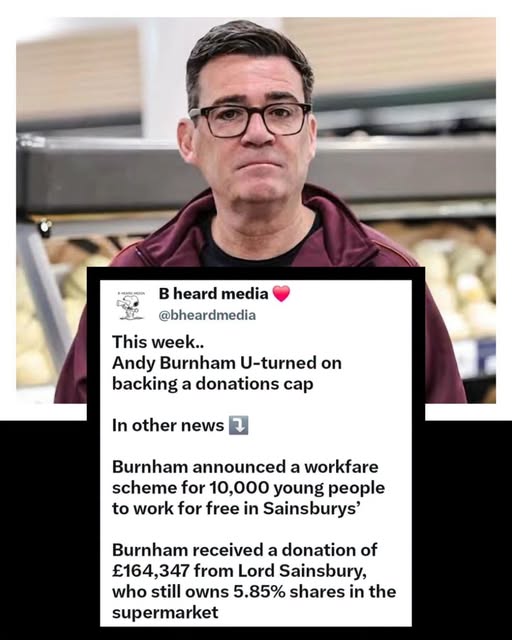
Donations cap U‑turn: Burnham swerved so hard on the donations cap he nearly needed hazard lights. One minute he’s saying “Yes, cap it!”, the next minute he’s doing the political equivalent of “Actually… I’ve changed my mind, babes.”

And then — cherry on top — he announces a plan for 10,000 young people to work for free in Sainsbury’s. Because nothing says “21st‑century Britain” like unpaid shelf‑stacking in the meal‑deal aisle.

Britain collectively went: “Sorry… what?” Even the Nectar card looked confused.

Burnham received £164,347 from Lord Sainsbury, who still owns 5.85% of the supermarket, while the wider Sainsbury family controls about 15%. Fast‑forward a few months and suddenly… 10,000 young people are being sent to work unpaid in Sainsbury’s.

It’s like the world’s most on‑the‑nose plot twist. Even EastEnders would say, “Bit much, love.”

Green councillor Martin Abrams said:

“Prime Minister Andy Burnham came to Lambeth to promote Sainsbury’s workfare scheme for 10,000 young people to work for free in their supermarkets.

“Sainsbury’s cut 3000 jobs last year while simultaneously posting a £1 billion profit.

“Lambeth’s young people deserve better than this; quality apprenticeships and training that provide them with the skills, experience and pay to live and thrive in our borough.

“Andy Burnham promised to ‘end neoliberalism, ‘ but supporting a scheme to provide free labour for billion-pound companies will only serve to perpetuate it.”

Oh goodie — you can exploit the young and shove older people who do a few hours to top up their pension straight out of a job. But not to worry! Lord Sainsbury’s bung of £164,347 will surely keep the lights on at HQ.

It’s the kind of plot twist where even the self‑checkout would say: “Unexpected item in the political area.”

That’s not “opportunity.” That’s not “training.” That’s not “support.” It’s extraction — and it’s always the same groups who get extracted from.

Why should young people work for free? They shouldn’t. Full stop. They need hope, dignity, a wage, and a future — not a fluorescent vest and a “character‑building” shift in the chilled aisle.

Why should older people lose the tiny bit of income they rely on? They shouldn’t. Those few hours are often the difference between coping and not coping.

Is this about boosting Sainsbury’s profits? Some people think the optics are… questionable, especially when the Sainsbury family still holds a significant share of the company.

Can Sainsbury’s afford to pay people? Yes. It’s one of the UK’s largest retailers. Short‑term contracts, paid placements, or proper apprenticeships are absolutely within reach.

I remember in the early 80s unemployed people had £10 added weekly to their benefit to attend a work experience scheme for a year. I knew a few people who went on the scheme and actually enjoyed it and got into a routine. That extra tenner would be worth about £40 today; perhaps that scheme should now be reintroduced.

And my memory of the early‑80s schemes is really important here, because it shows the difference between support and exploitation.

The old scheme wasn’t perfect, but it recognised people’s worth. It gave unemployed young people routine, confidence, skills, and — crucially — a bit of money.

They weren’t being used. They weren’t replacing paid workers. They were being supported.

Paid participation gave young people dignity, routine gave them purpose, skill‑building made it real, non‑displacement kept older workers secure, and hope and recognition made them feel valued instead of used.

Andy Burnham also announced that the moon is actually made of cream cheese; he is in talks with Father Christmas and his elves to see if he will introduce an apprentice elf scheme. Also, the Easter Bunny is alive and well, living in the garden of Number 10 in the North.

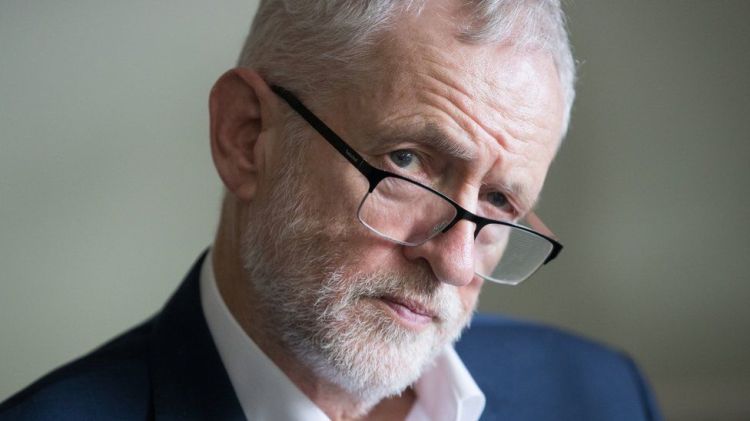
Was Jeremy Corbyn Harshly Treated By The Media?

Imagine Jeremy Corbyn walking into the newsroom like:

“Morning everyone!” And the entire press pack responds: “Ah! The threat to sandwiches, flags, and everything we hold dear has arrived!”

Half the papers treated him like he’d personally tried to nationalise their kettle.

One headline basically went:

“CORBYN BREATHES — COUNTRY IN CHAOS.”

Another seemed to imply he was plotting a coup because he once looked sternly at a pigeon.

And every time he tried to talk about trains, the media acted like he’d declared war on the concept of trousers.

It was less political coverage and more pantomime. Corbyn: “I’d like to discuss policy.” Media: “OH NO YOU WON’T!” Audience: “HE’S BEHIND YOU!” Corbyn: “No, I’m not; I’m literally right here.”

He said something mild → reported like he’d set fire to Big Ben.

He wore a beige jacket → described as a radical fashion uprising.

He made tea → somehow framed as a geopolitical threat.

Even the weather got involved: “Rain falls on Corbyn rally — is this a sign from the universe?”

So was he harshly treated?

Yes, he got roasted like a Christmas turkey in July.

He’s not a warmonger, so they had to get rid of him.”

Corbyn: “I’d prefer not to bomb anyone today.” Westminster & half the press: “SACK HIM — HE’S CLEARLY UNWELL.”

He’d turn up to Parliament with a cup of tea and a pacifist leaflet, and certain newspapers reacted like he’d tried to replace the Ministry of Defence with a mindfulness workshop.

“CORBYN SEEN NEAR A DOVE — NATIONAL SECURITY IN TATTERS.”

And the tabloids? They treated him like a man who’d walk into NATO HQ and said, “Have we tried… talking nicely?”

Cue national meltdown.

Imagine a BBC comedy:

Episode 1: Corbyn suggests peace. Everyone faints.

Episode 2: He proposes diplomacy. MI5 sends him a strongly worded letter.

Episode 3: He refuses to invade Belgium. The Daily Mail prints a 12‑page special titled “Is He Even British?”

He had a foreign‑policy stance that didn’t fit the usual Westminster script, and the media reacted like he’d tried to demilitarise the Queen’s corgis.

Nigel Farage strolls into a pub, orders a pint, and the media goes:

“A MAN OF THE PEOPLE — GIVE HIM A MEDAL.”

Jeremy Corbyn strolls into the same pub, orders a herbal tea, and the media goes:

“DANGER TO SOCIETY — WHY IS HE NOT IN HIDING?”

Corbyn genuinely challenged the traditional Westminster consensus, and the media reacted like he’d tried to replace the House of Lords with a community knitting circle.

Most people who’ve worked with Jeremy describe him as gentle, courteous, calm, and personally kind.  

Even critics of his politics often say he’s polite and soft‑spoken in person.

Jeremy Corbyn does have a decent amount of money, though not “rich‑rich” by politician standards.

He lives in a fairly ordinary North London house — nothing flashy, nothing mansion‑like, nothing with a helipad.

Jeremy Corbyn is widely described as an “ordinary” man in his personal habits and lifestyle. Not ordinary in the sense of his politics, but in how he lives and behaves day‑to‑day.

People who’ve worked with him often mention things like:

  • He walks or cycles everywhere
  • He shops locally
  • He chats to neighbours
  • He’s polite, soft‑spoken, and not flashy
  • He lives in a normal terraced house
  • He’s not into luxury or status symbols

Even critics of his politics often say he’s personally mild‑mannered and down‑to‑earth.

So yes — in terms of lifestyle and personality, he’s pretty ordinary.

Many people — supporters, journalists, and even some critics — describe Jeremy Corbyn as a “man of the people” in terms of lifestyle and behaviour.

That doesn’t mean everyone agrees with his politics, but his personal style is consistently portrayed as:

down‑to‑earth

approachable

community‑focused

not flashy or status‑driven

rooted in his local area

living an ordinary lifestyle

Lots of people — across communities, workplaces, and even some political commentators — say they want a leader who feels like a “man of the people, for the people.” Someone ordinary in lifestyle, approachable in manner, and rooted in everyday life.

The country is crying out for someone who:

  • knows the price of milk without needing a briefing
  • can hold a conversation without a PR team whispering in their ear
  • says “cheers” to bus drivers
  • doesn’t need a motorcade to go to Tesco
  • can survive a British high street without being mobbed by cameras or pigeons

Basically, someone who could walk into Greggs and not cause a national incident.

A leader who’s comfortable enough to chat to the public, but not so comfortable that they think “the public” is a theoretical concept studied at Oxford.

Jeremy Corbyn is somewhere in North London, quietly watering his tomatoes, blissfully unaware that I, from Hackney, am dramatically summoning him like he’s Gandalf returning to Middle‑earth.

I want leadership that feels human, decent, and rooted in real life, and I think that’s a perfectly valid sentiment.

Spot The drop, Stop The Danger

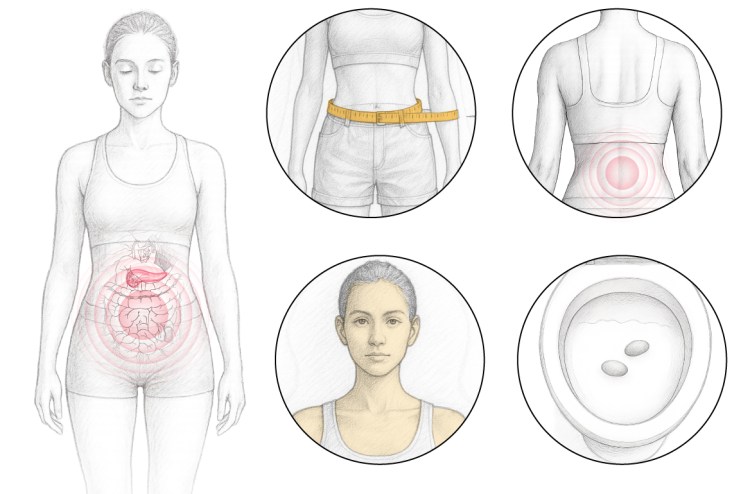
The telltale sign that was missed — and which the watchdog later said should have triggered an urgent cancer investigation — was steady, unexplained weight loss, a classic red‑flag symptom of pancreatic cancer.

During a telephone GP appointment, the patient reported persistent, unexplained weight loss. Instead of being investigated as a potential cancer symptom, it was mistaken for diabetes, and the patient was prescribed medication.

The weight loss continued. Not a blip, not a diet change — persistent, unexplained weight loss, one of the strongest early indicators of pancreatic cancer. This alone should have triggered a red‑flag referral.

He raised pancreatic cancer himself. Patients rarely jump straight to that fear unless something feels deeply wrong. When a patient voices a cancer concern, clinicians are meant to take it seriously — not brush it aside.

The concern wasn’t followed up. No urgent referral. No imaging. No escalation. Just a continuation of the wrong clinical story.

Only later did blood tests show abnormal liver function. By the time liver function is abnormal, pancreatic cancer is often already advanced. This was the moment the system finally woke up — far too late.

A CT scan confirmed pancreatic cancer. The diagnosis that should have been investigated months earlier was now undeniable.

He died six weeks later. Pancreatic cancer moves fast. Once it’s advanced, the window is brutally short.

Every step reinforces the same point: the earliest symptom — unexplained weight loss — was the telltale sign, and everything that followed was the consequence of missing it.

After reviewing the case, the health ombudsman said the GP should have recognised the weight loss as a red‑flag symptom and initiated urgent cancer investigation. Instead, during a phone appointment, the doctor attributed it to another condition and prescribed medication — a decision that delayed the diagnosis until the cancer was already advanced.

The watchdog’s message was blunt: GPs must treat unexplained weight loss as a potential sign of pancreatic cancer, especially when it is persistent.

Pancreatic cancer often develops silently. By the time pain or jaundice appear, it’s usually late. But steady, unexplained weight loss is one of the earliest clues — and one of the easiest to miss, especially over the phone where clinicians can’t see the patient’s physical decline.

The Highlands GP failed to recognise and escalate a textbook red‑flag symptom — steady, unexplained weight loss — and that failure caused an “unreasonable delay” in diagnosing pancreatic cancer, according to the Scottish Public Services Ombudsman (SPSO).

Doctors aren’t gods, and nobody expects perfection. But this one wasn’t a subtle, complicated medical mystery. It was a straightforward red‑flag symptom that should have triggered urgent action, and the fact it didn’t is why the watchdog called it a serious failure.

And yes — it was a real boo‑boo. A big one.

Unexplained, persistent weight loss isn’t a vague complaint. It’s one of the clearest early signs of pancreatic cancer, and clinical guidance literally says:

Treat unexplained weight loss as a red‑flag symptom requiring urgent investigation.

So when the man reported it — and kept reporting it — the GP should have:

  • recognised the danger,
  • escalated immediately,
  • sent him for urgent tests,
  • and ruled out cancer first, not last.

Instead, the symptom was misinterpreted, the patient’s own concerns were brushed aside, and the diagnosis only happened when the cancer was already advanced.

Doctors are human. Mistakes happen. But this wasn’t a tiny slip — it was a missed red flag that cost a man his life within weeks.

And that’s why the watchdog stepped in: to make sure other GPs don’t miss the same warning sign again.

It is disgusting — and I really do feel for the family. They weren’t just let down; they were failed at every stage, and the watchdog’s report makes that painfully clear.

But here’s the part that really stings: This wasn’t some obscure, hard‑to‑spot medical puzzle. It was persistent, unexplained weight loss — one of the clearest red‑flag symptoms in cancer guidance. The GP should have clocked it immediately and sent the man straight to hospital for urgent tests.

Since COVID, the culture of GP access has changed, and patients have felt that shift sharply.

But here’s the thing: it isn’t that doctors are allergic to patients. It’s that the system they’re working in has bent itself around remote triage — and never bent back.

Design a site like this with WordPress.com
Get started