Tory Towers Over Kemi Badenoch

Britain’s tallest Tory became the unlikely star of this year’s Conservative Party Conference – even meeting leader Kemi Badenoch after her barnstorming address.

Standing at 7ft 2in, James McAlpine towered over the 5ft 4in Tory leader as she thanked him for being ‘our tallest member’ at the conference in Manchester today.

The 22-year-old Oxford Brookes University student drew extra attention from fellow attendees thanks to his significant stature and even sat near the front for Ms Badenoch’s closing speech.

Mr McAlpine, who has been a Conservative member for four years but was attending his first party conference, said he thought the Tory leader’s speech was ‘fantastic’.

‘She’s got my full support. She’s fantastic, she’s in touch with the young Conservatives, and she’s a brilliant leader,’ he told the Mail.

‘And with the removing of stamp duty, I just think that’s fantastic. Because it’s going to help absolutely everybody, whether you’re buying your first home, buying a new family home and also for the older generations as well who are looking to move somewhere smaller.’

Before pursuing a career in politics, Mr McAlpine, who is earning a BA in business management, wishes to obtain practical experience working in finance in the city.

He said he ‘would love to be’ a Conservative councillor and eventually an MP, adding: ‘I’m not going to say leader just yet.’

If his dreams are realised, Mr McAlpine – whose mother is 6ft 5in and his late father was 6ft 9in – would break the Guinness World Record for the tallest politician.

The present world record holder is US Republican Jon Godfread, who stands at just over 6ft 10in, while the tallest Tory is former MP Daniel Kawczynski, who is 6ft 9in.

Mr McAlpine said he has a ‘love-hate’ relationship with the attention he receives due to his height, but believes it gives him a ‘platform’ to speak up for what he believes in.

‘I don’t adore it, but I also I don’t hate it,’ he said. ‘Because I think it’s given me a voice and I’m able to speak up and represent the Conservative Party.’

Asked whether he receives attention at university from other students for his political views, Mr McAlpine said: ‘It’s mostly been my about my height, never really my political views.

‘But I think when I go back tomorrow, things might change.’

The proud ‘Tory boy’ is a huge horse racing fan and has also become a social media celebrity after partying his way around high society events such as the Cheltenham Festival, where his interviews have lured millions of views.

He said: ‘Labour just want to ban anything that people enjoy doing, starting with the tax on farming, horse racing and the cost of shotgun licencing going up.’

Hopefully, this won’t just be another Tory with his head in the clouds. However, I think there might be high hopes for this fellow, pardon the pun.

And he could always pursue a career in basketball if he doesn’t succeed in politics. He really doesn’t need a platform; he’s already got one, and he certainly looks like he’s on his way up.

However, on a more sober note, being tall, everything must seem so small to him and pose challenges at times, but no doubt he rises above it.

POLICE OFFICER FOUND GUILTY

A British Transport Police (BTP) officer who grabbed a teenage fare dodger by the throat and put her in a headlock has been found guilty of assault by beating. 

CCTV footage shows Adrian Young, 48, violently restraining the 15-year-old girl by holding her in a headlock for 30 seconds. 

In September of last year, PC Young was shown on camera pulling the girl back through the ticket barrier, gripping her throat, and throwing her against a machine at Camden Road Underground station.

Afterwards, he handcuffed and arrested the girl before de-arresting her at the scene. 

A member of the public who witnessed the attack made a complaint, and the incident was referred to the IOPC. 

The Crown Prosecution Service received a file of evidence from the IOPC, and today at Westminster Magistrates’ Court, PC Young was found guilty.

He will be sentenced on November 13.

At the end of the IOPC investigation, it found he should also face a gross misconduct hearing for allegedly breaching the police standards of professional behaviour.

To further the disciplinary process, they will collaborate with BTP.

Assistant Chief Constable Sean O’Callaghan said: ‘I’d like to be absolutely clear that the actions of PC Young during this incident were appalling, demonstrating a completely unnecessary and unacceptable use of force against a child, which has seen him be convicted of assault today.

‘Police officers are rightly expected to maintain control of any situation, and by not doing so, PC Young has undermined public confidence in BTP and the high standards we hold our officers to every day.

‘We thank the IOPC for their investigation and will be looking to progress with internal disciplinary proceedings as soon as possible.’

IOPC Director Emily Barry said: ‘All police officers are trained to use force that is necessary, proportionate and reasonable in the circumstances. On this occasion, there was no lawful reason for the force used by PC Young, which could have resulted in serious injuries, particularly as he was dealing with a child who was considerably smaller than him.

‘The incident was witnessed by several members of the public who expressed concerns at the scene about the officer’s actions, with one of the witnesses making a complaint to BTP that ultimately led to us carrying out an independent investigation.

‘This shows that the public can have confidence in the police complaints system and that the IOPC will hold officers to account for their actions, with PC Young now convicted of a criminal offence.’

Police morale must be at an all-time low, and it appears that the lunatics are taking over the asylum.

The young girl was fare dodging, not robbing the Bank of England. It wasn’t the heist of the century.

In the UK, police personnel are typically not allowed to employ headlocks because they must be used in extreme circumstances that are appropriate for the threat being faced.

The use of force must be reasonable, and officers are trained to avoid ‘chokeholds’ or ‘stangle-holds’ because they are dangerous.

If used, it must be minimal, temporary, and monitored carefully to ensure the person’s airway and breathing are not obstructed.

There is a whole spectrum between ‘strangle a child’ and ‘appropriate force’. This was not ‘appropriate force.’

Labour Accused Of Developing A Surveillance State

Children as young as 13 could be forced to have digital ID cards under ‘sinister’ strategies to expand the role of the state in people’s lives.

A petition against digital ID signed by nearly three million people has been ignored by ministers who promised to press ahead with imposing them before the election.

In a formal response, the Department for Science, Innovation and Technology said the government would introduce ID cards for everyone aged 16 and over by the time of the next election.

And, in a significant extension of the scheme, the department said ministers will now consult on bringing in so-called ‘Brit Cards’ for children as young as 13.

The response also indicates that the scheme will extend far beyond the original proposal to tackle illegal working, with ID cards potentially required to access an expansive range of public services.

It states that digital ID will eventually become people’s ‘boarding pass to government’.

Silkie Carlo, director of civil liberties group Big Brother Watch, said digital ID was ‘fast becoming a digital permit required to live our everyday lives’.

She added: ‘Starmer has sold his Orwellian digital ID scheme to the public on the lie that it will only be used to stop illegal working, but now the truth, buried in the small print, is becoming clear.

‘We now know that digital IDs could be the backbone of a surveillance state and used for everything from tax and pensions to banking and education.

‘The prospects of enrolling even children into this sprawling biometric system is sinister, unjustified and prompts the chilling question of just what he thinks the ID will be used for in the future.

‘No one voted for this, and millions of people who have signed the petition against it are simply being ignored.’

Conservative MP Greg Smith warned that the scale of the government’s plans had ‘sinister implications for the future’.

‘Digital ID opens up a Pandora’s Box for big state, intrusive government,’ he said. ‘This raises big questions about what they might be used for in the future. Why on earth are they suggesting children need them? Could they be told to produce them to go to school?

‘We risk ending up with a situation where the law-abiding majority face more state interference in their lives while the illegal migrants, who this is supposedly aimed at, carry on ignoring the rules as they do at the moment.’

Sir Keir Starmer defended the plan, saying the government could not ‘shirk’ from tackling illegal immigration.

Speaking at a press conference in Mumbai, the Prime Minister said: ‘On digital ID, let me be really clear – we have made a commitment to do whatever we can to stop people arriving illegally in the UK. One of the issues is the ability people have to work in our economy illegally. We have to do something about that – we can’t shirk that. We had a strong manifesto commitment to deal with it.

‘The vast majority of people in the UK wants it gripped and we need to therefore take the measures necessary to grip it.’

Sir Keir said digital ID would also trigger ‘great benefits’ for the public in speeding up access to public services.

A public petition stating ‘Do not introduce digital ID cards’ has now been signed by more than 2.8 million people and will be discussed by MPs in the forthcoming weeks.

The government’s response states that the system will be introduced before the next election, with people required to produce their digital ID when they take a new job to demonstrate they have the right to work in this country.

It implies that the document will probably be required in the future to access a variety of government services, such as filing taxes and receiving benefits.

‘People in the UK already know and trust digital credentials held in their phone wallets to use in their everyday lives, from paying for things to storing boarding passes,’ the response states. ‘The new system will be built on similar technology and be your boarding pass to government.’

The response, however, maintains that the police cannot require anyone to present a digital ID card and that not having one will not be a crime.

This is going to happen whether we like it or not. Once digital IDs are introduced, it might be implemented slowly, but then it will become more stringent, where if you don’t have an ID card to produce, you will be excluded from society.

Everything our government does is a scamdemic. It’s like a trial run to see what the sheep will put up with.

Even on our computers, when we go onto some web pages. You are asked by a robot to verify that you are human! And we just go along with it like bleating sheep.

What people don’t realise is that all this data already exists in the background and has done ever since digitisation occurred with the spread of computers. We should have probably put our foot down then, but people just didn’t realise until it was too late.

At the moment, data exists, but cannot be used to restrict your normal life or hinder basic human rights. With digital ID, we will have no rights based upon whatever fashionable algorithm there is that week, because what will be acceptable one week will not be the following week. Not only that, your data can and will be easily hacked.

This is all extremely creepy, and it’s so obvious what they’re attempting to achieve. What has become of this once great country? It is so sad, especially as some still seem to be so oblivious to it, particularly the younger generation with no life experience, who are getting their information from TikTok, et cetera.

Digital IDs are just a dystopian way of controlling your life, and it will be the cage that you live in!

Fuel Pump Error: Morrisons Must Pay

A supermarket chain is facing demands for payouts to be given to motorists after a fuel pump mix-up left them with potential repair bills of up to £3,000. 

Many drivers have experienced serious issues at the Morrisons petrol station in Tiverton, Devon, after inadvertently filling up their vehicles with the incorrect fuel.

After numerous motorists had filled up, it was discovered that the petrol pump was dispensing diesel – and vice versa.

As a result, motorists left the service station completely oblivious that they had the wrong fuel in their engines, which led to some experiencing breakdowns soon afterwards.

Many drivers are now responsible for paying for costly repairs.

Among them, forklift driver Graham Stevens was given a repair bill of £2,800 after he filled the tank in his Vauxhall Insignia estate with unleaded petrol, instead of diesel.

He told BBC News: ‘I put in £50 of what I thought was diesel. I live just a minute away, so I didn’t notice anything wrong at first. But when I set off for work early the next morning, the car started spluttering and eventually died.’

He was then told that the fuel injectors in the car’s engine were blocked due to contamination from the petrol after his visit there on September 26.

Motor Fuel Group (MFG), which owns the petrol station, admitted to Graham that the mistake was their fault.

However, Graham said he was told not to contact them again and has yet to hear from their insurance company, despite promises from MFG.

Graham said he cannot afford the repairs needed.

Now the supermarket chain is facing demands to compensate the motorists who have been affected. 

Taking to Facebook, one person wrote: ‘Customers should be compensated for their error.’ 

Another commented the incident was ‘shocking’, adding: ‘I wonder how much it will cost them to put right!’ 

Another wrote: ‘Give the supermarket the bill. They will have to pay.’

And another said: ‘Drivers not facing any bill. Morrisons are.’

But on a local Facebook page, numerous people pointed out that MFG now owns the station and not Morrisons.

More motorists took to the same Facebook group to share their experiences after filling up at the petrol station.

One mother said both her car and her daughter’s car were affected.

Susan Trudgill wrote: ‘Both my Daughter and my car broke down, have had to hire a rental and just got 1 car back from garage repairs costing £108. Plus rental £220, still one car to go. Not happy.’

Another wrote: ‘Happened to my car, had to abandon it at the side of a road, and it cannot start up. Filled up a whole tank pretty much…’ 

One driver claimed it is not the first time the mix-up has happened at the garage.

They said: ‘Happened to me October last year. I put 30 quids’ worth of diesel in and got home, and my car was running rough. Took it to the garage and was told there was petrol in the tank.. It cost me over 3k to fix.’

Morrisons and MFG have been approached for comment.

The company should have the appropriate insurance to cover this, and if they don’t, they will likely go into liquidation.

Motor Fuel Group (MFG) owns the former Morrisons petrol stations after a £2.5 billion deal was finalised in April 2024.

Morrisons has a minority 20 per cent stake in MFG, and both companies have a strategic partnership, meaning you can still see the Morrisons brand at many of the sites.

The deal also included more than 400 associated sites for developing ultra-rapid EV charging infrastructure.

There is no question about it. MFG own the petrol station, it was their error, so they need to compensate these people that have been affected without hesitation – they messed up, so just pay up!

Multiple checks are done at petrol stations when fuel is delivered by tankers. Clearly, in this case, they failed miserably, and the drivers should bear no responsibility.

It was MFG’s responsibility to ensure the pumps were dispensing the correct fuel, and as a consumer, you have the right to the product you paid for; otherwise, this is a clear misrepresentation from the seller.

This is a consumer rights issue. Goods sold must be of merchantable quality and as described, and the vendor is responsible if they’re not and cause loss for the consumer.

In this case, diesel was sold as petrol and vice versa, so not as described, and it did cause damage because it was not of merchantable quality, and as such, those affected should be compensated by the vendor.

Jamie Oliver To Fix ‘Broken’ SEND System

Without sounding condescending. For those who have no idea what SEND stands for, it stands for Special Educational Needs and Disabilities. It refers to children and young people who have a learning difficulty or a disability that needs special educational aid to learn and progress.

This term encompasses a wide range of needs, including difficulties with communication, cognition, social and emotional skills, and physical or sensory impairments, and signifies the requirement for extra help and provisions within the education setting.

Jamie Oliver is urging parents, educators, and anybody else involved in a child’s education and the SEND system to literally stand up for kids with special needs.

He has now partnered with the British Dyslexia Association and several well-known individuals, such as Kelly Hoppen, Anna Maxwell Martin, and Davina McCall. They will start the UK’s first-ever voice petition together.

Jamie wants every parent’s voice to be heard, and he said, ‘An education system that only works for some kids and not everyone is broken.’

But it encompasses all types of unique needs, not only dyslexia, but the picture is bleak because there is a clear picture of the poor state of support for children with Special Educational Needs and Disabilities.

Financially, the SEND system is at breaking point, and the number of children and young people with Education Health and Care Plans (EHCPs) has increased from 240,183 in 2015 to 575,973 in 2023/24, an expansion of 140 per cent over 10 years. 

Almost a third of parents (30%) have had to use the legal system to get their children the right provision, and over half of children (58%) have had to take time out of school because their needs were not being met.

Of these children 36% spent between a month and a year out of school, while 7% had spent more than a year out of school.

This is not new to me. My son is Autistic, and I spent years trying to get him into a school with Specific Learning Needs, but my council would not pay for it.

Now, I’m not a stupid person, but I was made to feel inadequate as a mother. In the end, I employed a solicitor to fight my son’s corner. They even at one point believed that it would be a good idea to take my son into care because it would be more affordable than educating him in the place that I wanted him to go to.

I was told that I had inadequate parenting skills, taking into account that I already had three older children. It’s an extremely long story that I would love to go into, but it would take far too long.

Once I got myself a solicitor, we went from you can’t have anything to which school would you like.

I wasn’t going away. All I kept saying to them was that my son deserved to go to a school for special needs because he deserved an education like any other child did.

Numerous parents go through what I went through. Sitting up at night crying, and just completely drained all the time, but I was determined to fight the fight, whatever it took.

I watched the programme with Kellie Bright last night. To be fair, it was extremely good, and it brought tears to my eyes because it made me remember what I had to go through. Sadly, it didn’t cover everything that families have to go through.

I was made to look stupid as a mother. I was told I had to attend parenting classes, and while I was there, I was made to look foolish all the time with their patronising words, but I was not going to be browbeaten by egomaniacal and condescending wannabes who believed they knew better than me about my child.

I eventually contacted the Son-Rise Program in America. I phoned them, they phoned me, and they really helped me help my son. They were absolutely great. In fact, I don’t know where I would be without them.

With their help, I eventually managed to get eye contact with him, which I couldn’t do before. This was great progress, and just that alone made me smile.

It’s not easy being the parent of an Autistic child, or any special needs child, but believe me, it does have its ups and downs as well, but eventually I started to see more ups than downs.

I learnt that going against my son was not helping, and I needed that link, which needed to be extremely loving and respectful. I did say respectful, not compliant, which is what most schools do.

Before my son got into boarding school, he did go to special needs classes, which were absolutely useless. At the first sign of trouble, they would send him home and tell education that I took him out of school of my own free will.

In the end, I just taught him at home. Do you remember those Ladybird books from years ago? They were great and loads of flash cards because I figured that teaching him needed to be repetitive, but also fun. We would start at 9 am and finish at 3 pm with 15-minute breaks with milk and cookies, because the brain of a special needs child can only take so much in at a time.

Yes, there would be meltdowns; I would be crazy to believe there would not be any, but a time-out was the way. I would just let him calm down in his room, and then he would come back on his own accord, and if not, we would just start again the following day. Nothing was set in stone, but it worked.

What I’m trying to say is that nothing is impossible when done in the right way and in the correct setting.

The problem is with other people who have no concept of what special needs mean. Not only that, but people who have no idea judge unrelentingly.

We assume that the child is not normal, but I always used to say, ‘How do you know it’s not normal? Perhaps it is, perhaps before we crawled out of the muck we were like this, and how we have become is just a mutation.’ Now, in our society, we are expected to be a certain way. Always be yourself, not what others demand of you.

Nine Areas To Be Affected By DWP Change

Job Centre staff will be stationed in GP surgeries and physiotherapy clinics in an effort to get sick patients off benefits and back to work.

The careers advisors will encourage unemployed patients to return to the workforce and assist them in finding suitable work.

Beginning early next year, the NHS and the government will test the program in regions where there is a high rate of economic inactivity as a result of poor health.

It will then be rolled out nationwide if it is proven to promote wellbeing and tackle the nation’s sick note culture.

Amanda Pritchard, chief executive of NHS England, said last night: ‘By tackling a rise in health-related economic inactivity and by helping people stay in work or get back to work, the NHS can be a key driver for economic growth in England.’

One in ten people of working age – equal to 3.9 million adults – now receive health-related benefits in England and Wales.

This is up 38 per cent from 2.8 million people in just four years, according to the Institute for Fiscal Studies.

Over this period, real-terms spending on incapacity or disability handouts has increased by a third, from £36 billion to £48 billion and is predicted to hit £63 billion by 2028.

Backed by £45 million from the autumn Budget, the trial will see the NHS create ‘Health and Growth Accelerators’ in South Yorkshire, North East and North Cumbria, and West Yorkshire.

The three sectors will try to increase people’s health alongside combating the problems that most impair people’s capacity to work, including heart disease, diabetes, back pain and poor mental health.

By assisting patients in managing their conditions and encouraging them to alter their lifestyles, staff will step up efforts to avoid the illnesses that cause people to miss work.

The accelerators, which were revealed at the NHS England board meeting last week, will also investigate the usage of websites and phone apps to assist with musculoskeletal pain and mental health therapy sessions.

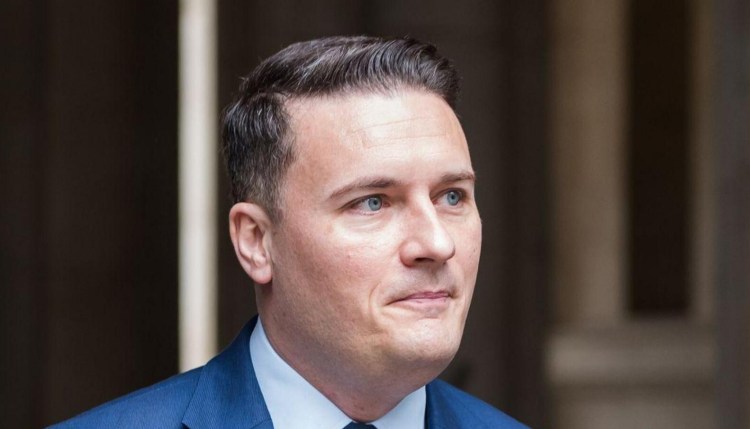
Health Secretary Wes Streeting has previously promised to improve the health service so it is more effective at getting sick people back to work.

Speaking at an Institute for Public Policy Research event in September, he highlighted how a drop in productivity due to ill health ‘has cost our economy £25 billion since 2018’ and how 900,000 more people are off work than would have been on pre-pandemic trends.

‘That’s more people than Tesco, Sainsbury’s and Asda employ put together,’ Mr Streeting said.

‘Fail to act and by the end of this parliament, 4.3 million people could be off work sick. Millions of people left behind, the welfare bill will balloon, and growth will be hampered.’

Alongside the accelerators, NHS England is working with the Office for National Statistics to assess the economic benefits of several health interventions, including talking therapies, bariatric surgery, treatment for endometriosis, and the NHS Type 2 Diabetes Prevention Programme.

In order to support the government’s and the Office for Budget Responsibility’s work on labour market consequences, the analysis will look at how waiting times, employment rates, and earnings are affected.

A pilot scheme in the North East and North Cumbria, led by the integrated care board and the Department for Work and Pensions, has already helped nearly 2,000 people back to work through one-to-one support in County Durham and the Tees Valley.

Samantha Allen, chief executive at North East and North Cumbria Integrated Care Board, said, ‘Our GPs often see patients who want to be at work, but need practical, non-medical help as well as what a doctor can offer.

‘Having a job, a steady income and feeling useful make a big difference to people’s health – and so far almost one-third of patients seeing an advisor have successfully got back to working life.’

Professor Kamila Hawthorne, chair of the Royal College of GPs, said: ‘We know that in general, working can be beneficial for our patients’ health, so ensuring they get the support they need to get back to work, when it is safe for them to do so, is a good thing.

‘However, it’s important we don’t push patients into work or back to work before they’re ready, as this could have a detrimental impact on their health.’

Parth Patel, associate director at the IPPR, said: ‘Most of those who are unwell would like to get back to work if they could be better supported to do so.

‘This pilot brings together local health and employment services in a way recommended by our commission report, backed by evidence, to help raise health, wellbeing and growth across the nation.’

Seeing as it’s impossible to get a doctor’s appointment, numerous patients won’t attend the doctor’s surgery in person. Most is done by eConsult now, and generally a doctor will ring you and diagnose you over the phone, including sick notes.

This change will hardly halt Parkinson’s Disease or MS.

If they even have the gall to say that epilepsy isn’t a disability, that would just make me so furious. Medication doesn’t always work, and it’s the most challenging to control.

How might the Job Centre advisor determine which patients are on extended sick leave so they could provide them with advice? Without access to patients’ medical information, they wouldn’t be aware, which is against the law and unethical.

What is our government saying? That these advisers, many of whom are narcissistic, have more medical knowledge than their doctors, who can read MRIs and X-ray reports.

I’m sure there are a lot of con artists out there, but there are loads that are not.

I had a friend who is epileptic and was sent on a job by the Jobcentre in a kitchen, with knives no less, and he had a fit while he was there, but of course these advisers know best – of course, they are above God!

Capital May Become ‘Childless’ As Spiralling Costs, Poor Housing, And School Closures Drive Families Out

London could become a ‘childless city’ as pupil numbers fall, schools close and families move out due to spiralling costs of transport and housing, teachers claim.

It is also claimed that declining birth rates and new-build apartments taking the place of family homes are contributing to the decline, which began before Brexit and COVID but has since quickened.

National Association of Head Teachers vice-president Dave Woods told The Times there was ‘almost one thing on top of another’ contributing to the plunge in pupils.

He said: ‘It’s a phrase that is talked about in meetings – about London becoming a childless city. You’ve got high housing, high transport prices, a cost of living crisis.’

Mr Woods, headteacher of Beaconsfield Primary School in Southall, added that family homes were being replaced by smaller apartments in his area of West London.

He said the ‘continuous downward spiral’ in numbers began before Brexit, and many families who moved to the UK from Eastern Europe left permanently during COVID. 

Families moving out of London and other cities to get more space for the same price have been a hot topic in online forums like Mumsnet in recent years.

Frankie Graddon, who writes a popular Substack column under the name Mumish, said that her social media feeds were ‘full of updates from work peers and friends of friends with young kids who have switched city living for The Good Life’.

It comes after the Education Policy Institute (EPI) revealed that nine of the ten local authorities seeing the biggest drops in primary school pupil numbers are in London.

The capital is expected to continue to see bigger falls than the rest of the country for the next five years, and researchers said strategies were required to adapt funding and provision to cope with falling numbers, which threaten the viability of schools.

There are set to be 400,000 fewer students at schools in England by 2030 than today, and primary pupil numbers have already dropped by 150,000 since 2019.

The EPI said Westminster saw a nearly 16 per cent fall in primary pupil numbers from 2020/21 to 2024/25 – but claimed London’s steeper decline cannot be explained by falling birth rates alone.

In Southwark, figures have dropped by more than 12 per cent in five years, and the number of primary schools has fallen by six.

In order, the ten local authority areas with the largest falls in primary pupil numbers over the last five years are Westminster, Lambeth, Southwark, Hackney, Camden, Hammersmith and Fulham, Islington, Merton, Wandsworth, and Redcar and Cleveland.

Schools are financed on a per-pupil basis, which means falling registrations are a major problem, as big declines are associated with school closures.

An increasing number of students are leaving London, researchers found. About 17 per cent of primary pupils in reception in 2012/13 had left the city by Year 6, increasing to 20 per cent for students who began reception in 2017/18.

While declining birth rates play a critical role, London primary pupils are most likely to either move within the city or depart the state education system, findings indicate. 

The South East and East of England have the biggest student influxes from London, according to local authorities.

Over the next five years, Islington, Lambeth and Southwark are expected to experience the biggest declines in student numbers from 14 per cent to 20 per cent.

A population bulge in England has been moving into secondary schools, but the Department for Education said in July that it expected pupil numbers to peak in 2026/27.

Earlier this year, a former education secretary called for school funding to no longer be considered on a per-pupil basis due to declining enrollment.

Conservative MP Damian Hinds said the decline in the number of children in schools meant the per-pupil basis was no longer a good reflection of whether funding was increasing or decreasing.

A Department for Education spokesperson told the Daily Mail today: ‘We recognise the pressures caused by demographic changes which some schools in inner London are facing.

‘Our system is designed to give schools more certainty over funding levels so they can plan ahead. Per-pupil funding for schools is currently at record levels, increasing to £69.5 billion by 2028-29.

‘As part of our wider work to give children the best start in life, we have awarded 300 primary schools £37 million to repurpose their spare space, with schools now providing over 5,000 new childcare places, as part of our school-based nurseries roll out.’

White people can’t afford to have children, but migrants don’t appear to have a problem breeding like rabbits – I wonder why?

London won’t become childless, but it will definitely become ‘white childless’ because the Muslim community is outbreeding us, but that is their master plan, and it’s not just about spiralling prices. London resembles a third-world country in some places. Who wants to bring their children up in filth and with the danger of being stabbed if they go out with their friends?

Sadiq Khan has created an absolute cesspit of a capital, and that remains the biggest reason people want to get out of our once great capital.

Welcome to Khan’s London, where it’s all going to plan, and quicker than he could have ever imagined, but it won’t matter to him when London is filled with the right kind of Londoners!

Dame Jilly Cooper Dies At Age 88

Renowned novelist Jilly Cooper has passed away at the age of 88 after a fall, her family has revealed. 

The ‘Queen of the bonkbuster’ writer was famed for her raunchy romance books, selling more than 12 million books in her career.

Her children, Felix and Emily, said her death on Sunday morning has come as a ‘complete shock’. 

They said in a statement: ‘Mum was the shining light in all of our lives.

‘Her love for all of her family and friends knew no bounds. Her unexpected death has come as a complete shock.

‘We are so proud of everything she achieved in her life and can’t begin to imagine life without her infectious smile and laughter all around us.’

Dame Jilly Cooper’s agent Felicity Blunt gave a similarly warm tribute, saying the author was ‘sharply observant and utter fun’.

The Rutshire Chronicles, which featured the showjumping lothario Rupert Campbell-Black, is the author’s most well-known work.

The portrayal of the polo-playing elite’s bedroom activities was a tremendous hit, captivating millions of readers seeking naughty bedtime reading.

Rivals, the first and possibly most famous book in the series, was published in 1985.

It made the BBC list of 100 important English language books in the love, sex and romance selection alongside Jane Austen’s Pride and Prejudice. 

It was recently adapted for television by Disney+. 

In August, Dame Jilly hosted a party for the cast at her Gloucestershire home, demonstrating her continued busy life in her senior years.

Also among the attendees was friend Andrew-Parker Bowles, the ex-husband of Queen Camilla.

The ‘famously naughty’ former Army officer is said to have been the inspiration for Campbell-Black. 

The novelist lost her husband, Leo Cooper, to Parkinson’s disease in 2013. 

Even when his condition deteriorated, the author, who had known him since she was nine years old, refused to place him in a care facility.

In her latter years, Dame Jilly said that she only kept writing novels to cover her husband’s medical expenses.

Her agent, Ms Blunt, said in reaction to her death: ‘The privilege of my career has been working with a woman who has defined culture, writing and conversation since she was first published over fifty years ago.

‘Jilly will undoubtedly be best remembered for her chart-topping series The Rutshire Chronicles and its havoc-making and handsome show-jumping hero Rupert Campbell-Black.

‘You wouldn’t expect books categorised as bonkbusters to have so emphatically stood the test of time, but Jilly wrote with acuity and insight about all things – class, sex, marriage, rivalry, grief and fertility.

‘Her plots were both intricate and gutsy, spiked with sharp observations and wicked humour.

She frequently looked to her own life for inspiration, and her critiques of society’s numerous rules and biases had an Austenesque quality.

‘But if you tried to pay her this compliment, or any compliment, she would brush it aside. 

‘She wrote, she said, simply “to add to the sum of human happiness”. In this regard, as a writer, she was and remains unbeatable.’

She added: ‘Emotionally intelligent, fantastically generous, sharply observant and utter fun, Jilly Cooper will be deeply missed by all at Curtis Brown and on the set of Rivals.

‘I have lost a friend, an ally, a confidante and a mentor. But I know she will live forever in the words she put on the page and on the screen.’

Born in Hornchurch, Essex, in 1937, Dame Jilly grew up in Yorkshire and attended the private Godolphin School in Salisbury.

Her father was a brigadier, and her family moved to London in the 1950s, where she became a reporter on The Middlesex Independent when she was 20.

She has said she moved to public relations and was sacked from 22 jobs before ending up in book publishing.

Her work has been adapted at various points, including an ITV series of The Man Who Made Husbands Jealous with Coronation Street star Stephen Billington and Downton Abbey actor Hugh Bonneville, while Marcus Gilbert starred in a Riders series during the 1990s.

She won the inaugural Comedy Women in Print lifetime achievement award in 2019 and was made a dame for her services to literature and charity in 2024.

In November, Dame Jilly is scheduled to release a new book through Transworld.

How To Survive Christmas is defined as ‘an irreverent and witty guide to surviving the festive season.’

Her publisher, Bill Scott-Kerr, said: ‘Working with Jilly Cooper over the past thirty years has been one of the great privileges and joys of my publishing life.

‘Beyond her genius as a novelist, she was always a personal heroine of mine for so many other reasons. For her kindness and friendship, for her humour and irrepressible enthusiasm, for her curiosity, for her courage, and for her profound love of animals.

‘Jilly may have worn her influence lightly, but she was a true trailblazer.

‘As a journalist, she went where others feared to tread, and as a novelist, she did likewise.

‘With a winning combination of glorious storytelling, wicked social commentary and deft, lacerating characterisation, she dissected the behaviour, bad mostly, of the English upper middle classes with the sharpest of scalpels.

‘It is no exaggeration to say that Riders, her first Rutshire chronicle, changed the course of popular fiction forever.

‘Ribald, rollicking and the very definition of good fun, it, and the 10 Rutshire novels which followed it, were to inspire a generation of women, writers and otherwise, to tell it how it was, whilst giving us a cast of characters who would define a generation and beyond.’

He added: ‘A publishing world without a new Jilly Cooper novel on the horizon is a drabber, less gorgeous place and we shall mourn the loss of a ground-breaking talent and a true friend.’

Dame Jilly’s funeral will be private in line with her wishes, according to her agent.

A public service of thanksgiving will be held in the coming months in Southwark Cathedral to celebrate her life, with a separate announcement made in due course.

This is sad news for all of those who loved her books; she will be deeply missed.

First Jane Goodall, Patricia Routledge and now Jilly Cooper – they will be having a huge party upstairs.

What a life she lived, though – she was a true icon, and people will mourn the fact that there will be no more books to come.

She was saucy and charming and an absolute scream, but she was never rude, and I believe that’s why generations utterly loved her.

She addressed many sensitive subjects, but she also did it in a humorous manner and without sugarcoating the facts.

Her books were tremendous fun, and she also appeared entertaining to be with – the kind of person that you would want to be placed next to at a dinner party.

A further outpouring of sympathy for recently deceased writers, singers, and performers seems to have occurred. It must serve as a memorial to a generation that created truly innovative and high-calibre work, which is unlikely to be seen again.

Post Office Closures Will Hit Rural Areas Hardest

Labour has acknowledged that proposals to cut the number of post offices in half will disproportionately affect the elderly in rural regions.

It says ‘nearly half’ of all those nationwide are no longer profitable and subsidies are unsustainable, meaning almost 6,000 of the 11,500 risk being scrapped.

Part-time ones, which open a few days a week or share premises with other businesses, are also threatened. Village post offices are most at risk, particularly if they can’t afford to open full-time.

The Government also suggests it could redefine what is meant by a ‘branch’. This means ‘drop and collect’ boxes could count as post offices.

The threats are in the fine print of Labour’s Future of Post Office consultation, which closes tomorrow.

The Tories have created a petition railing against the changes, with shadow post office minister Harriett Baldwin saying: ‘Post offices are a precious part of our critical national infrastructure.

‘Every community must have access to essential services like cash, parcels and communications.’

In the consultation, the Government acknowledges that post offices are vital community hubs that provide the most ‘social value’ for elderly people. It also admits those in rural areas rely on them more.

Numerous postmasters are still fighting for compensation after being persecuted in the Horizon faulty computers scandal.

A Department for Business spokesman said last night: ‘It is right to consider a range of options to secure the organisation’s long-term future, but our preference is to keep the overall size and shape of the network the same.’

To be honest, why would this Labour government even give a damn about the elderly? After all, they cut the winter fuel allowance, so they’ve already proved that they don’t care about rural communities.

Keir Starmer seems to forget about the pensioners. You know the pensioners that he dislikes, but what he needs to remember is that they are the parents and grandparents of our ordinary working-class people.

When banks began to close branches, we were told we could access many of their facilities from a post office, particularly the depositing and withdrawal of cash. Now they want to do away with the post offices as well.

Of course, it’s more convenient to use a card rather than cash, but if we stop using cash, we will end up losing it, and then our government will be able to follow our every move.

This is truly shameful. Post offices are the fabric of our society, but the game is up if these are allowed to disappear.

This is all part of the plan for a cashless society. Close bank branches and tell us to use the post office, then close them too.

Labour is here just so they can hurt pensioners – they are the meanest government ever, and every policy is a sickening betrayal of their constituents.

Mark my words – not so long from now, post offices will just be history and so will banks, and cash will be gone as well, and it will just be something that our children and grandchildren read in history books, and this is not a country for old folk anymore.

The attack on cash continues. High street banks are as good as gone. ATMs are constantly empty, and now the post offices are being shut. It’s pretty obvious what they’re doing. Digital IDs tied to Central Bank Digital Currency – were screwed!

Red-Light Runners Injure Pedestrians

Cyclists have caused a record number of pedestrian injuries, and half of them confess to recklessly running red lights daily.

For the year 2024, police recorded 603 accidents in which a civilian was injured in a bike collision, according to Department for Transport road casualty figures.

Meanwhile, in 2023, 507 similar injuries were reported. 

Last year also made a record for the most casualties involving cyclists on pavements and at zebra crossings, as 321 incidents were recorded – a nine per cent increase from the 292 in 2023.

Two pedestrians were killed in 2024 in a cycling collision. 

Meanwhile, 52 per cent of cyclists in London admitted to running red lights – with 16 per cent, or almost one in six, confessing they did so regularly, a study by e-bike provider Lime revealed.

Cyclists on the roads daily were the worst culprits, as 58 per cent of them said they wheel directly past red lights.

It is illegal to run a red light even as a cyclist, yet many continue to disregard the rules and put pedestrians at risk. 

Ten times more cyclists than drivers have been fined for running red lights in one of London’s busiest districts.

Some 284 people have been fined so far this year for not stopping at traffic lights while riding bikes in the City of London, compared to just 25 drivers.

And one in six bike riders admits to repeatedly disregarding traffic light signals to stop.

There has been growing pressure on the government to take greater steps to safeguard pedestrians and to regulate road safety for bikers.

City of London Police say they are carrying out a new crackdown on cyclists who disregard regulations, with many more doing so compared to drivers in the region. 

They have said they want to be able to introduce harsher penalties to cyclists who do not stop at red lights and have requested that the government raise the penalty.

Fines for cyclists running red lights are set at £50, while drivers must pay £100 – with the money going to the Treasury – and receive three points on their licence.

The study demonstrated 82 per cent of the capital’s cyclists, more than four in five, recognised that going through traffic lights was dangerous – yet 13 per cent of those committing the crime were unaware it is even illegal.

Some 71 per cent of London bikers say there should be harsher penalties for running red lights, according to the new poll of more than 1,000 cyclists across the city.

Lime is now launching its own new safety campaign, dubbed ‘Respect the Red’ – installing safety messages at high-traffic cycling hotspots and key junctions.

City of London Corporation figures show cycling in the area has risen by 50 per cent in the past two years. 

And capital-wide statistics indicate there are now 1.33 million daily cycle journeys across the entirety of London. 

It was not a smart idea to change the law to prioritise cyclists in its current form. They should bring in compulsory licensing, insurance and road tax for cyclists. Cyclists are not accountable, so make them accountable! And a lot of cyclists now seem to expect that pedestrians should give way for them.

You can’t even trace these cyclists because they have no number plate, so they can get away with whatever they want.

All those Lime rental bikes are a danger and need to be removed because some of the people riding them don’t have a clue, and don’t have any respect or appreciation for what else is going on around them.

Design a site like this with WordPress.com
Get started