Pennies Bought The Letters; Mary Brought The Banners

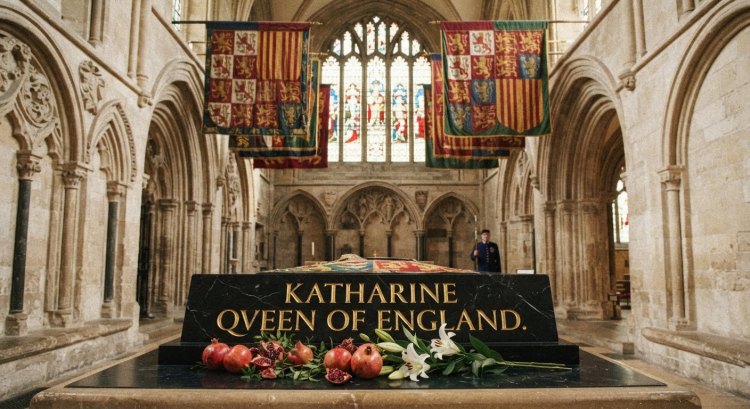
While Queen Mary of Teck officially ordered that the royal banners of a queen consort be hung above the tomb, it was actually a Victorian woman named Katharine Clayton who raised the funds to add the gilded “Katharine Queen of England” lettering.

Held annually from late January to early February at Peterborough Cathedral and the Peterborough Museum, the Katharine of Aragon Festival honours the queen’s legacy through a mix of remembrance services, expert historical lectures, and immersive Tudor-themed reenactments.

Henry VIII completely ignored his own initial choice to marry Catherine of Aragon, the Pope’s affirmation of their marriage, and her twenty-four years of flawless service as his queen and regent, just to use her brief past marriage to his brother Arthur as a hypocritical theological excuse for an annulment.

Kneeling directly at Henry VIII’s feet at the Blackfriars court on 21 June 1529, Catherine of Aragon delivered a powerful speech appealing to his conscience, declaring her lifelong loyalty, love, and obedience as his true wife, and steadfastly maintaining that she had entered their marriage a virgin bride.

After finishing her historic speech, Catherine of Aragon rose, made a low bow to the King, and immediately walked out of the courtroom on the arm of her servant.

To control the damage caused by Catherine’s dramatic exit, Henry VIII immediately addressed the silent, stunned courtroom by praising his departed wife’s virtues, stating that she was a perfectly dutiful, loving, and obedient queen, while quickly adding that his pursuit of an annulment was not driven by any dislike for her, but rather by a deeply troubled religious conscience regarding his succession.

Cardinal Wolsey reacted to Catherine’s defiance with profound panic and public self-defence, immediately begging King Henry VIII to declare openly that he had never suggested or engineered the annulment.

Because the Blackfriars trial collapsed without granting the annulment, Henry VIII completely lost faith in Cardinal Wolsey’s diplomatic influence, allowing Anne Boleyn’s faction to convince the King that his chief minister was intentionally stalling, which triggered Wolsey’s stripped titles, the seizure of his properties, and his eventual arrest for high treason.

Cardinal Campeggio was bound by explicit, secret written instructions from Pope Clement VII to protract and delay the Blackfriars trial as long as possible under no pretext of rendering a final sentence, because the Pope was effectively held hostage by Catherine of Aragon’s nephew, Holy Roman Emperor Charles V.

Following the collapse of the Blackfriars trial, Anne Boleyn’s faction—led by her father Thomas Boleyn and her uncle the Duke of Norfolk—systematically isolated Cardinal Wolsey from King Henry VIII by feeding the King intercepted correspondence to frame Wolsey as a papal spy, ultimately convincing Henry to charge him with high treason.

Paid The Masters, Policed The Oceans

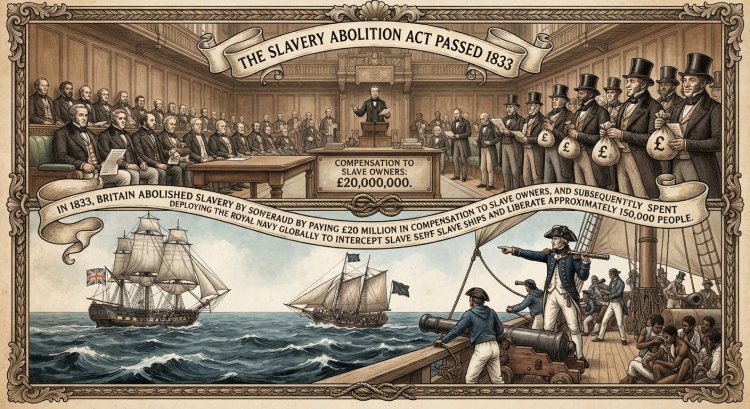
In 1833, Britain abolished slavery by paying £20 million in compensation to slave owners, and subsequently spent decades deploying the Royal Navy globally to intercept slave ships and liberate approximately 150,000 people.

The massive £20 million debt used to compensate slave owners was consolidated into permanent government bonds and serviced by generations of British taxpayers for 180 years until HM Treasury finally redeemed the bonds on 1 February 2015.

The £20 million in compensation was rapidly injected into the Industrial Revolution by former slave owners, who ultimately funded 487 distinct railway investments and critical transportation lines across Britain between 1835 and 1850.

Major financial institutions like Barclays, NatWest, HSBC, and the Bank of England heavily profited from the 1833 abolition by functioning as corporate administrators, payout agents, and capital repositories for the £20 million bailout given to slave owners.

During the 18th and early 19th centuries, Lloyd’s of London served as a primary financial pillar of the transatlantic slave trade by treating captive Africans as insurable cargo, with slave-economy policies making up 41% of the entire marine insurance industry’s business at its peak.

The infamous 1781 Zong massacre occurred when a crew threw over 130 living Africans into the ocean to exploit a maritime insurance loophole covering jettisoned cargo, leading to a landmark legal battle (Gregson v. Gilbert) that was fought entirely as a commercial property dispute rather than a mass murder trial.

In March 1783, Olaudah Equiano discovered the Zong killings through shipping industry contacts and strategically exposed the atrocity to the British public by partnering with lawyer Granville Sharp to launch a searing newspaper campaign that forced the horrific reality of the slave trade into the national spotlight.

Founded in London in 1787 by formerly enslaved men like Olaudah Equiano and Quobna Ottobah Cugoano, the Sons of Africa became Britain’s first Black political organisation by directly lobbying Parliament, publishing best-selling memoirs, and exposing the horrors of the slave trade to turn abolition into a mass public movement.

Published in 1787, Quobna Ottobah Cugoano’s groundbreaking treatise demanded the immediate, unconditional abolition of slavery, radically arguing that enslaved people had a moral duty to violently rebel against their oppressors and that Britain should deploy a naval fleet to forcefully suppress the slave trade.

While the £20 million payout—equivalent to roughly 40% of the government’s annual budget—successfully secured the passage of the 1833 Abolition Act, historical records show it was a tactical political bailout explicitly paid to compensate white slave owners for the loss of their “property” rather than a moral investment to rectify the wrongs of slavery.

During the 1833 parliamentary debates, British legislators fiercely prioritised corporate property rights by ruling that the legal precedent of owning human beings as private property superseded the moral right to immediate freedom, resulting in a £20 million bailout for enslavers and a system of forced unpaid labour for the emancipated.

The direct conflict of interest of British politicians who were also slave owners allowed them to negotiate their own massive £20 million bailout in 1833, saddling generations of ordinary citizens with servicing the resulting national debt for 180 years until it was finally cleared on 1 February 2015.

Rebranded For Survival

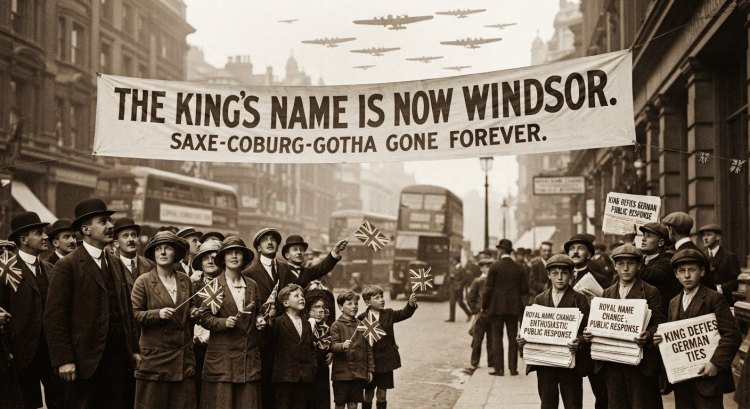
Historians reject the idea that King George V delayed changing the royal family’s name to Windsor until late in the war to hedge his bets, arguing instead that the July 1917 decision was an urgent act of domestic political survival driven by intense anti-German public outrage over Gotha bomber raids.

The debate over the British monarchy centres on whether the UK should maintain a politically neutral hereditary head of state for stability and tradition, or transition to a republic with an elected head of state to uphold democratic principles, equality, and public accountability.

Historical claims that Edward IV was illegitimate originated as unproven 15th-century political propaganda to justify Richard III’s usurpation, and they have no bearing on the current royal family whose legal right to the throne is established by acts of Parliament rather than a single medieval bloodline.

Many constitutional experts agree that who was historically “supposed” to be on the throne is irrelevant today because Parliament legally took control of the royal succession over 300 years ago.

Historians recognise the royal family’s German ancestry but reject the claim that the majority of Germans were bad people, emphasising the complex history of Nazi totalitarian control, widespread civilian complicity, and active domestic resistance.

While everyday name changes are often personal or routine, historians emphasise that the Royal Family’s July 1917 change to Windsor was an urgent, strategic response to a major wartime political crisis rather than a casual decision.

Historians confirm that King George V changed the family name to Windsor precisely because its German sound was fueling intense public hostility during the war, making the rebranding a direct effort to protect the monarchy’s popularity.

King George V chose the surname Windsor because it was tied directly to Windsor Castle, a royal fortress used by English monarchs for over 800 years, offering a quintessentially British identity that completely avoided the negative political baggage of other historical dynasties.

While choosing Balmoral or Sandringham would have been a mouthful, Windsor was ultimately selected because it carried ancient English royal history dating back to the 11th century, whereas those alternatives were just recently acquired Victorian holiday estates.

The British public reacted to the July 1917 announcement with overwhelming relief and patriotic enthusiasm, widely celebrating the name Windsor as a triumph that successfully severed the monarchy’s German ties and restored national loyalty.

The British public responded with deep satisfaction and approval when the King’s German relatives anglicised their names, seeing it as a necessary step to defuse the fierce wartime hostility that had previously forced prominent figures like Prince Louis of Battenberg to resign from public life.

Prince Louis of Battenberg accepted losing his German title with dignified, self-deprecating humour, famously writing in a family guestbook that he had “Arrived Prince Hyde, Departed Lord Jekyll” to make light of his forced wartime transformation.

To compensate for the loss of their princely German status, King George V granted the Battenbergs the senior peerages of Marquess of Milford Haven and Marquess of Carisbrooke, while their Teck cousins were created Marquess of Cambridge and Earl of Athlone.

Driving Miles To Bring Smiles

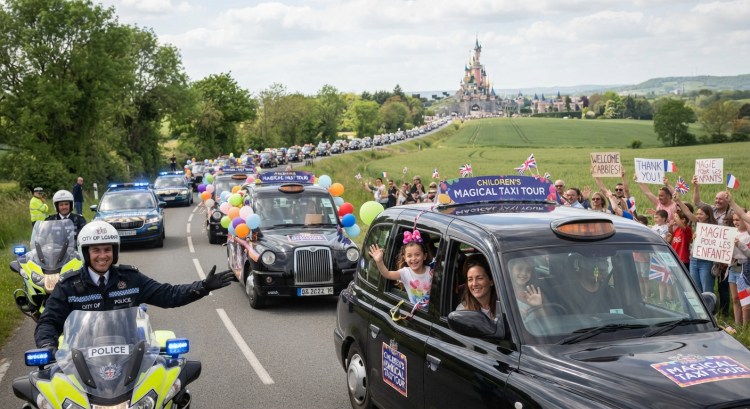
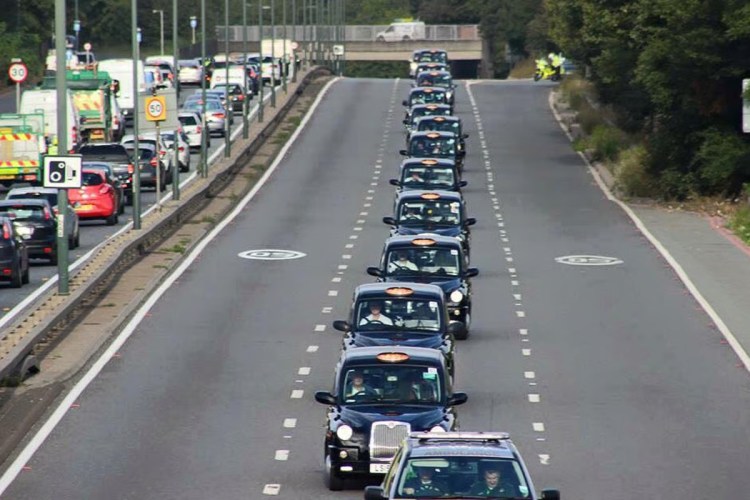
The Children’s Magical Taxi Tour is an annual event where more than 100 London black cab drivers volunteer their time, fuel, and vehicles to escort over 200 children with chronic or life-limiting illnesses in a massive, three-mile convoy from Canary Wharf to Disneyland Paris for a heartwarming, three-day adventure.

Established in 1994, the Children’s Magical Taxi Tour has safely transported more than 5,400 children with life-limiting illnesses to Disneyland Paris through a massive volunteer effort backed by police and medical escorts, with the next trip scheduled for September 10, 2027.

The Children’s Magical Taxi Tour was started in 1994 by the Worshipful Company of Hackney Carriage Drivers as an annual charity initiative.

Seeing that massive convoy of black cabs and hearing the sea of support from the HGV drivers really puts things into perspective. It is a beautiful reminder of the deep impact of human kindness, and, naturally, it brought out some emotion.

It truly is a wonderful thing that these drivers and the community do, spreading an unforgettable ripple effect of kindness and joy to these children and their families.

Seeing such a spectacular display of love and kindness is truly powerful, offering a beautiful reminder of the good in the world.

It is a beautiful and long-standing London cabbie tradition to quietly waive the fare for families travelling to or from Great Ormond Street Hospital, showing an extraordinary level of compassion alongside their charity work.

“Cabbies Do Kilimanjaro” is an extraordinary fundraising initiative started by a group of London taxi drivers who transformed their health to scale Africa’s highest peaks, successfully raising tens of thousands of pounds for children’s charities, military veterans, and an African orphanage.

The “Cabbies Do Atlantic Row” challenge was a gruelling 60-day, 3,200-mile unassisted ocean rowing expedition from the Canary Islands to Antigua, completed by three middle-aged London taxi drivers, successfully raising over £13,000 for the Stroke Association, military veterans, and an African orphanage.

The Taxi Charity for Military Veterans organises entirely free, all-expenses-paid trips for World War II veterans, with volunteer London black cab drivers providing door-to-door transport from the UK to Normandy so the heroes can attend poignant D-Day commemorations at no cost to themselves.

Beyond the Magical Taxi Tour, the Worshipful Company of Hackney Carriage Drivers supports the local community by funding trade benevolence, mentoring students at the Royal Docks Academy, training cabbies as city tour guides, and donating to the annual Lord Mayor’s Appeal.

The public overwhelmingly celebrates the Children’s Magical Taxi Tour, frequently leaving deeply moving comments that praise the volunteer drivers as “fantastic heroes” with “amazing hearts” for bringing unforgettable joy and a beautiful escape to children facing serious medical struggles.

PIP: Missing Leg Expected Back By Tuesday

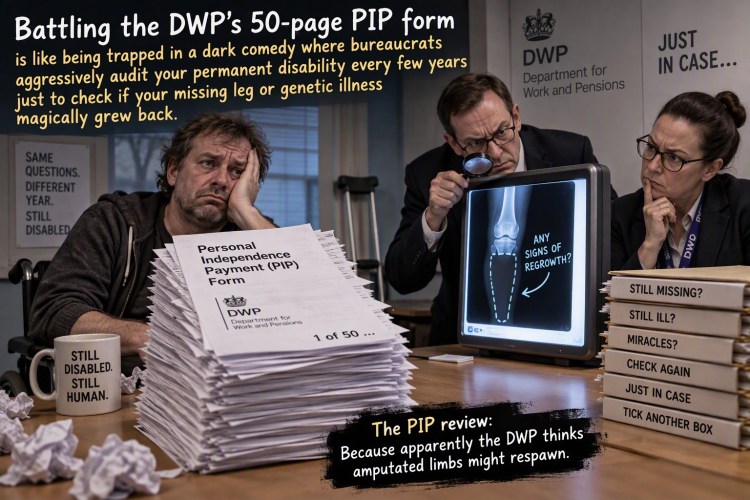
Battling the DWP’s 50-page PIP form is like being trapped in a dark comedy where bureaucrats aggressively audit your permanent disability every few years just to check if your missing leg or genetic illness magically grew back.

The whole system operates on the assumption that if they make you fill out enough paperwork, you will eventually get so bored of being disabled that your body will simply choose to reboot and download a working pair of lungs.

The political debate is a spectacular clash between sanity and bureaucracy: advocates want to stop traumatising people for a quick cost-cut, while the system insists that spending millions on private contractors is a vital service—just in case you’ve upgraded your incurable condition or managed to achieve a level of illness hitherto unknown to science.

The DWP actually invented a brilliant, sensible shortcut to save you time, but then immediately panicked, hid the key, and left a confused algorithm to accidentally throw everyone with a permanent condition right back into the 50-page obstacle course because it couldn’t compute a world where a missing limb didn’t magically grow back over the weekend.

The government has essentially designed a health assessment that acts like a biological time machine, aggressively stressing you out until your immune system goes into a total meltdown, successfully making you twice as sick just so you can perfectly qualify for the benefits you were already claiming.

The state has essentially balance-sheeted your incurable illness into a minor accounting glitch, confidently deciding that the best way to hit their financial targets is to unleash a 50-page psychological warfare kit upon your immune system and call it “prudent fiscal management”.

The DWP essentially bound and published a light novella detailing every single way your body malfunctions, slapped on a few pages of “helpful hints” to make it look friendly, and then mailed it to your house as a fun weekend activity to complete while your joints or immune system are actively staging a violent coup.

Charities widely condemn the form as a weaponised, 50-page trauma-journaling exercise designed to drain your remaining life force by forcing you to write a comprehensive gothic horror novel about your own medical misery.

This satirical guide exposes how the DWP translates basic daily tasks into Olympic-level achievements, concluding that if you can successfully put on a single sock or look at a map, you are an elite tailor and a world-class explorer who is far too talented to qualify for support.

The DWP essentially treats a signature from a world-renowned medical consultant like a note your mum wrote to get you out of PE, operating on the paranoid assumption that your doctor is just a co-conspirator helping you pull off an elaborate heist to steal a modest weekly allowance.

The DWP essentially treats a missing limb like a slightly delayed Amazon delivery, aggressively audits you every few years just to see if your 19-year-absent leg has finally arrived in the post, and acts deeply disappointed when you haven’t managed to pull off a full-blown biblical miracle just to save them a bit of paperwork.

The DWP will confidently mail a mountain of physical paperwork to someone who is blind and deaf, operating on the brilliant assumption that your lack of sight and hearing simply frees up enough brainpower for you to navigate their 50-page booklet using pure psychic intuition.

Forcing DWP workers to fill out a 50-page assessment just to locate their own brains is a beautiful piece of poetic justice, though the system would immediately crash because “Chronic Common Sense Deficiency” isn’t a pre-approved box on their computer script.

Feed Me, Finance Me, Or Fuck Off!

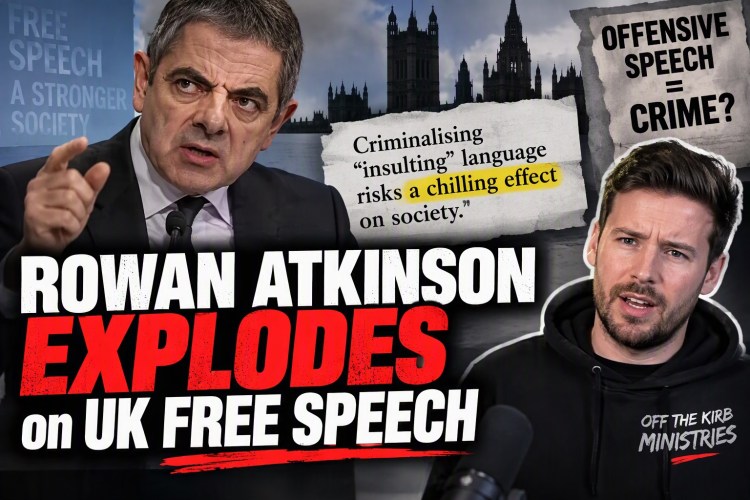
Rowan Atkinson EXPLODES on UK Free Speech is a viral commentary video by Joe Kirby of Off the Kirb Ministries that highlights actor Rowan Atkinson’s famous 2012 campaign speech against UK legislation criminalising “insulting” language, warning that censoring offensive speech creates a dangerous chilling effect on society.

Rowan Atkinson’s famous campaign speech argued that UK laws criminalising “insulting” language created a dangerous “chilling effect” on society, leading to a successful legislative change that removed the word “insulting” from Section 5 of the Public Order Act.

To demonstrate how the law was being abused, Rowan Atkinson highlighted the real-world arrests of a university student who jokingly asked if a police horse was gay, a teenager holding a sign calling Scientology a dangerous cult, and a café owner displaying Bible passages on a TV screen.

In all three cases, the charges were ultimately dropped or abandoned before a full trial because the Crown Prosecution Service and police senior officials ruled that no actual crimes had been committed.

The amended law now protects individuals by completely removing the word “insulting” from Section 5 of the Public Order Act, ensuring that speech or behaviour must be actively threatening or abusive to trigger an arrest.

Rowan Atkinson has actively defended free speech by campaigning to dilute the Racial and Religious Hatred Act 2006 to protect religious criticism, fighting for a free speech clause in a 2009 homophobic hatred law, and opposing Scotland’s 2021 Hate Crime Bill.

Current UK laws regulate online speech by enforcing the Online Safety Act alongside criminal legislation to force digital platforms to remove illegal hate speech and police false information meant to cause harm.

Rowan Atkinson strongly opposes modern social media cancel culture, famously likening online mobs to a “medieval mob roaming the streets looking for someone to burn” and warning that digital platforms destroy nuance by reducing complex debate to a simplistic, binary mentality.

Other classic British comedy legends who share his stance include Monty Python star John Cleese, who frequently campaigns against modern censorship, and his former Blackadder co-star Stephen Fry, who famously argued that being offended carries no special social rights.

Rowan Atkinson stepped up to campaign, arguing that a healthy society needs to develop a thick skin to handle everyday offence rather than relying on state laws and social media cancellations to referee hurt feelings.

A no-nonsense attitude perfectly captures the core argument of free speech advocates who believe that choosing to ignore rude remarks is far healthier than treating hurt feelings as a matter for the law.

Stephen Fry famously stated that declaring “I’m offended” is nothing more than a pointless whine that carries no special social rights, bluntly concluding his point with the phrase, “Well, so fucking what?”

From my point of view, if you are troubled by “hurty words,” you are simply a snowflake who needs to grow a thick skin instead of expecting the law or society to protect your feelings.

My personal rule is that I simply do not care what people say about me, because unless they are feeding me, fucking me, or financing me, they can just fuck off.

A Blessing For The Book, A Blow To The Brotherhood

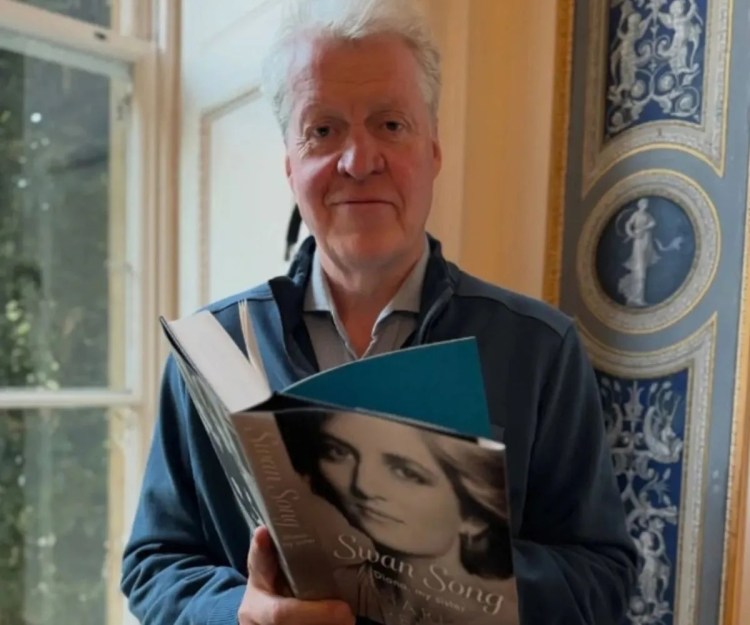
Prince William is reportedly furious and feels deeply betrayed by his uncle Charles Spencer’s memoir, Swan Song: Diana, My Sister, which contains scathing allegations about King Charles that Buckingham Palace has publicly rejected.

Prince William was reportedly left stunned and deeply hurt by Charles Spencer’s admission that Prince Harry gave his blessing to the book, further widening the gap between the brothers over Harry’s acceptance of such a brutal depiction of King Charles.

A royal insider claims that a furious Prince William cannot comprehend his brother’s lack of outrage and is assuming Prince Harry only skimmed the book for his own name rather than processing the brutal allegations against their father.

The royal insider strongly questioned Prince Harry’s true loyalty and desire for reconciliation, wondering how he could be comfortable with his last remaining parent being heavily criticised in Charles Spencer’s memoir while King Charles is actively battling cancer.

According to the royal insider, Charles Spencer’s memoir portrays King Charles as a cruel, heartless monster, specifically highlighting Princess Diana’s claims that her husband was in love with his valet.

Royal sources report that behind-the-scenes disquiet is mounting at the palace because Prince Harry, 42, has been leaning heavily on his uncle Charles Spencer since arriving back in the UK with Meghan, 45, and their children, seven-year-old Prince Archie and five-year-old Princess Lilibet.

A royal source claims that the shocking accusations Earl Spencer levelled against King Charles in his memoir have sent an absolute tidal wave through the palace.

According to the royal source, King Charles loathes Charles Spencer, and they have never gotten along, meaning Prince Harry’s close relationship with his uncle gives the monarch genuine cause for concern.

According to the source, forging a closer relationship with the Spencers makes “perfect sense” to Prince Harry, as his mother’s family has been nothing but warm and loving to him his entire life.

The source explains that Prince Harry shares a remarkably close bond with Charles Spencer, his sisters, and the rest of his mother’s side of the family because they have always actively tried to protect him.

The royals may face further anxiety over Diana’s secrets, with reports that Prince Harry and Meghan Markle are working on a Netflix documentary to mark the 30th anniversary of her death in 2027.

The source says Prince William is bracing for more controversy as Prince Harry and Meghan Markle move ahead with their Princess Diana documentary, noting that while the heir is used to people mining his mother’s legacy for money and clout, it hits too close to home when his own brother is in charge.

Public comments are sharply divided, with critics accusing Earl Spencer and the Sussexes of exploiting Princess Diana’s legacy for money and clout at the expense of a battling King Charles, while supporters defend their right to share their truth and praise the Spencers for offering Prince Harry a protective sanctuary.

Digital Convenience Versus Digital Exclusion

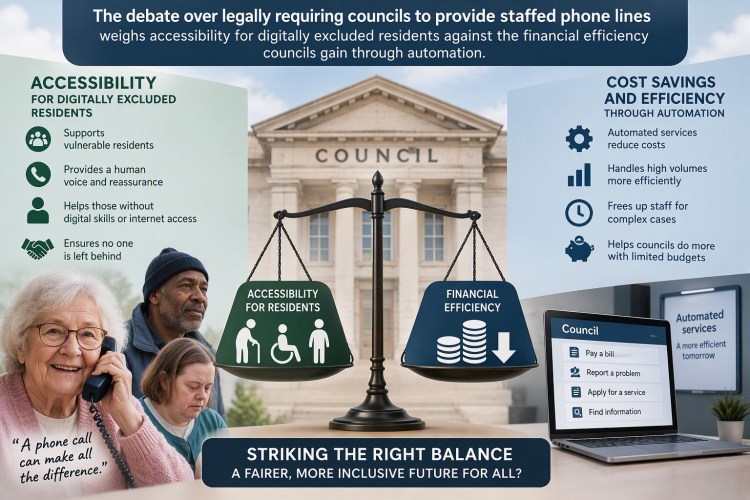
The debate over legally requiring councils to provide staffed phone lines weighs accessibility for digitally excluded residents against the financial efficiency councils gain through automation.

While councils face a severe £7 billion funding black hole that forces them to automate phone lines, national campaigns and regional coalitions are pushing for mandatory digital exclusion strategies to protect offline access for vulnerable residents.

While official parliamentary campaigns like the “right to live offline” petition have recently closed, active initiatives like the Age UK “Offline and Overlooked” campaign and open healthcare petitions continue to fight for legally protected offline access to public services.

While residents have a democratic right to vote out local representatives who they feel fail to serve them by cutting off telephone support, councils argue that they must prioritise funding statutory frontline services over administrative contact channels to balance their budgets.

While critics argue that eliminating manned telephone lines violates the Equality Act 2010 by failing to provide reasonable adjustments for those with disabilities, mental health conditions, or financial hardships, councils contend that they meet their legal duties through targeted alternatives like library-based digital hubs and face-to-face appointments.

While police forces argue that replacing physical front counters with outsourced services like the Report Fraud system saves vital funds for frontline officers, critics contend that forcing distressed crime victims onto websites and automated lines destroys the essential trust of community-led policing.

While frustrated residents argue that defensive call handlers use hostile screening tactics to deflect reports and blame the victim, public service organisations contend that staff must remain strictly objective and analytical to clarify legal liabilities within high-pressure, standardised protocols.

You can access free, empathetic advocacy through independent charities like Victim Support (by calling 0808 1689 111) or the London Victim and Witness Service (by calling 0808 168 9291), both of which will stand by your side and ensure your voice is heard without judgement.

While frustrated residents argue that withholding council tax is a justified response when public services refuse to provide telephone communication, local authorities stress that council tax is a mandatory statutory obligation under the Local Government Finance Act 1992, meaning non-payment is a criminal offence that triggers immediate court action regardless of service quality.

Because Council Tax is a statutory tax enacted by Parliament under the Local Government Finance Act 1992 and not a private contract, residents are legally obligated to pay it regardless of the council’s performance, meaning it cannot be lawfully withheld due to poor customer service.

While critics argue that Council Tax is poor value because rising bills coincide with a visible decline in street-level services like pothole repairs, supporters contend it is vital value for money because it acts as a collective safety net, funding essential, high-cost social care for the community’s most vulnerable residents.

While frustrated residents argue that council staff use cold, dismissive tactics to deflect complaints and avoid accountability, public service advocates contend that what appears as rudeness is often a result of overwhelmed workers facing extreme stress, unmanageable workloads, and strict processing protocols driven by a £7 billion funding black hole.

While critics argue that dissatisfied council workers should seek alternative employment if they cannot provide respectful public service, labour market analysts contend that encouraging staff to quit would worsen a severe public sector retention crisis, causing already overstretched local services to deteriorate further.

However, no resident deserves to be treated with disrespect when accessing essential public services, and council employees have a clear professional obligation to maintain courtesy and standard customer service regardless of their internal budget or workload pressures.

Under the Immigration Act 2016, public-facing workers must possess the necessary command of English to perform their role, but this legal definition of fluency allows for diverse accents and does not require staff to speak with a specific regional dialect. When public services outsource their call centres to external private companies—either within different regions of the UK or internationally—background noise from busy call floors and compressed telephone lines can heavily distort speech, making it incredibly difficult for callers to comprehend the conversation.

If an insurmountable communication barrier occurs because you cannot understand a staff member’s accent, you have the right to request that they slow down, repeat the information, or transfer you to a supervisor, and you can formally demand a written follow-up via email under public accessibility guidelines.

Rules Vs. Roots: Clear Boundaries Or Deep Support?

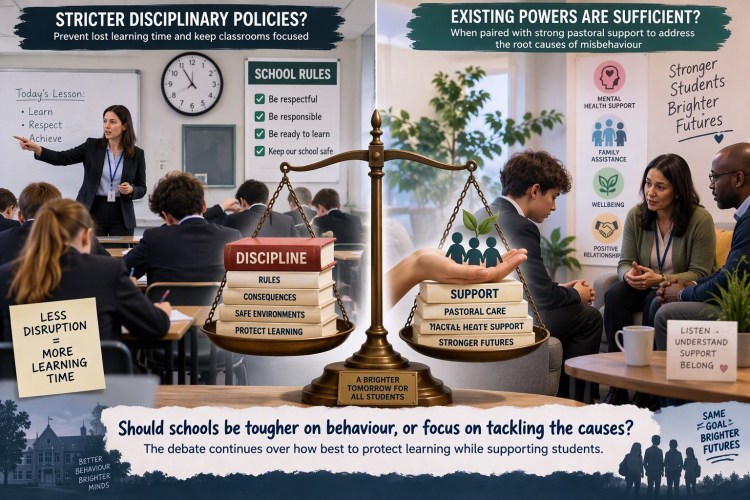
The debate centres on whether schools require stricter disciplinary policies to prevent lost learning time, or if their existing powers are already sufficient when paired with strong pastoral support to address the root causes of misbehaviour.

To effectively manage classroom behaviour, teachers must receive robust backing from school authorities and be fully defended against hostile or unreasonable parents.

Under the principle of in loco parentis, schools assume full custody of children during the day and must therefore hold the ultimate authority to dictate and enforce disciplinary boundaries.

While the law grants schools independent authority to issue detentions, searches, and use reasonable force without parental consent, their power is strictly limited by the Equality Act 2010, which requires proportionate adjustments for students with special educational needs or disabilities.

Under Section 93 of the Education and Inspections Act 2006, school staff possess the legal right to use necessary and proportionate force without parental consent to prevent injury, property damage, or severe disorder, provided it is never used as a punishment and is formally recorded and reported to parents on the same day.

While passive physical control refers to non-restrictive guidance where a student retains mobility, active restraint involves the positive application of force to physically overpower or immobilise a child to prevent immediate harm.

The Department for Education strictly prohibits teachers from using high-risk holds—including the seated double embrace, double basket-hold, nose distraction jabs, or prone restraint—because applying pressure to the neck, throat, chest, or abdomen can fatally restrict a child’s airway, breathing, or blood circulation.

While you can absolutely still say the word “blackboard,” the practice of hurling a wooden eraser across the room has been strictly illegal since corporal punishment was permanently banned in UK schools.

While some argue that a hyper-cautious culture of modern rules has restricted children’s resilience, others maintain that shifting away from fear-based discipline toward inclusivity fosters a safer, more supportive environment for learning.

While critics argue that modern overprotection has left children emotionally fragile, psychologists counter that today’s youth are managing unprecedented systemic pressures and that emotional literacy represents evolving psychological strength rather than weakness.

While advocates of strict discipline argue that a lack of firm boundaries directly leads to anti-social behaviour and youth violence, criminologists counter that extreme offences like knife crime are primarily driven by deeper issues such as organised criminal exploitation, poverty, and systemic fear rather than a simple absence of school rules.

While critics argue that an overprotective “snowflake culture” has coddled youth and eroded accountability, criminal data indicates that extreme juvenile violence is rarely random or “for fun,” but rather a symptom of organised exploitation, systemic deprivation, and a cyclical culture of fear.

However, I disagree with this as well. Back in the 1980s, I walked out my front door and some kid about 9-10 years old looked at me and called me a “slag”. I told him that his mum should put soap in his mouth, and his retort was, “If she does, I’ll call social services and the police and have her arrested.”

My argument underscores a deeply held conviction that modern legal protections have shifted power away from traditional authority figures and fundamentally changed how generations interact.

While many observers agree that modern children increasingly struggle with face-to-face peer interaction and emotional regulation, developmental experts attribute this trend to a heavy reliance on screen time and the long-term social disruption of early-20th-century pandemic lockdowns rather than a simple loss of manners.

While critics emphasise that the decline in children’s social skills began decades ago with the rise of early internet culture and shifting parenting styles, developmental researchers note that these long-term trends were merely accelerated, rather than created, by recent events.

While critics argue that modern legal and cultural shifts have completely stripped parents and teachers of their ability to maintain control, educational and legal frameworks demonstrate that authority figures still hold substantial disciplinary powers, though they must now exercise them within clear regulatory boundaries.

While proponents of corporal punishment believe that physical discipline, when combined with a clear explanation, is an effective way to establish boundaries, UK law has strictly banned the cane and the slipper in all schools, and section 1 of the Children Act 2024 has outlawed all forms of physical punishment by parents in the home.

While child protection data show that legal bans successfully reduce everyday physical discipline in mainstream society, safeguarding experts emphasise that severe abuse continues to occur in high-risk households where substance dependency and domestic chaos trigger extreme violence regardless of the law.

While proponents of strict discipline argue that a failure to establish firm boundaries during childhood directly fuels street violence and societal chaos, criminologists and social policymakers maintain that preventing youth crime requires a combination of clear legal consequences alongside targeted community interventions to address systemic issues like poverty and gang exploitation.

While many individuals feel that experiencing physical discipline in childhood successfully taught them respect and boundaries without causing harm, decades of large-scale developmental research indicate that physical punishment is statistically correlated with increased adult aggression and mental health challenges rather than genuine, long-term respect.

Poppy cock, so what about all the mental health issues that are now prevalent?

Design a site like this with WordPress.com
Get started